Nigeria’s economy is bracing for fresh turbulence as global oil market analysts warn of a potential decline in crude prices below $50 per barrel in the second half (H2) of 2025.
The outlook, driven by weakening global demand growth and surging supply, could severely undermine the West African nation’s 2025 budget, which is heavily reliant on oil revenues.
As of mid-June, global benchmark Brent crude is trading around $67 per barrel, buoyed by short-term optimism over potential breakthroughs in U.S, China trade negotiations. However, this apparent stability masks deeper, more persistent headwinds in the oil market.
Analysts from top institutions, including S&P Global, warn that a confluence of structural weaknesses, chiefly a slowdown in demand growth and an uptick in supply from OPEC+, could send prices tumbling to below $50 per barrel in the coming months.

Read also: Oil prices fall further, throwing Nigeria’s budget in turmoil
Nigeria’s fragile fiscal foundation
Nigeria, Africa’s largest oil producer, built its 2025 federal budget on a benchmark crude price of $75 per barrel and production output of 2 million barrels per day. A drop below $50 would spell a significant shortfall, putting critical infrastructure, education, and healthcare funding at risk.
“The warning signs have been there for months,” said Bola Adediran, an energy economist based in Lagos. “Nigeria’s fiscal framework is extremely sensitive to oil price fluctuations. With the projected price collapse, we could see a repeat of the 2020 crisis, with mounting deficits, rising borrowing costs, and pressure on the naira.”
Already, Nigeria’s oil revenues have underperformed projections in the first half (H1) of the year, partly due to ongoing oil theft, pipeline vandalism, and delayed investment in upstream projects. Now, with crude oil prices potentially falling to $50 or lower, the fiscal pressures are likely to intensify.
Global Market dynamics
At the heart of the bearish oil forecast is a weakening in global oil demand. The International Energy Agency (IEA) recently slashed its 2025 demand growth estimate to under 1 million barrels per day, the slowest rate since the 2020 pandemic lockdowns.

This stagnation is attributed to a combination of factors, including high interest rates, sluggish economic recovery in key markets like Europe, and continued efficiency gains in transportation and industry.
Meanwhile, supply is surging. OPEC+, the coalition of oil-producing nations led by Saudi Arabia and Russia, has begun unwinding its pandemic-era production cuts. Earlier this year, the group announced a phased plan to reintroduce roughly 2 million barrels per day to the market, a move that analysts say could flood an already oversupplied market.
“The supply-demand imbalance is becoming more pronounced,” said Edward Holloway, senior analyst at S&P Global. “If demand continues to underperform and OPEC+ doesn’t re-tighten production, $50 oil isn’t just possible—it’s probable.”
Read also: Oil hits four-month high in boost for budget
Geopolitical tailwinds or temporary relief?
Ironically, current oil prices are climbing, thanks in large part to geopolitical optimism. The United States and China, the world’s two largest economies, are reportedly on the verge of reaching a new trade agreement, which includes provisions for easing U.S. chip export restrictions and rolling back China’s rare earth export limits.
Kevin Hassett, chief of the White House National Economic Council, told CNBC this week that a deal could be imminent. “Our expectation is that … immediately after the handshake, any export controls from the U.S. will be eased,” he said, adding that Chinese rare earth magnets, essential for electronics and electric vehicles, would likely return to international markets at normal volumes.
These developments have temporarily pushed up oil prices, as investors bet on a rebound in industrial activity and manufacturing demand for energy. However, many analysts remain sceptical that such diplomatic progress will reverse the structural oversupply and demand fatigue facing the oil market.
Nigeria’s limited options
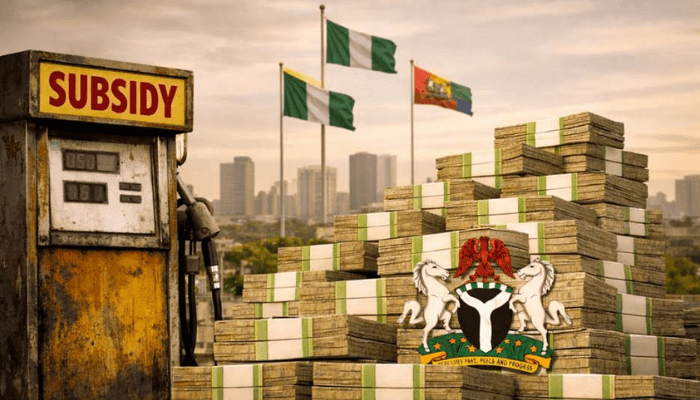
For Nigeria, the impending oil price slump couldn’t come at a worse time. The country’s foreign reserves have been gradually depleted, inflation remains stubbornly high at over 20 percent, and recent reforms, including the removal of fuel subsidies, have faced public backlash.
The government has promised to diversify the economy and boost non-oil revenue, but progress has been slow. Agriculture, tech, and manufacturing remain underdeveloped, while the tax-to-GDP ratio remains one of the lowest globally.
Nigeria, heavily reliant on oil revenue to finance its ambitious N54 trillion budget for 2025, faces a significant economic risk as low oil prices impact both government revenue and the stability of the foreign exchange market.
The government projects that revenues will more than double to N36.35 trillion. Of this revenue, oil is expected to contribute about 55 percent, N20 trillion.
Tunde Abidoye, a research analyst at FBNQuest, stated that the decline in oil prices is detrimental to Nigeria’s fiscal health, forcing the government to adjust domestic fuel prices.
He warned that the situation threatens Nigeria’s budget, which was based on a benchmark oil price of $75 per barrel and a production target of 2.1 million barrels per day (mbpd).
Read also: Nigeria’s oil output underwhelms ambitious 2025 budget
Given current realities, Abidoye estimates that maximum production will likely not exceed 1.8 mbpd, making it difficult to meet revenue projections.
“Nigeria may have to turn to the international capital markets, such as issuing Eurobonds, to bridge the funding gap,” he added.
Abidoye noted that this option comes with challenges, as the U.S. Federal Reserve is unlikely to cut interest rates this year, raising borrowing costs for the country.
Arnold Dublin Green, chief investment officer at Cordros Asset Management, warned in an interview with Arise TV that falling oil prices will strain Nigeria’s foreign exchange earnings, deplete reserves and further weaken the naira.
He noted that these challenges could force the government to seek additional financing through the debt market to mitigate the fiscal shortfall.
The Central Bank of Nigeria (CBN)’s quarterly economic report reveals that the federal government recorded a fiscal deficit of N3.1 trillion in the fourth quarter (Q4) of 2024. While still significant, this figure shows some improvement compared to earlier deficits of N3.2 trillion in Q3 2024 and N3.3 trillion in Q4 2023.
Analysts at FBNQuest said in a note seen by BusinessDay that the modest decline was supported by higher gross revenue collection, especially oil receipts, aided by improved crude production and a weaker naira exchange rate.
“Despite the positive outturn, the fiscal deficit remained elevated, reflecting the shortfall in budgeted oil revenue and persistent spending pressures,” analysts at FBNQuest said.
This situation disincentivises further oil exploration and development, as companies become hesitant to commit substantial capital to projects with uncertain returns.
Such major energy projects include: Owowo offshore project by ExxonMobil, HI and HA shallow offshore gas project by Shell and Ima gas project by TotalEnergies.
These projects represent significant potential for Nigeria, promising to unlock new oil and gas reserves, create jobs, and inject billions of dollars into the economy.
“The current oil price environment is creating a significant challenge for Nigeria,” a senior project manager with an international oil company (IOC) doing business in Nigeria said. “No investors sign FID when the environment remains uncertain and profit margin is not predictable”.
Read also: FG weighs budget reset amid Trump’s tariff turmoil
Analysts told BusinessDay that they expected the Owowo field development, estimated to cost $10 billion and unlock an estimated 180,000 bpd, to commence by 2020 or 2021. Of course, no one saw COVID coming. Crude theft was a challenge but it has since morphed into a nightmare.
Six years after the discovery, ExxonMobil is yet to announce a definite date for its development. ExxonMobil, however, is investing a pile of money into a former British sugar colony, Guyana, squeezed between Venezuela, Brazil and Suriname at the northern end of South America.
The HI project in Nigeria’s Offshore Mining Licence (OML) 144 is also awaiting FID. The project aims to deliver up to 500 million cubic feet of gas per day to the Nigeria LNG project’s proposed Train 7 and export approximately 70,000 barrels per day of condensate at peak production.
Last December, Energy major TotalEnergies announced plans to greenlight a $750 million offshore gas project in 2025.
The Ima shallow water gas project will be developed in partnership with a local Nigerian firm. Gas from the project will be used to boost supply to Nigeria’s LNG facility.