Historical background
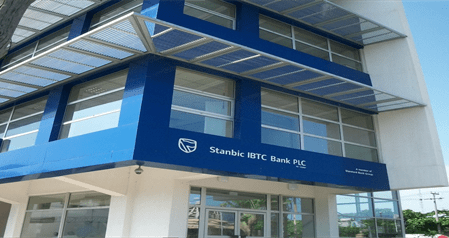
Stanbic IBTC Holdings is a member of Standard Bank Group. Standard Bank is Africa’s largest financial institution ranked by assets. Standard Bank Group merged its Nigerian operations, Stanbic Bank Nigeria with that of IBTC Chartered Bank PLC in 2007 to create Stanbic IBTC Bank PLC. The merger was executed by way of the first ever tender offer in Nigeria and a $525 million FDI, the largest in Nigerian financial history.
Stanbic IBTC Bank through its wholly owned stockbroking and asset management subsidiary, Stanbic IBTC Asset Management Limited has several excellent mutual funds including the Stanbic IBTC Nigerian Equity Fund, which is Nigeria’s largest mutual fund. Stanbic IBTC Pension Managers Limited is a licensed Pension Fund Administrator (PFA) set up with the primary objective of delivering quality pension fund administration and management services to both private and public sector employees.
The corporate and investment banking offering includes global markets, project and structured finance, equities trading, corporate finance, global custody and numerous transactional and electronic banking solutions. As part of Africa’s largest bank, we are able to give our clients access to expertise and on the ground presence across the globe – a vital service with the ever increasing global requirements of business.

Stanbic IBTC Bank continues to play a significant role in some of the largest capital markets deals not only in Nigeria but in the continent as well. Stanbic IBTC Bank was involved with Standard Bank London and Afrinvest as lead arrangers of the historic $350 million Eurobond issue for GT Bank. More recently, together with our parent company, Standard Bank, we put together the largest telecommunications deal ever in Africa – a two billion dollars syndicated loan for MTN Nigeria.
DOUBLE DIGIT GROWTH IN GROSS EARNINGS
Gross earnings increased by 11 percent to N68.30 billion in June 2015 from N61.71 billion in June 2014. The growth was attributable to an increase in interest income by 23 percent year on year (yoy). Interest income moved to N41.71 billion in the period under review as against N34 billion last year over the period as a result of increased lending to businesses in the oil and gas and manufacturing sector. Additionally, strong increase in trading securities and financial assets and growth in interbank also contributed to the increase in interest income.
However, interest expenses grew by 78 percent to N19.58 billion in June 2015 as against N11.020 billion the same period of the corresponding year 2014. Net interest income were down by 4 percent to 22.13 billion in June 2015 as against N22.97 billion in June 2014.
Pending reasons from management, we attribute the growth in interest expense to the high interest rate environment bedeviling lenders Africa largest economy.

The Central Bank decided to set a unified cash reserve ratio for public- and private-sector funds at 31 percent to improve the transmission of monetary policy. Previously, the rate for private-sector funds was 20 percent and 75 percent for public funds. The Apex bank said the policy is to curb inflation and protect the foreign reserve from a one or two punch it has been receiving due to the drop in oil price.
SPIRALING IMPAIRNMENT CHARGE AND LOW EFFICIENCY A DRAIN ON PROFITABILITY.
After-tax profit fell by 40 percent to N9.69 billion in June 2015 compared with N16.18 billion over the period. Pretax profit dropped by 52 percent to N9.37 billion in the review period compared with 19.94 billion over the period. Operating expenses were up by 7 percent to N31.04 billion as against N29.11 billion as at June 2014; driven by a 3 percent rise in staff costs to N13.47 billion in 2015 from N13.05 billion the preceding year. Adding to the rise in operating expenses is a 9 percent increase in other operating expenses to N17.57 billion in June 2015 from N16.06 billion as at June 2014.
The fall in the bank’s profitability may not be unconnected to the drop in credit impairment charges in the review period. Credit impairment charges surged by 449 percent to N7.89 billion in the review period compared with N1.43 billion the corresponding period of last year.
Stanbic’s cost to income ratio moved to 64.58 percent in the period under review as against 58.17 percent over the period. This simply means the lender is less efficient in cutting costs, a situation that further explains the drop in profitability. Net margin, another measure of profitability and efficiency were down to 14.18 percent in June 2015 from 26.22 recorded last year.
SINGLE DIGIT GROWTH IN TOTAL ASSETS CAUSED BY DECLING LOAN GRWOTH.
The bank’s total assets increased by a single digit 9 percent to N1.03 trillion in June 2015 from N944.54 billion in June 2014; caused by slow growth in loans and advances. Loans and advances jumped by a mere 3 percent to N409.90 billion in the period under review compared with N398.60 billion in June 2014. On the other hand, deposits from customers were up by 22 percent to N601.73 billion in June 2015 from N494.93 billion the same period of the corresponding year.
SHARE PERFROMANCE
The bank’s share price rose by 1.83 percent to close at N23.98, 11:52 am on the NSE. Market capitalization was N235.50 billion on the sam day.
Stanbic has proposed an interim dividend of N0.90 per share which is below our N1.16 forecast and around -18% lower than the interim dividend paid in H1 2014. The dividend represents a yield of 3.64 percent. This means the lender has an aggressive dividend policy that will increase investors’ appetite for its shares. Stanbic’s share holder’s fund was N122.25 billion as at June 2015 and shareholding outstanding of 10 billion.
Bala Augie