|
Getting your Trinity Audio player ready...
|
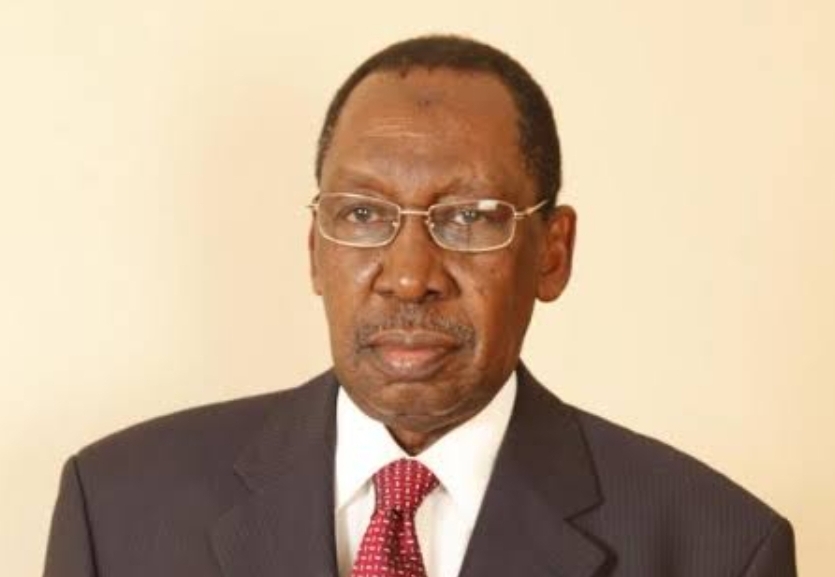
Justice Mohammed Lawal Uwais, a former Chief Justice of Nigeria, has died at the age of 89.
His passing was confirmed by a family source, who revealed that the retired jurist died on Friday, June 6, 2025, in Abuja.
Arrangements for his funeral prayer and burial are currently underway.
Born on June 12, 1936, Uwais served as the Chief Justice of Nigeria from 1995 until his retirement in 2006.

Read also: Uwais: Salute to a great jurist at 80
He was widely respected for his integrity and contributions to the legal and democratic systems of the country.
After stepping down from the bench, he was appointed by the late President Umaru Musa Yar’Adua to lead a high-level committee on electoral reform, a task he carried out with distinction.
Justice Uwais came from a notable background, being the son of the Chief Alkali and later the Waziri of Zaria Emirate.
His reputation for impartiality and legal acumen made him a natural choice to head the Electoral Reform Committee, which played a crucial role in proposing changes to Nigeria’s electoral system.

The committee submitted its report on December 11, 2008.
Among its key recommendations were the creation of independent commissions to handle electoral offences, constituency boundary reviews, and the registration and regulation of political parties.
It also proposed a shift towards proportional representation in elections at all levels of government.
Perhaps the most debated recommendation was the call for the head of the Independent National Electoral Commission (INEC) to be appointed by the judiciary instead of the President, in a bid to ensure greater independence and credibility.
This proposal was ultimately rejected by President Yar’Adua and, later, by the Senate’s Constitutional Review Committee, which cited concerns over the separation of powers.
Despite initial resistance, Acting President Goodluck Jonathan later sent the unaltered version of the Uwais Report to the National Assembly in March 2010, signaling a renewed commitment to electoral reform ahead of the 2011 elections.
However, controversy remained, particularly over who should have the authority to appoint the INEC chairman. Critics argued that judicial involvement in such appointments could compromise the judiciary’s role in adjudicating electoral disputes.
Justice Uwais’s legacy extends beyond the courtroom.
His work on electoral reform continues to influence public debate on how to build a more credible and transparent electoral system in Nigeria.
Tributes have been pouring in from across the legal and political spectrums, with many praising his lifelong dedication to justice, good governance, and institutional reform.
Uwais leaves behind a legacy of principled service and an enduring impact on Nigeria’s democracy.