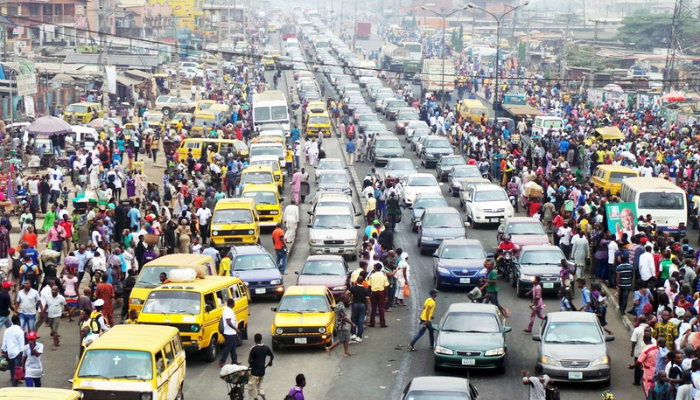
In many African nations, traffic congestion remains a pressing challenge with far-reaching implications. According to the 2025 Numbeo Quality of Life Index, several countries continue to struggle with heavy traffic, highlighting infrastructural and urban planning concerns.
Numbeo’s data, based on crowd-sourced input, ranks six African countries by their traffic index. The index measures overall congestion levels, factoring in commuting times, inefficiencies, and dissatisfaction.
Read also: Top 5 African cities with severe traffic at the start of 2025
Nigeria tops the list with a traffic index of 319.36, underscoring the notorious gridlock in cities like Lagos and Abuja. Kenya follows with an index of 271.25, reflecting persistent transport difficulties in Nairobi. Egypt, South Africa, Morocco, and Tunisia complete the list, each facing varying degrees of traffic-related strain.

It’s important to note that “Numbeo’s data shows the traffic index of just 6 African countries,” meaning this snapshot does not represent the entire continent. However, it offers insight into some of the urban centres where congestion is a daily hurdle.
In many of these locations, limited public transport options, rapid urbanisation, and poor road infrastructure contribute to worsening traffic. Addressing this issue will require sustained investment in mobility solutions, urban planning, and traffic management systems.
Read also: Top 10 African cities with the highest crime rates in early 2025
According to Numbeo, here are the top 5 African countries with the heaviest traffic in 2025
1. Nigeria
Traffic Commute Time Index: 65.3
Global Rank: 1st

Nigeria tops the list both in Africa and globally. Cities like Lagos and Abuja continue to experience high traffic volumes, with workers spending several hours commuting daily. Poor road networks, frequent vehicle breakdowns, and a lack of alternative transport systems are major causes. Many commuters leave home before dawn just to avoid long delays.
2. Kenya
Traffic Commute Time Index: 50.6
Global Rank: 5th
Kenya ranks second in Africa and fifth in the world. Nairobi remains the most affected city, with congestion made worse by ongoing construction projects and a high number of personal vehicles. Matatus (public minibuses) are commonly used, but often contribute to traffic build-up. The impact on productivity and mental health is being felt across the city.
Read also: 10 African countries with high crime rates in 2025
3. Egypt
Traffic Commute Time Index: 48.0
Global Rank: 7th
In Egypt, Cairo is the main centre of traffic delays. The country ranks third in Africa and seventh globally. Despite the presence of a metro system, the roads are often full, especially during peak hours. Traffic congestion is a regular part of daily life for millions of residents.
4. South Africa
Traffic Commute Time Index: 38.6
Global Rank: 27th
South Africa takes the fourth spot in Africa. Cities like Johannesburg and Cape Town are known for their busy roads. Although the country has better infrastructure compared to others in the region, increasing car ownership and population growth continue to put pressure on the road network. Delays on highways and city roads are common during rush hour.
Read also: Africa’s top 10 cities with the most alarming crime rates
5. Morocco
Traffic Commute Time Index: 35.2
Global Rank: 44th
Morocco ranks fifth in Africa and 44th in the world. Casablanca and Rabat see the most significant traffic problems. Urban sprawl and limited investment in public transport have led to increased dependence on cars. The result is slow movement during peak periods, affecting both workers and businesses.