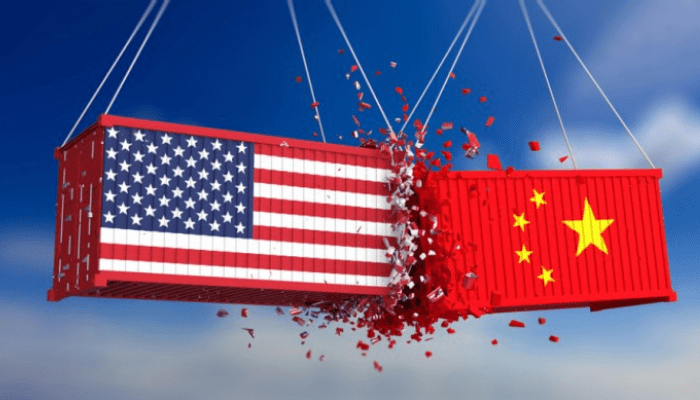
Less than a month after reaching a truce in their latest trade standoff, the U.S.-China trade agreement is showing signs of strain. U.S. President Trump and other senior officials have accused China of breaching key terms of the agreement, raising concerns that the deal could soon unravel.
According to Donald Trump, China “totally violated” the terms of the agreement. In a post on his social media platform, Truth Social, Trump said,
“I made a fast deal with China in order to save them from what I thought was going to be a very bad situation, and I didn’t want to see that happen. Because of this deal, everything quickly stabilised and China got back to business as usual. Everybody was happy! That is the good news,” Trump continued. “The bad news is that China, perhaps not surprisingly to some, HAS TOTALLY VIOLATED ITS AGREEMENT WITH US. So much for being Mr. NICE GUY!”
According to American news reports, the fallout is attributed to export controls imposed by the Chinese government. China currently accounts for more than 90 percent of the world’s rare-earth minerals, and these elements are a key input in the automotive industry. Since the trade war began, China has implemented highly restrictive policies on rare earth exports to the US and Europe. The New York Times notes that since the export controls started, some American car factories have had to slow down their operations, and in one case, temporarily pause operations.

However, China alone is not complicit. Just one day after the May 12 truce, the U.S. Department of Commerce imposed new export restrictions on advanced AI chips destined for Chinese tech giant Huawei. Then, on May 28, the U.S. President further escalated tensions by halting the sale of critical American technologies to China, including those used in jet engines, semiconductors, and select chemical compounds.
Read also: US-China trade war could cut global GDP by 7%, warns Okonjo-Iweala
Tariff uncertainty in the US
Amid escalating tensions between the U.S. and China, the U.S. Court of Appeals on May 29 issued a temporary stay on a prior ruling by the U.S. Court of International Trade. The earlier ruling had declared the sweeping tariffs imposed by the Trump administration as unlawful.
While the U.S. continues trade talks with various countries, the implementation of these agreements has encountered significant hurdles. For instance, despite the U.S.-UK trade deal signed on May 9, former President Trump imposed a 50 percent tariff on steel imports into the U.S., casting doubt over the agreement, which had initially eliminated tariffs on UK steel and aluminium.

A key component of the deal also called for increased British imports of U.S. agricultural products. However, the UK has shown resistance, particularly over concerns about lowering animal welfare and food safety standards to accommodate the terms.
Ultimately, the U.S. shows no signs of easing its aggressive tariff policies, leaving many trade partners grappling with the unpredictability of shifting American positions. That said, financial markets appear to be growing less reactive to such tariff announcements, having become somewhat accustomed to the volatility.
The market is now less reactive
After Donald Trump’s liberation day announcements on April 2, the market reacted with a wave of bearish movements. Just a week after the Liberation Day, the S&P 500 index declined by about 13 percent to hit an almost 52-week low. Since April 8, the market has bounced back to close to its February all-time high.
Despite Trump’s remarks about China, Monday morning trading data showed a more muted reaction from markets. The S&P 500 futures is responding less bearishly to the potential breakdown of the trade deal.