|
Getting your Trinity Audio player ready...
|
Ghana, the West African nation that defaulted in 2022, is set to outperform peers from Latin America to Asia as it delivers best dollar-bond returns in May, reflecting renewed investor confidence in its economic management.
According to Bloomberg data, Ghana’s dollar bonds returned 8.7% in May alone, dwarfing the emerging-market average of just 0.4%.
The country’s dramatic turnaround is fueling optimism that its long and painful restructuring process, backed by the International Monetary Fund (IMF), may finally be bearing fruit.
A long climb back

Ghana’s debt crisis was years in the making. After a decade of borrowing to finance ambitious infrastructure and social programmes, combined with overdependence on gold, cocoa, and oil exports, the continent’s biggest cocoa producer was hit hard by COVID-19 and the global inflation surge that followed Russia’s invasion of Ukraine.
Public debt ballooned to $50.4 billion as of June 2024, and interest payments consumed more than 70 percent of government revenues, a situation that left the citizens reeling from a brutal cost-of-living crisis.
Facing dwindling foreign reserves and spiralling inflation that rose to its fastest in more than two decades, the gold major exporter requested IMF assistance and halted payments on most external debts in late 2022.
A $3 billion IMF programme was approved in May 2023, contingent on fiscal reforms and debt restructuring.
“The key has been credibility,” says an economist at Lagos-based investment firm. “The government has stuck to the IMF’s reform path—cutting spending, boosting tax revenues, and increasing transparency. Investors have taken notice.”

Read also: It is up up for Ghana as debt burden is eased by surprise Cedi surge
Investor confidence rebounds
The rebound in investor sentiment comes as S&P awarded Ghana a CCC+ rating from the previous Selective Default rating. This puts Ghana’s credit rating one notch above the Caa2 assigned by Moody’s in October 2024.
Progress on restructuring bilateral and commercial debts, especially with Eurobond holders, has reassured investors that Ghana is committed to restoring debt sustainability.
“Markets love momentum and narratives,” says Abimbola Durotoye, a capital market analyst in Lagos. “Ghana has shifted its story from one of risk and uncertainty to one of policy discipline and engagement with creditors. That’s powerful.”
Indeed, recent reforms have yielded early wins. Inflation, which peaked at 54 percent in December 2022, has fallen for the fourth consecutive month and its lowest in eight months to 21.2 percent in April, the cedi has stabilised too.
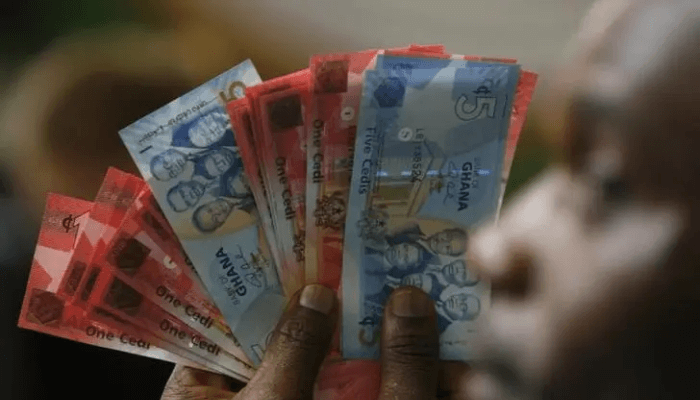
The currency rallied massively by 21 percent since November 2024 but with most of the gains, amounting to about 17 percent since early April 2025, data from Renaissance Capital Africa shows.
Ghana’s fiscal deficit is expected to narrow to 3.1 percent of GDP in 2025 from a 3.9 percent deficit in 2024, buoyed by steep spending cuts this year to recover the economy.
“Our base case is that the government will improve the fiscal picture,” Renaissance Capital Africa (RenCap), a Lagos-based investment firm said in a research note recently.
Challenges remain
Still, risks persist. Talks with bondholders have dragged on longer than expected, with disagreements over the scale of nominal haircuts.
“The local currency bond story is also not as exciting as it was. There was potential for 15% real currency appreciation when the cedi was cheap two months ago, to add to the local currency bond gains from falling inflation. Potential foreign investors have now lost some of that insurance,” RenCap noted in its report.
“For now, we recommend investors be neutral on Ghana’s external debt, and foreign investors might still be more bullish on cheap currencies with much higher local real rates,” it added.
Despite these headwinds, Ghana’s recent performance in the bond market is a rare bright spot in Africa’s sovereign debt landscape, where several countries—Zambia, Ethiopia, and Malawi—remain in or near default.
For investors who once shunned Ghanaian debt, the turnaround is proof that a disciplined path, though politically difficult, can yield dividends.