In principle, yes. However, since the Great Schism of 1054, which split Christendom into West (Catholic) and East (Orthodox), there has been mutual suspicion between the two traditions. While recent decades — especially after the Second Vatican Council — have seen Roman pontiffs making efforts toward unity, deep-rooted historical and theological divides remain.
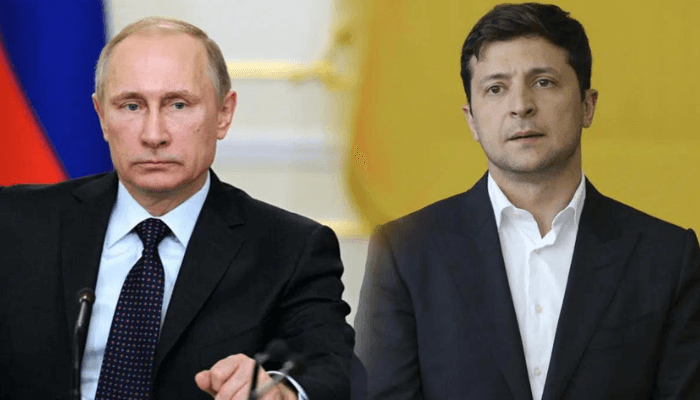
Putin was reportedly baptised into the Orthodox Church as an infant and, though perhaps only nominally, identifies as an Orthodox Christian. In principle, the war between Ukraine and Russia is essentially a war between two Orthodox nations. Within Orthodoxy, there is a recurring wariness of Catholic missionary and evangelising activities, particularly in regions the Orthodox consider their own.
The religious dynamics in Ukraine are further complicated by the fact that Kiev is regarded as the cradle of Russian Christianity and national identity, tracing back to the baptism of Emperor Vladimir the Great in 987 AD. The war has also deepened an ecclesiastical rift between the Patriarchates of Moscow and Kiev. Although Kiev holds historical seniority, Moscow has long regarded it as under its ecclesiastical jurisdiction due to its political prominence and demographic size.
Moreover, some Orthodox communities have broken away and accepted the primacy of Rome, joining the Eastern Rite churches in full communion with the Pope. This complex mosaic of religious and national identities highlights the sensitive geopolitical and theological dimensions at play in the conflict.

The Pope’s offer to mediate may be received with suspicion or outright rejection — especially by hardline Russian politicians and elements within the Orthodox clergy — who might view him as a rival or opportunistic usurper. The Russian Orthodox Church, after all, functions as the de facto official religion of the Russian state.
Still, in this era of divine surprises and improbable breakthroughs, perhaps our collective prayers can help guide all parties toward a just and lasting peace.
Daniel Nyambi (Jnr), May 2025