A recent BusinessDay poll on Nigeria’s power sector has found that most citizens have yet to see any improvement in electricity supply, despite the recent hike in tariffs.
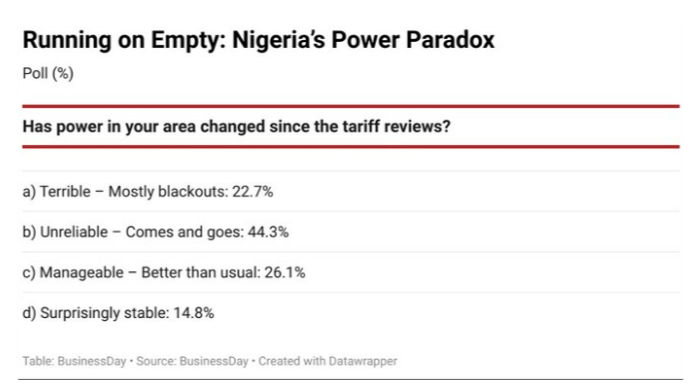
The survey asked respondents whether power supply in their area had changed since the revised tariffs took effect. Only 14.8 percent said it had become “surprisingly stable,” while 26.1 percent described it as “manageable” or “better than usual.”
However, 44.3 percent said electricity still “comes and goes,” and 22.7 percent reported experiencing “mostly blackouts.” In total, 67 percent of respondents said they continue to face unreliable or poor supply, even as they pay more under the new pricing regime.
Read also: Running on empty: Power cuts dim Nigeria’s biggest asset

In April, the Nigerian Electricity Regulatory Commission (NERC) introduced a cost-reflective tariff model. Customers in Band A– those expected to receive at least 20 hours of power daily– now face significantly higher rates. Yet, many Nigerians say the promised service levels have not been delivered.
The poll results underscore a growing concern that tariff increases alone cannot resolve Nigeria’s deep-rooted power challenges. Without consistent supply, higher costs risk worsening the financial burden on households and businesses alike.
The electricity subsidy removal is a policy that is expected to improve liquidity in the sector and attract investments but there’s still a huge gap to be filled by the biggest power consumers who have abandoned the grid.