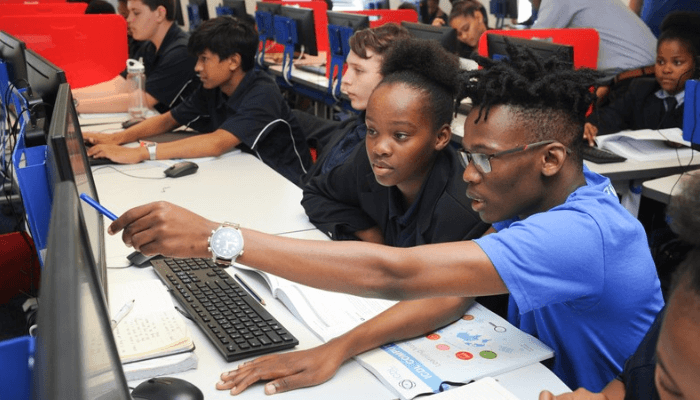
The vibrant pulse of Africa is undeniable. With 75 percent of our population projected to be under 30 by 2030 and two-thirds under 25 by 2050, our continent is a powerhouse of youthful energy and potential. This demographic dividend, this incredible “youth bulge”, is our greatest asset. It holds the key to transforming our economies, enriching our societies, and propelling Africa to global leadership. Yet, this immense potential also highlights a critical need: how do we ensure that the core services of health, education, and beyond, which form the bedrock of a young person’s well-being, truly serve and meet their evolving needs?
“Bringing experimentation to entertainment media means we are not only telling stories; we are crafting interventions.”
The power of playful learning
This is where “edutainment” enters the conversation, not as a fleeting trend but as a robust and proven strategy. Edutainment, the ingenious fusion of entertainment and education, leverages the very media that captivates our youth, i.e., movies, TV shows, social media, music, and games, to deliver powerful messages and drive positive change. In a world grappling with complex global challenges, where conventional communication methods often fall short, the rise of the internet and mobile technology presents an unprecedented opportunity. And the ability of edutainment to forge deep emotional connections, significantly alter attitudes, and inspire widespread behavioural shifts, which positions it as a “Best Bet” innovation in development practice.
My work has brought me face-to-face with the immense power of connection, and I’ve learnt that true impact often lies in meeting people where they are. For our youth, “where they are” is increasingly within the digital sphere, engaging with compelling narratives and interactive experiences.

Proven impact and scalable solutions
Consider the groundbreaking work that has already been achieved. A study co-authored by Nobel Laureate Professor Abhijit Banerjee, focused on the TV drama MTV Shuga, revealed astonishing results in sub-Saharan Africa: a doubling of HIV testing rates, a halving of sexually transmitted infections, and a significant reduction in violence. These are not simply statistics; they represent lives saved, futures secured, and communities strengthened. In northern Nigeria, a five-day intervention combining community screenings with smartphones preloaded with gamified literacy apps reshaped gender norms, reduced teenage pregnancies, and improved learning outcomes. These examples powerfully illustrate the cost-effectiveness and profound reach of edutainment in tackling some of our most pressing global challenges.
The beauty of edutainment lies in its versatility. It transcends sectors, aligning with multiple Sustainable Development Goals (SDGs) by advancing girls’ education, promoting sustainable practices like solar lantern use, improving financial literacy, addressing violence against women, and combating the spread of diseases like HIV/AIDS.
Bringing experimentation to entertainment media means we are not only telling stories; we are crafting interventions. We are leveraging the universal appeal of storytelling to deliver vital information in a way that resonates deeply and inspires action.
Read also: Youth with creative edutainment business desires scaling up

Forging strategic partnerships
My experience at eHealth Africa, leading partnerships and programmes, has further solidified my conviction in the power of collaboration. Just this past Thursday, May 22nd, in Nairobi, this conviction was vibrantly reinforced as I co-hosted/moderated our side event at the Africa Soft Power Summit on ‘Edutainment: a creative solution for social impact in Africa?’ The energy in the room, bringing together innovators, researchers, and experts from across the creative, technology, and health sectors, truly underscored how the edutainment ecosystem thrives on global partnerships to achieve shared goals. We saw live demonstrations from pioneers like Usiku Games and Black Rhino VR and received compelling insights from organisations such as the Population Council and SHUJAAZ. Critically, our panel discussion, featuring leading innovators like AIfluence, Reach Digital Health, and Nigeria’s own BellaNaija, illuminated how diverse expertise converges to drive measurable behaviour change. These conversations mirrored the high-level dialogues driven in prestigious global forums, from major economic gatherings to the UN General Assembly, all aimed at influencing policy and driving further investment in this vital space.
The future of edutainment, especially in Africa, is intrinsically linked to the burgeoning access to smartphones and the internet in emerging markets. This digital revolution empowers us to reach billions and accelerate progress towards the SDGs.
Investing in Africa’s future
The urgent need for these innovations is underscored by the data on African youth. The 2019 Status of African Youth Report (SoAYR) by the African Union Commission paints a clear picture. Although youth unemployment and the number of youth not in education, employment, or training (NEET) remain concerns, the overall trajectory for African youth is one of immense opportunity, provided we make the right strategic investments.
The African Union Demographic Dividend (AUDD) Roadmap, with its four pillars of Employment and Entrepreneurship, Education and Skills Development, Health and Well-being, and Rights, Governance, and Empowerment, provides a critical framework. Edutainment directly contributes to all these pillars by creating innovative pathways for learning, fostering healthier behaviours, and empowering youth to be active participants in their own development and governance.
We must also acknowledge that the enabling environment, encompassing transparency, good governance, and equity, is paramount. Even though quantifying this can be challenging, the existence of national youth policies and ensuring youth voter eligibility are critical starting points. However, as the SoAYR highlights, many countries still need to ratify the African Youth Charter or develop national-level youth charters that truly reflect the current realities of our young people. Herein lies the transformative power of edutainment. It transcends policy documents and empowers youth to internalise and champion the values of good governance, health, and education through engaging content.
The future of Africa rests on the shoulders of its youth. To truly harness this demographic dividend, we must invest in their well-being, their education, their health, and their empowerment in ways that are both innovative and deeply resonant. Edutainment is not merely a tool; it is a catalyst for transformation, a bridge to a brighter future, and a powerful testament to our consistent belief in the potential of the African continent.
Ota Akhigbe is the Director of Partnerships and Programmes at eHealth Africa, a strategic advisor, and a passionate advocate for sustainable development. She is committed to leveraging innovative solutions and forging powerful collaborations to drive positive change across the African continent.