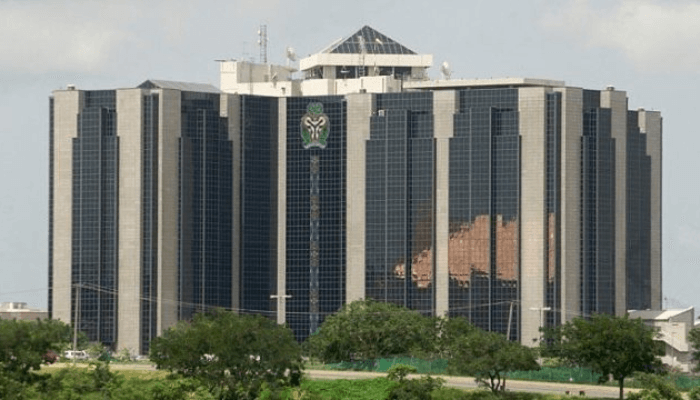
A series of far-reaching policy reforms by the Central Bank of Nigeria (CBN), including bank recapitalisation, the introduction of an electronic FX matching platform, a new FX Code, and the deployment of tighter monetary policy, have collectively strengthened Nigeria’s financial system.
These measures have not only reinforced the resilience of the banking sector but also set the broader economy on a trajectory of sustainable growth.
Despite persistent global and local economic headwinds, Nigeria’s financial sector has remained stable and robust. The CBN’s exchange rate unification policy, for instance, has narrowed the gap between the official and parallel market rates, marking a significant stride towards market efficiency.
Pius Deji Olanrewaju, President and Chairman of Council at the Chartered Institute of Bankers of Nigeria (CIBN), emphasised the resilience of Nigerian banks amid macroeconomic challenges including inflation, currency volatility, and national and international shocks.

Under the leadership of Olayemi Cardoso, governor of the CBN, the apex bank has doubled down on its commitment to supporting the federal government in achieving its economic goals through a multifaceted reform strategy. These reforms have targeted key areas such as foreign exchange management, banking sector stability, and payments modernization.
One of the most impactful reforms was the unification of the multiple exchange rates into the Investors and Exporters (I&E) forex window. As a result, transactions such as medical bills, tuition fees, Business Travel Allowance/Personal Travel Allowance, and Small and Medium Enterprise (SME) imports are now processed through a more transparent and standardised channel. The reinstatement of the “Willing Buyer, Willing Seller” model within the I&E window further boosted market confidence.
This new transparency has brought market stability. Currently, the naira trades at N1,599\$1 at the official window compared to N1,605\$1 on the parallel market, an extremely narrow spread that underscores the effectiveness of these measures.
While acknowledging the progress, the CBN has assured both domestic and international stakeholders of its commitment to rebuilding Nigeria’s economic buffers and reinforcing long-term resilience.
To confront inflationary pressures head-on, the apex bank aggressively tightened monetary policy, raising the Monetary Policy Rate by 875 basis points to 27.5 percent in 2024. This decisive move aimed to rein in inflation and stabilise the economy.

In tackling the fragmented FX regime, where over $7 billion in unmet obligations once threatened investor confidence, the CBN took swift action. Not only were the outstanding backlogs cleared, but new mechanisms were introduced to prevent future occurrences.
These initiatives have already started bearing fruit. Fitch Ratings upgraded Nigeria’s long-term foreign-currency issuer default rating (IDR) from negative to stable. These signals improved economic confidence, enhances the country’s ability to attract foreign capital, and enables borrowing at more favourable terms.
Fitch highlighted Nigeria’s shift to orthodox economic management since June 2023, noting that reforms such as exchange rate liberalisation, tight monetary policy, the end of deficit financing via the CBN, and the removal of fuel subsidies have collectively improved economic coherence and reduced macroeconomic vulnerabilities.
Read also: CBN on rates hold, timely against global disruptions – CPPE
Sustained Battle Against Inflation
Data from the National Bureau of Statistics (NBS) showed that Nigeria’s inflation rate declined to 23.7 percent in April 2025 from 24.2 percent in March, reflecting some progress in the fight against inflation.
Speaking on the issue, Cardoso noted, “We recognise that inflation remains the most disruptive force to the economic welfare of Nigerians. Our policy stance is firmly focused on bringing inflation down to single digits in a sustainable manner over the medium term. Our goal is to restore price stability, protect household purchasing power, and lay the foundation for long-term investment.”
He also reiterated that a key component of the reform is maintaining a market-determined exchange rate regime. “We have embraced market-driven pricing for the naira, significantly enhancing transparency and restoring investor confidence. Thanks to disciplined reforms and policy clarity, the naira has stabilized at a more sustainable level against the U.S. dollar,” Cardoso stated.
“The once-wide gap between the official and parallel market rates has all but disappeared, a first in Nigeria’s recent history, and speculative arbitrage has all but vanished. This renewed stability has restored confidence and spurred autonomous inflows through formal channels. These inflows are diversifying our foreign exchange sources beyond oil.”
Bank Recapitalisation Driving Inclusive Growth
The ongoing recapitalisation of Nigerian banks, another major pillar of the reforms, is designed to ensure financial institutions can take on greater lending risks, especially in underbanked areas.
Cardoso explained, “This strategic move ensures that banks are well-capitalised, enabling them to take on greater risks, particularly in underserved markets. With stronger capital bases, banks can provide more loans and financial products to Micro, Small and Medium Enterprises (MSMEs), rural communities, and other vulnerable segments that have previously struggled to access formal financial services.”
Launched on April 1, 2024, the recapitalisation exercise is set to conclude on March 31, 2026. Under the initiative, banks must meet new capital thresholds: N500 billion for international banks, N200 billion for national banks, and N50 billion for regional banks.
Cardoso described the policy as a tool not only for financial stability but also for economic inclusion. “By enabling banks to extend more credit to MSMEs, we enhance job creation and productivity. Furthermore, with increased capital, banks can invest in technology and innovation, crucial for driving digital financial services such as mobile money and agent banking. These technologies are key to breaking down geographic and economic barriers, bringing financial services to even the most remote areas.”
During a recent event, the CBN unveiled key initiatives including the Women Financial Inclusion Dashboard, the Women Entrepreneurs Finance Code, and a Financial Inclusion Strategy for Forcibly Displaced Persons.
In further support of FX market integrity, the apex bank launched the Nigeria Foreign Exchange Code (FX Code), which aims to ensure fairness, transparency, and efficiency in the forex market. The code is anchored on six principles: ethics, governance, execution, information sharing, risk management and compliance, and confirmation and settlement processes.
Read also: CBN holds key rate on hazy global outlook
Backward Integration Takes Center Stage
Nigeria is also at a critical juncture where promoting local manufacturing is becoming increasingly vital. Reducing reliance on imports not only supports the naira but also boosts job creation and economic sustainability.
Cardoso underscored this during a visit by the Airtel Africa management team led by Sunil Taldar, Group CEO. The CBN governor emphasised the need for telecom operators to embrace backward integration by locally producing key components like SIM cards, cables, and towers to reduce pressure on foreign exchange reserves.
He noted that over the last 16 months, the apex bank has stabilised the FX market, strengthened the naira, and created a more favorable investment environment. Taldar, in response, praised the CBN’s reforms and reaffirmed Airtel’s commitment to supporting local production and driving financial inclusion through technology.
Gbolahan Awonuga, executive secretary of the Association of Licensed Telecommunication Operators of Nigeria (ALTON), also called on more Nigerian businesses to invest in local manufacturing within the telecoms space.
Stakeholders Speak on the Reforms
The World Bank projects that Nigeria’s economy will grow by 3.6 percent in 2025. Alex Sienaert, the Bank’s lead economist for Nigeria, commended the Federal Government for implementing reforms that have helped stabilise the economy.
He noted that for growth to be inclusive, Nigeria must expand social protection measures such as cash transfers. “Nigeria is no exception, particularly since public resources remain constrained. A useful strategy is to position the public sector to play a dual role as a provider of essential public services, especially human capital and infrastructure, and as an enabler for the private sector to invest, innovate, and grow the economy,” Sienaert said.
However, the World Bank warned that Nigeria’s economy would need to grow five times faster to achieve the $1 trillion target by 2030 and tackle rising poverty.
Muda Yusuf, CEO of the Centre for the Promotion of Private Enterprise (CPPE), praised the reforms but urged the government to implement fiscal and tax incentives to cushion the impact on businesses and vulnerable groups. “We need to see more fiscal and tax incentives to drive recovery of growth sectors of the economy and mitigate the pains of the current reforms,” he said.
Uju Ogubunka, former registrar of the CIBN, acknowledged the bold decisions on subsidy removal and FX reforms but urged the government to ensure palliative measures are more effectively delivered to the people. “Government should find a better way of ensuring the palliatives go round and provide longer-term benefits to the people,” he stated.
Also speaking, Aminu Gwadabe, president of the Association of Bureaux De Change Operators of Nigeria (ABCON), called for broader participation in diaspora remittance operations. He suggested re-admitting BDCs into the forex policy framework to deepen dollar inflows.
In spite of the tough decisions and their immediate costs, Nigeria is increasingly gaining recognition as a rising economic force. The path is tough, but with a renewed focus and commitment to reform, the nation appears to be on the path to sustainable economic growth and resilience.