Stakeholders in the education sector have decried the current exclusion of private universities from the Tertiary Education Trust Fund (TETFund ) and advocated for a legislative amendment to expand the Fund’s coverage to include private institutions.
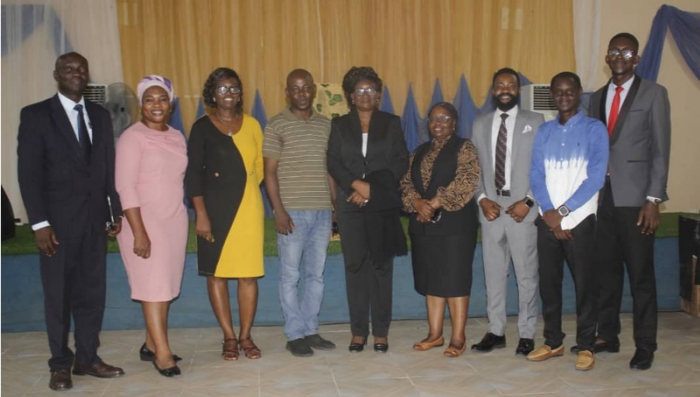
Speaking at an international symposium themed ‘Harnessing Multi-disciplinary Research and Innovation for Sustainable Development held at KolaDaisi University, Ibadan (KDU-I) which attracted hundreds of participants both on-site and online, the stakeholders acknowledged the growing contribution of private universities to Nigeria’s educational landscape, hence the need to get support from TETFund.
Olajumoke Morenikeji,professor and Deputy Vice Chancellor of KDU-I,in her opening remarks stated that “a fair and realistic middle ground should be reached in the ongoing national debate over whether the Tertiary Education Trust Fund (TETFund) should extend support to private universities, one that respects the concerns of the Academic Staff Union of Universities (ASUU) while recognizing the growing contribution of private universities to Nigeria’s educational landscape. TETFund is the primary and most significant funding mechanism used by the Federal Government to support public universities in Nigeria.
“Rather than direct funding for infrastructure or operations, which are typically seen as the responsibilities of private institutions, TETFund could focus its support on research-based and capacity-building initiatives that align with national priorities. This would allow private university academics to access competitive research grants, participate in TETFund-sponsored training programs, and contribute to collaborative research projects that address critical developmental challenges facing the country.

Olajumoke opined that such support should come with strict oversight and transparency. Funds should be awarded through a merit-based process, ensuring that only high-impact, nationally relevant research proposals receive funding. Private universities would not receive direct infrastructural or capital development support, thereby preserving TETFund’s core mandate of strengthening the public tertiary education system.
The DVC however, emphasized that while public funding is critical, private universities can still access research funds through alternative means such as collaborative research with public institutions, international and private sector grants, internal funding, and philanthropic support.
‘Funding bodies often prefer collaborative projects because they show a stronger potential for success and societal benefit. Collaboration makes proposals more competitive,’ she noted. Highlighting the benefits of collaboration—including knowledge advancement, resource sharing, and increased research impact, she added.
Morenikeji added, that ‘many pressing issues—like climate change, public health, or AI ethics—require multidisciplinary and international efforts that no single institution can tackle alone.’
The well-attended event reaffirmed , she stated that KolaDaisi University’s commitment to holistic student development, cutting-edge research, and academic excellence.

“As this is another giant stride toward the realization of its vision to ‘become a world-class institution committed to producing graduates capable of addressing the socio-economic needs of a knowledge-driven economy’,.
Paige Martin, a doctorate degree holder and Team Lead for User Training at Australia’s Climate Simulator (ACCESS-INRI), Australian National University, echoed these sentiments.
Read also: ASUU asks NASS, FG to strengthen TETFund, not replace it with NELFund
“Her 40-slide presentation delved into the theoretical and practical dimensions of international collaboration, citing examples such as NASA’s Open Science Curriculum and the West African Coastal Ocean Environment Summer School (COESSING) in Nigeria and Ghana. She emphasized that meaningful collaboration takes time, effort, and strategic relationship-building.
Speaking for the Africa Oxford Initiative (AfOX), David Onyango Owino elaborated on AfOX’s mission to foster equitable, multidisciplinary partnerships between Oxford University and African institutions, he introduced attendees to various fellowship and research support opportunities under AfOX, urging researchers to continually add value to themselves and their collaborations to maximize research impact.
A particularly engaging and practical session was led by Kudus Oluwatoyin Adebayo of the Diaspora Transnational Studies Programme, Institute of African Studies, University of Ibadan.
In his presentation, “Accessing and Winning Research Grants,” was tailored especially for undergraduates, early-career researchers, and PhD students—the majority of the symposium’s on-site attendees, Adebayo. a doctorate degree holder outlined various funding opportunities, including post-doctoral fellowships, travel grants, and academic sponsorships. Drawing from his own academic journey, he demonstrated how scholars can leverage grants and scholarships to build robust academic careers.
He explained the distinctions among different types of research funding—grants, scholarships, and fellowships—and advised participants on key application strategies: building a strong academic profile, articulating clear goals, writing compelling proposals, preparing realistic budgets, and adhering to timelines. He also provided a curated list of funding sources and useful websites for further exploration.
The symposium concluded with a lively questions and answers session and a strong sense of enthusiasm among participants. Attendees left with a renewed commitment to research, a deeper understanding of collaborative opportunities, and practical knowledge on securing funding.