For decades, Nigeria has battled with the reputation of being a dumping ground for counterfeit goods made abroad. Now, new research suggests that the country is not only a recipient, but emerging as complicit in a kind of trade that is as profitable as it is problematic.
A joint study by the Organisation for Economic Co-operation and Development (OECD) and the European Union Intellectual Property Office (EUIPO), which maps global trade in fakes, has placed Africa’s most populous nation in an uncomfortable spotlight.
The report ranked Nigeria among the top 20 ‘provenance economies’ for counterfeit goods in 2020 and 2021, based on the number of customs seizures and share of seized value obtained from the World Customs Organisation (WCO), the European Commission’s directorate-general for Taxation and Customs Union and the United States Department of Homeland Security (DHS).
The country had an average General Trade-Related Index of Counterfeiting Economies (GTRIC-e) score of 0.611 out of the highest attainable score of one. This score means there’s a high likelihood that fake products making their way into Western markets came from or passed through Nigeria.

Fakes in this context mean ‘counterfeit’ and ‘pirated’ tangible goods that infringe upon trademarks, design rights, or patents.
Read also: How Nigeria can curb spread of counterfeit products – Experts
“The findings are concerning,” the report stated. In 2021, counterfeit and pirated goods accounted for up to 2.3 percent of trade, and worth $467 billion.
Of all confiscated goods, Nigeria was named as one of the African economies likely to be sources of counterfeit clothing, footwear, perfume and cosmetics products, especially into the European Union.
While Nigeria contributed under five percent to global customs seizures compared to economies like China, its emergence this year after a notable absence in the last report has stirred unease among observers.

“It’s a cause for concern,” said Femi Egbesola, president of the Association of Small Business Owners of Nigeria (ASBON), who admitted some disbelief. “It’s possible that this can happen, and it means the government should wake up, and those involved should know the effects of this. It must stop.”
Egbesola’s shock is not far-fetched. Nigeria has been battling counterfeit imports for a long time. The issue became more pronounced as the economy expanded, leading to increased trade and the infiltration of fake goods.
By the 1990s and early 2000s, authorities like NAFDAC and SON intensified crackdowns, particularly on counterfeit pharmaceuticals and consumer products, with Nigeria ranking among the top countries in Africa for counterfeit seizures.
However, despite enforcement measures, counterfeit trade remains a persistent issue due to economic pressures and gaps in regulation, what Egbesola called ‘backends.’
How do the products get out?
The modern counterfeit economy is decentralised, and disturbingly efficient.
Nearly 60 percent of fake goods seized globally arrived through the post. Small parcels, usually fewer than ten items, make up 79 percent of all seizures, often escaping customs scrutiny under ‘de minimis’ trade rules. These items are cheap, light, and labelled innocuously as gifts or household items.
A tactic, which the report called ‘localisation,’ involves exporting the products unassembled. The parts arrive unbranded, while the logos and packaging are shipped separately. Once reassembled, the result is nearly indistinguishable from the real thing. And they’re harder to trace.
“They are less likely to attract scrutiny if they are shipped unassembled and unbranded,” the research found.
The Nigerian Customs Intellectual Property Rights (IPR) unit is responsible for enforcing intellectual property laws at the border by preventing the import, export, and transshipment of counterfeit and pirated goods.
Abdullahi Maiwada, national customs spokesperson, told BusinessDay he suspects the items may have been mostly moved through airports.
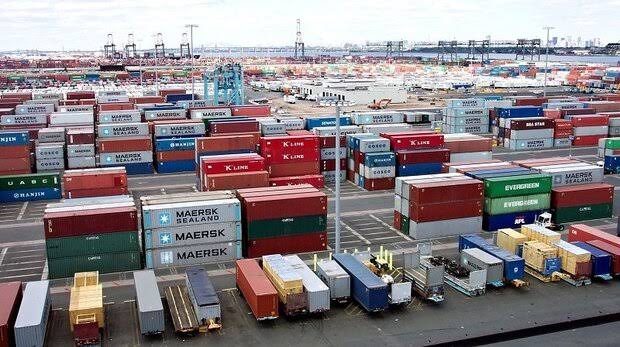
“If they are in parcels, then it’s likely they’re being moved through airports. That would be a potential pattern of movement because parcels have their own codes, have their own way of movement and different procedures, unlike conventional movement through the seaport,” he said.
Counterfeiters are also adapting faster than regulators can respond. The report reveals that fake goods are assembled in free trade zones or informal markets near destination economies.
With the rise of localisation, Nigeria’s free trade zones, designed to attract foreign direct investment, risk becoming safe havens for counterfeiters. But in the absence of strong oversight, they offer reduced scrutiny, providing exactly the kind of regulatory blind spot that counterfeit networks thrive on.
Maiwada said Customs is “developing officers with the technical know-how to identify counterfeit materials at the point of entry or at the point of entry or exit.”
Read also: Apapa’s largest terminal hits two-decade high in non-oil exports
Made in Italy/Nigeria
It is unclear how much of this trade originates from local manufacturers or whether Nigeria is primarily a transit country. But customs data referenced and seizure patterns suggest domestic complicity. And experts who spoke to the OECD believe local production, especially of items like clothing, footwear, and cosmetics, is quietly growing.
Aba Market, particularly the Ariaria International Market in Aba, Abia State, Nigeria, is one of the largest and most vibrant markets in West Africa. It is known as the ‘China of Africa’ with hundreds of thousands of artisans working in over 37,000 stalls specialising in shoemaking, leather works, fabrics, household goods, and pharmaceuticals.
The market is Nigeria’s biggest concentration of SMEs, known for its shoe and leather industry, which generates an estimated N144 billion annually, as a key player in Nigeria’s informal economy.
“In Aba, there are people who make shoes and all of those products and put labels on them using other people’s brands to sell products. We know this happens,” said Muda Yusuf, who runs the Centre for the Promotion of Private Enterprises (CPPE).
“When they’re exporting, they won’t put Nigerian labels. They put “made in Italy” or elsewhere,” he told BusinessDay, adding that the depreciation of the exchange rate may be an underlying driver.
But the problems are bigger than fake shoes or knock-off jerseys. The repercussions, according to the OECD, are lost jobs, unsafe goods, weakened institutions, and a threat to Nigeria’s reputation in global trade.
“It’s something to be worried about…It’s not good for our reputation,” Yusuf said.