|
Getting your Trinity Audio player ready...
|
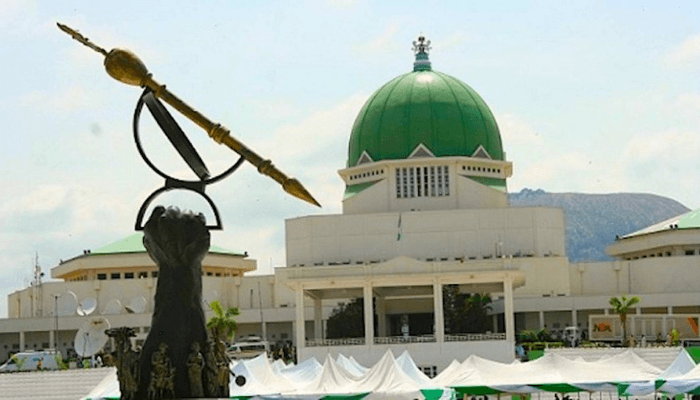
The lawmakers at the National Assembly must fashion out a better way of arriving at decisions on important and critical issues as the representatives of the people. The voice votes appear to be both anachronistic and moribund.
There seems to be a semblance of purposeful and intentional governance going on in Enugu State. It is a smart way of doing things, I tell you.
Let the voice votes die!
In what seems a pattern at the National Assembly, where voice votes are used to consign weighty issues to the dustbin of history, the members of the House of Representatives last Tuesday shredded seven constitutional amendment bills into a trash can without as much as considering the bills according to their individual merits.
The seven bills included a bill to allow for the rotation of the Offices of the President and the Vice President among the six geopolitical zones of the country; a bill to strip the Independent National Electoral Commission (INEC) of the powers of registration and regulation of political parties in Nigeria and transfer the same to the Office of the Registrar General of Political Parties; a bill to create the Office of the State Auditors-General for Local Governments and the Federal Capital Territory Area Councils; and the bill to provide for the number of judges of the Federal High Court to be not less than one hundred.

Others are bills to empower the National Judicial Council to fix and review, in conjunction with the National Salaries, Incomes and Wages Commission, the salaries, allowances, and other emoluments of judicial officers and staff of the judiciary and a bill to create Ughelli East Local Government Area in Delta State.
But with a voice vote that did not show a pattern of real voting, the lawmakers shut down all the bills.
Nigerians are becoming increasingly uncomfortable with the use of voice votes in deciding critical matters at the National Assembly; sometimes, the voice votes are said to be manipulated by the presiding officers to achieve a predetermined outcome.
The use of voice vote, as has been severally argued by many observers, runs against the grains of transparency and accountability in deciding weighty matters. It is also, in the estimation of many Nigerians, a betrayal of trust.
The presiding officers now hide under voice votes to railroad important legislation without allowing members of the House and senators to take a clear stance.

Read also: N’Assembly pledges support for APC’s Progressive Institute
What is difficult in having senators and members of parliament take a clear stand on important issues by voting openly and transparently, as is the case in the United States, the United Kingdom, South Africa, and a few other places?
The normal thing should be that elected representatives are held accountable for their actions and decisions on behalf of their constituencies and districts. A few posers are pertinent here:
Why do representatives of the people continue to take them for granted here in Nigeria?
Why would the House of Representatives decide to shred the bills collectively without considering them based on their individual merit? Why must the bills be lumped together and given a mass burial?
When will the National Assembly consider adopting a better voting method different from the predictable and flippant “ayes” and “nays”?
Not long ago, in the full glare of the camera, Senate President Godswill Akpabio hesitated in banging the gavel, as he received the response he did not expect.
It was on the issue of Natasha Akpoti-Uduaghan’s suspension. On that very occasion he repeated the question three times, and even when there were overwhelming and deafening ‘nays’, he hit the gavel, saying, “The ayes have it.” That was brazen, right in the full glare of the camera!
The voice vote practice negates the core of democracy, which is founded on the principles of transparency, accountability and representation. When elected representatives fail to take a clear stance on important issues, they fail to represent the interests of their constituents. This is a betrayal of the trust reposed in them and a subversion of the democratic process.
With such a cacophony of voices, there is no way citizens can track how their representatives are voting on important and critical issues that concern them.
In this era of technology, is it rocket science for the National Assembly to come up with a more intelligent way of voting and knowing where a lawmaker really stands on a given matter?
Shouldn’t there be a device fixed close to the microphones of individual lawmakers that, at the touch of a button, can display the choice of identifiable voters on the screen, which can then be counted to determine those who are really for or against an issue on debate?
The other day, Nigerians watched in awe as the federal lawmakers okayed the imposition of the emergency rule in Rivers State through mere voice votes.
The thinking was that there would be a robust discussion and purposeful voting done on the issue, but instead, the lawmakers toed the same path as in a cult.
In a country where lawmakers are beholding the face of presiding officers, the legislators live in fear of being marked and punished for voting against a predetermined written script, hence the market chorus of “nay” and “aye”.
The Nigerian National Assembly has simply become a “para de go” colony where members give the “all correct, Sir” salute to presiding officers. ‘Odikwa’ is very dangerous!
‘Tomorrow is here’ evokes new consciousness in Enugu.
While many politicians are busy with talks about defections and jumping ship, a few others are doing great things on their beats. In the last few weeks, the media have been awash with stories about those who dumped their parties and emptied themselves into the ruling All Progressives Congress (APC) and some others giving notice of surrendering (like common war criminals) in a matter of days.
There are few elected public office holders who are doing incredible things for the sake of humanity. The shocking thing is that these politicians have only spent one year and eleven months in office.
There are two such wonders in the South East geo-political zone. One in Abia State and the other in Enugu. Today, we shall focus on the wonders in Enugu State made possible by Governor Peter Mbah.
Many elected Nigerian governors usually see the first four years as a period of jamboree. They play around and amass wealth, hoping to do great things in their second tenure. They should go to Abia and Enugu and learn wisdom.
Upon assumption of office, Governor Mbah had adopted a mantra, “Tomorrow is here”, for the rapid development of the state. He believed that waiting for tomorrow was a waste of time and that what was supposed to be left for tomorrow must be done today for humanity’s sake.
Read also: More feathers to the cap of the people’s Governor, Peter Ndubuisi Mbah
A tour of some of his iconic projects a few days ago revealed the Midas touch he has given to every sector of the state’s economy.
Yours Sincerely was conducted round some of the projects within and outside Enugu metropolis.
Some of the places visited included a number of them located on Rangers Avenue, Independence Layout; they are the International Conference Centre, which has a sitting capacity of between 4,500 and 5,000; a dome at the centre that sits about 500 people; a multi-purpose hall that sits about 1,500 at the back of the centre; a number of shopping malls; the International Hotel to cater to guests that would be using the International Conference Centre; and the Enugu Presidential Hotel, where complete overhauling work is going on and the contractor said the delivery date is on or before August.
We were also conducted round the 300-bed international hospital having three blocks (A, B, and C). The contractor said he had November as the delivery date. We were shown 50 CNG-powered buses, with an additional 50 said to be awaiting clearance from the port; 3000 to 5000 taxis to run on CNG in line with the clean energy policy of the government. There is a twin-bus terminal at the Holy Ghost area of Enugu. Others are located at Abakpa, Nsukka, Gariki, among other centres.
We paid a visit to the 9th Mile Gas Plant that generates 70 million litres of water daily in fulfilment of the campaign promises of the governor. Repair works are ongoing across the state to replace the asbestos pipe with a more durable pipe that would not burst under water pressure.
Ongoing road projects are legion.
The state government has also introduced a number of smart things, such as Smart City, Smart Green Schools and Smart Hospitals (primary health care). The smart PHCs and smart schools are in the 260 wards across the state. Same as the farm estates that were launched recently to change the tenor of agriculture in the state.
A visit was paid to the PHC office at Otukwu Village in Emene, where the nurses on duty explained the technology being employed in attending to patients at the facility.
At the Smart Green School, Owo Campus, the pupils were excited as they chanted, “We are the tomorrow that is here.” It is a centre of innovation, as was explained by the Special Adviser to the Governor on Education Innovation and Director of Experiential Learning, Enugu Smart Green School, Chinyere Onyeisi.
The wonder of it all is the Command-and-Control Centre located inside the Government House. From the centre, every part of the state is being monitored, and security vehicles are stationed everywhere to act on the prompting of the centre. Special attention is being paid to areas identified as flashpoints across the state.
Interviews with government officials and residents attested to a new kind of governance in the coal city.
And so, for Enugu people, ‘tomorrow is here’ indeed!