Friday, April 18, 2025, Nigerians and the world woke up to a sad and bloody story of how some fellow Nigerians were being slaughtered in cold blood in the wee hours of the night in their farm settlements.
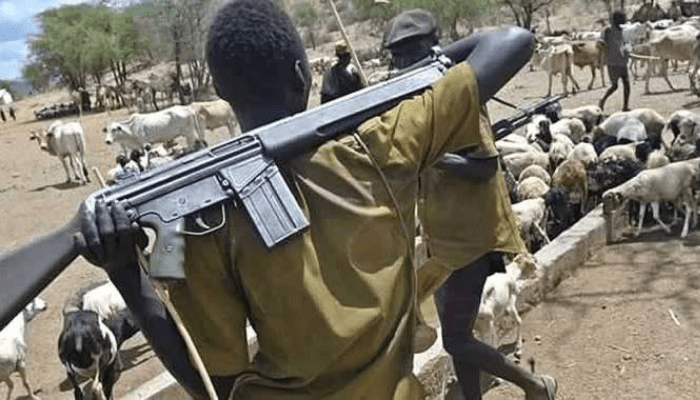
According to reports, at least 56 people are reported to have been killed as suspected nomadic cattle herders carried out twin attacks in Benue State. The number of dead could rise even further as search-and-rescue operations continue, a government spokesperson said.
Benue State police spokesperson, Anene Sewuese Catherine, said in a statement that “a large number of suspected militia had invaded” a region of Benue State overnight. The attack came amid a resurgence of deadly clashes between herders and farmers, a conflict that has killed hundreds over recent years. Security forces were deployed, and as the assailants “were being repelled in the early hours of today, they shot sporadically at unsuspecting farmers”, killing five (more) farmers in Benue’s Ukum area, the police spokesperson said.
Police said a second attack took place in Logo, about 70 km from the area of the first incident, noting, “Unfortunately, an unsuspected simultaneous attack was carried out” in a neighbouring locality, where 12 people were killed before police arrived.”

Again, on Tuesday, April 22, 2025, at least 11 people were killed in a renewed attack by armed herdsmen on the Afia community in the Ukum Local Government Area of Benue State, barely five days after the killing of over 60 farmers in the state.
According to Iyorkyaa Kaave, a leader in the affected community, the attack on Tuesday afternoon was “unprovoked and part of a calculated agenda to displace indigenous farmers.
“Today’s attack on Afia was particularly brutal, as the armed assailants stormed the community, firing sporadically at residents and leaving 11 dead on the spot, while several others sustained varying degrees of injuries.” A few days later, the attackers spread their bloody sport to Plateau State, where, to date, no specific number of deaths is known. At the end, they left behind sorrow, tears and blood – their regular trademark. The main reason foodstuffs from that part of Nigeria are beyond the reach of the ordinary man is fear of going to farm.
Often, a larger part of the media terms these attacks as herder-farmer clashes. But we believe these are clear bandits’ attacks on innocent Nigerians because the attacks are unprovoked.
The north-central region has, in the last few months, experienced a surge in violence between farming settlements and bandits. The attacks across several communities in the region have led to the deaths of more than 100 people in two weeks.

At the heart of the conflict are competing claims over land and water resources as well as issues related to obstruction of traditional migration routes, livestock theft, and crop damage. It is said that several other farmers far away from the scene of the attacks have deserted their farmland for fear of attack.
Read also: Many soldiers still missing after ISWAP attack on troops in Borno
The Islamic State West Africa Province (ISWAP), Boko Haram and sundry terrorists frequently attack farm settlements, especially in the north, killing, maiming, kidnapping and looting produce and other properties and forcing farmers to flee their settlements.
Data from the selected food price watch report of the National Bureau of Statistics (NBS) show that the average price of 1kg of local rice rose by 155.93 per cent between April 2023 and April 2024.
Rice, a staple food, has been rising in price despite its production locally and waivers given by the government to importers. The commodity now sells for between N78,000 and N85,000 for a 50kg bag, depending on the area and type.
In a related development, Nigeria and some nations across the West Africa region are projected to see increased prices of staples such as rice, maize, millet, cereals, etc., in the course of this year. Other crops affected include cassava, soya, sorghum and yam, which are key in the conflict-affected regions.
Many of the listed nations have come under severe banditry attacks and other forms of terrorism over the years.
At the end of 2022, Nigeria was home to 3.6 million internally displaced persons (IDPs), with 1.9 million living in protracted displacement in the north-eastern state of Borno. In March 2025, the Displacement Tracking Matrix identified 2,252,348 IDPs in the North-East alone. This represents a slight decrease of 0.1 per cent compared with the previous round in September 2024, when 2,255,595 million IDPs were recorded. The painful aspect of this is that these households are from farming settlements where most of the nation’s food crops are grown. Many of them were forced to flee their farms following sad experiences at the hands of terrorists.
Insurgency and terrorism are emerging as significant sources of shocks to agricultural and food systems as well as land use. Estimates of the causal effects of exposure to attacks on plot ownership, cultivated land, rented land, land values and cropping patterns are alarming and make clear that meaningful intervention is needed.
As the economic crunch bites harder, it is critical that Nigeria’s agricultural lands be relieved of the siege of terrorism so that our teeming stranded farmers can return to cultivate the much-needed food in increased quantities to effect price reductions.
Nigeria’s military and political authorities have said over time that the country requires much more than military intervention to deal with the complex forms of insecurity it is faced with.
Our security forces need to deploy into the country’s besieged farmlands and put to work the much-avowed non-kinetic strategies in their engagement with the terrorists and local populations to free up the fields for improved cultivation and lower prices of food on the table for the relief of Nigerians in these challenging times.