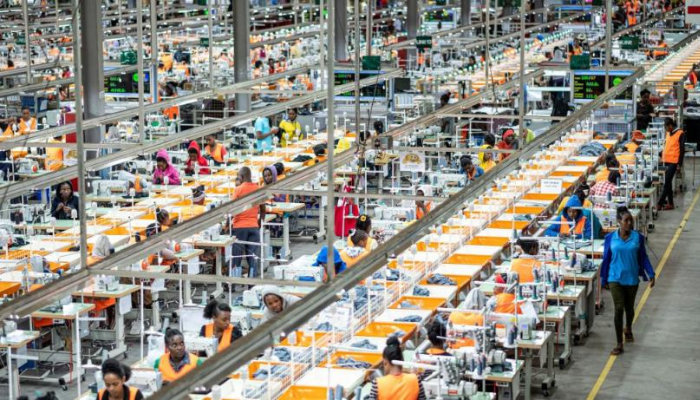
In a bold move to revive Nigeria’s stagnant economy, President Bola Tinubu has unveiled a sweeping industrialisation “policy” anchored on the “Nigeria First” principle. This initiative imposes a ban on the importation of foreign goods that can be produced locally, compelling government agencies to prioritise Nigerian-made products in procurement activities. The policy aims to stimulate domestic production, create jobs, and reduce import dependence-laudable objectives that align with Nigeria’s urgent need for economic diversification and self-reliance.
Key elements include strict restrictions on expatriate labour, comprehensive procurement rule revisions, and technology transfer requirements where foreign contracts are unavoidable. By establishing compliance mechanisms and disciplinary measures for breaches, the administration signals serious commitment to implementation. This approach mirrors similar protectionist models adopted globally and aims to strengthen Nigeria’s industrial base at a critical economic juncture.
However, laudable as this policy appears, there remain serious questions about the approach to its formulation and implementation. On its own and judging by stated objectives, the initiative rightly addresses Nigeria’s need to build domestic productive capacity. Yet, the apparent absence of a comprehensive policy document — beyond press briefings from the Minister of Information — raises concerns about its development process and sustainability.
Historically, industrial and manufacturing policies in Nigeria have suffered from inconsistent development, lack of continuity, and inadequate stakeholder consultation. Policies driven by political expediency rather than rigorous research and long-term strategy often result in frequent changes, poor implementation, and weak institutional frameworks. This pattern has repeatedly undermined investor confidence and stunted the growth of indigenous industries.

Read also: Africa’s rise in global uncertainty hangs on industrialisation, regional trade- stakeholders
To implement a policy of this magnitude – such as a sweeping ban on foreign goods that can be produced locally – there should be a clear, structured process involving research, stakeholder engagement, and formal documentation before an Executive Order is signed. A few hours of Federal Executive Council discussion over a Presidential Position Paper cannot substitute for the rigorous preparation such a significant policy demands. So far, there is no evidence of an actual formal policy document for the Nigeria First policy.
The key issue is whether what has been announced is a directive or whether there is a fully developed policy document backing it. It is important to stress that for a programme of this scale, there should be a formal Policy Document, White Paper, or gazetted Executive Order. This would ensure that there is clarity, accountability, and a framework for implementation and monitoring. Relying solely on statements from the Ministry of Information is grossly inadequate for such a transformative policy. Stakeholders and the public need access to the full policy text for scrutiny and feedback.
While the President can issue Executive Orders to direct government agencies, the National Assembly holds constitutional powers over lawmaking and oversight. For policies with broad economic and legal impact, best practice involves the National Assembly through legislation or formal consultation, enhancing transparency and reducing legal or political risks.
To arrive at a policy of this magnitude, established steps should typically be followed: comprehensive research, stakeholder engagement, policy formulation through expert input, and transparent documentation, before an Executive Order is signed. Effective industrial policies elsewhere in Africa demonstrate the importance of these processes.

Rwanda’s industrial policy project, launched in 2022 in partnership with the African Development Bank, exemplifies a well-structured approach. The initiative followed a participatory method that built capacity among government officials and private sector representatives to design, implement, and evaluate industrial policies independently. This structured process aims to create 200,000 jobs annually.
Ethiopia’s impressive industrial park development offers another instructive example. According to UNIDO studies, Ethiopia’s approach has contributed significantly to industrial development through employment creation, government revenue generation, export growth, and technology transfer. The programme’s success stems from extensive research, analysis of primary and secondary sources, and field findings conducted over several years in collaboration with partners.
Similarly, Tunisia’s industrialisation and innovation strategy, launched in 2022 with African Development Bank support, was developed through “a participatory approach that included a wide range of economic stakeholders,” as stated by the Minister of Industry. Wide-ranging consultations with partners and associations helped build consensus around the strategy’s objectives.
The core challenge with Nigeria’s current approach lies not necessarily in its objectives but in the approach. When industrial policies are implemented without adequate stakeholder engagement, they risk being based on incomplete information, face implementation barriers, encounter resistance from affected parties, and suffer from reduced innovation and poor learning mechanisms.
It is not too late for the government to consider converting this initiative into a more robust policy framework through inclusive consultation with key stakeholders. A well-documented policy with clear implementation roadmaps, monitoring frameworks, and feedback mechanisms would enhance its credibility and effectiveness.
Successfully articulated policy requires addressing fundamental challenges facing Nigeria’s manufacturing sector – chronic power shortages, pervasive insecurity, infrastructure deficits, and porous borders. Without tackling these structural impediments and ensuring broad stakeholder buy-in, even the most ambitious industrialisation drive risks falling short of its potential.
The “Nigeria First” initiative represents a commendable aspiration. By strengthening its policy architecture through inclusive consultation and detailed documentation, it could become a transformative framework for Nigeria’s industrial renaissance rather than just another well-intentioned but poorly implemented directive.