|
Getting your Trinity Audio player ready...
|
Infrastructure maintenance by Tunde Obileye
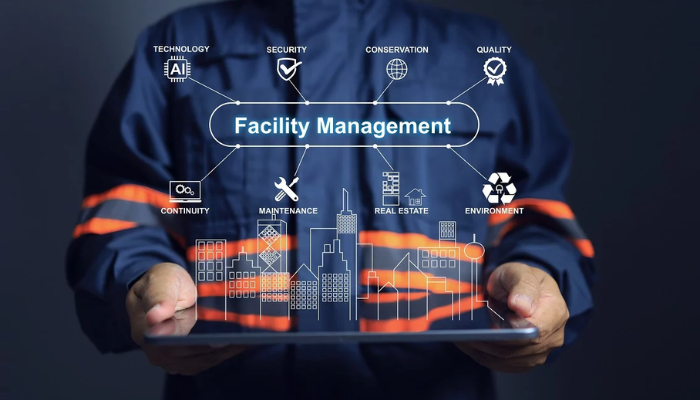
Facilities management (FM) has emerged as a profession and practice that seeks to integrate, efficiently and effectively, people with the built environment in order to achieve their objectives. Central to the activities within the built environment are buildings which are pivotal to facilitating the realization of the FM function.
However, FM has not been given its rightful place in the design and construction process except at the hand-over stage when it is brought in to ensure that buildings operate efficiently to achieve their purpose.
Buildings are designed to meet specific objectives as well as performance criteria. The design phase of a building relates to the process of providing all the necessary information required to facilitate its construction in order to meet the requirements of the client as well as public expectations in terms of their safety, health and welfare.

Facilities management has evolved to ensure that all components of a building integrate well to provide a conducive environment that supports the activities of an organization. It is therefore, reasonable to state that the facilities manager is well positioned to better appreciate how the various components of buildings integrate to provide its needed expectations hence the need to be involved in the conceptualization and the design process of buildings.
Construction Planning Phase: Project owners should invite a facility manager to the table as early as possible. A facility manager’s participation in pre-construction meetings will reveal questions and perspectives that impact the design, layout, materials, and other aspects of the project. Their knowledge of maintenance requirements and daily operations will help inform many decisions. For example, should each office have its own thermostat or should multiple office temperatures be maintained by a single control?
The facility manager can also coordinate meetings with key stakeholders and understand the scope of the project so that likely disruptions are noted and steps taken to mitigate against them.
Construction Phase: Facilities managers can work closely with the general contractor and project manager during construction, conducting regular site inspections and quality checks. They will work as a team to verify installations and accessibility, oversee system start-ups and testing, and coordinate shutdowns for utilities when connected into an existing facility.
Read also: Reasons to focus on adopting facilities management standards

Warranties and service contracts need to be reviewed, and suppliers and equipment installers may need to provide training and documentation for maintenance staff. Maintaining normal operations during construction is also a pivotal role that a facility manager helps to oversee.
The relationship between the construction team and the facility manager is the backbone of the project. If the facility manager is brought in late to the project, there will, inevitably, be details that get missed and obstacles difficult to overcome, some of which may be costly to fix or simply impossible to deal with once the project is underway.
Unfortunately, facilities management is oftentimes seen as an afterthought in the design and construction phases, which has proven, in many cases, to create avoidable problems as a result.
A facility manager can contribute significantly in the early stages of developing a project and minimize issues related to operations and maintenance.
Most importantly, having a voice for FM throughout a project cycle can help developers reduce costs and ensure the project is completed on time, fit for purpose and ready for use.