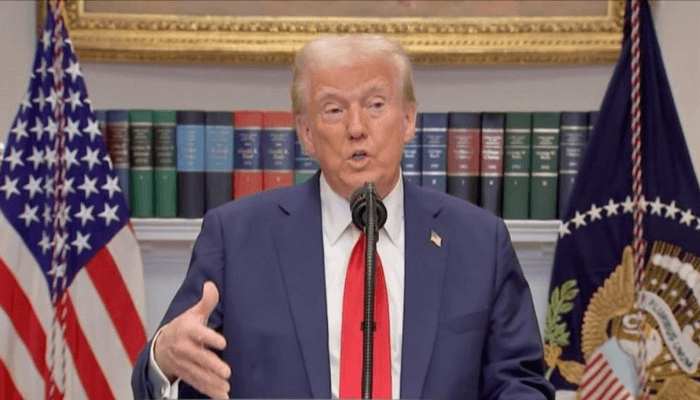
Donald Trump, president of the United States, has announced plans to sign an executive order aimed at slashing prescription drug prices in the United States by 30 to 80 percent through a “Most Favoured Nation” policy.
In a Truth Social post on Sunday, Trump described the move as “one of the most consequential in U.S. history,” pledging to end the long-standing trend of Americans paying the highest drug prices in the world.
“The United States will pay the same price as the nation that pays the lowest price anywhere in the world,” Trump declared, promising significant savings for American consumers.
While U.S. patients may benefit, global experts warn the move could cause unintended consequences for countries like Nigeria, which rely heavily on imported medications. By pushing pharmaceutical companies to lower prices in the U.S., the policy could lead to price hikes in lower-income countries to offset losses.

Mojisola Adeyeye, the director general of Nigeria’s National Agency for Food and Drug Administration and Control (NAFDAC), emphasised the need for urgent local solutions. Speaking at the 38th Victor Olufemi Marquis Memorial Lecture at Obafemi Awolowo University (OAU), Ile-Ife, Osun State, she called on Nigerian pharmaceutical companies and universities to collaborate in advancing local drug development.
Read also: World Bank calls for end to Nigeria’s ‘wasteful, regressive electricity subsidy’
“We must seize this moment,” Adeyeye said. “This is a much-needed boost for our local industry. Most of the drugs being imported are already produced here in Nigeria. It’s time for industries and academia to drive innovation in pharmaceutical research. The future of Nigeria’s drug manufacturing is not tomorrow—it is now.”
Nigeria currently imports more than 70 percent of its pharmaceutical products, accounting for a major share of its $10 billion annual healthcare expenditure. Out-of-pocket payments make up 62 percent of healthcare spending, reflecting both limited insurance coverage and economic disparities. The Pharmaceutical Society of Nigeria reports that domestic production currently meets only 25 percent of national demand.
Bola Tinubu’s recent ban on the importation of pharmaceutical products already available locally has been welcomed as a bold step toward industrial self-reliance. Adeyeye praised the policy, saying it aligns with the urgent need to protect and grow Nigeria’s pharmaceutical sector.

Amid global shifts in drug pricing, this moment presents a strategic opportunity for Nigeria to strengthen its local pharmaceutical manufacturing. Investing in domestic capacity can shield the country from external price shocks, improve drug availability, and bolster the economy.
The Coordinating Minister of Health and Social Welfare, Muhammad Pate, recently unveiled the Presidential Initiative for Unlocking the Healthcare Value Chain, with the ambitious goal of increasing local pharmaceutical manufacturing to 70 percent by 2030. Analysts say such reforms are critical to securing Nigeria’s healthcare future.
Beyond health benefits, scaling up local drug production would boost job creation, enhance self-sufficiency, and significantly reduce the national healthcare bill.
As the global pharmaceutical landscape evolves, experts agree: Nigeria must act decisively to chart a resilient and self-reliant healthcare path forward.