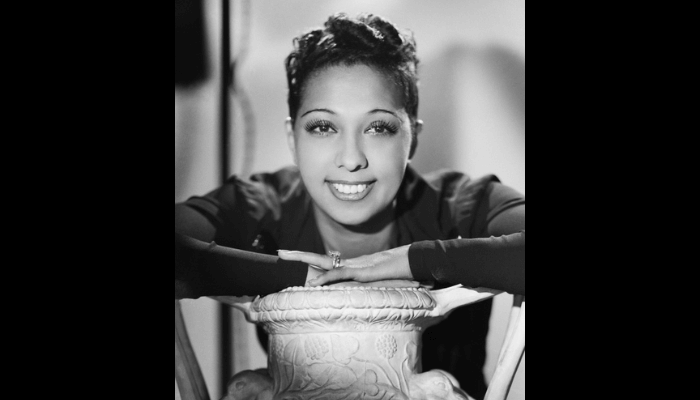
In a world that often tried to limit Black women to the margins of history, Josephine Baker pirouetted to the centre stage , not just as a dancer, but as a freedom fighter, activist, and cultural trailblazer. Born into poverty in the segregated United States, she would go on to become one of the most celebrated performers in Paris, a decorated spy in World War II, and a leading voice in the global civil rights movement. Her life, both dazzling and defiant, was one of unrelenting courage and boundless charisma.
Josephine Baker was born Freda Josephine McDonald on 3 June 1906 in St. Louis, Missouri. Her early life was marked by racial violence, poverty, and a fractured family. By the age of 13, she had left school and was working as a waitress and street performer. But even then, her flair for the theatrical was undeniable.
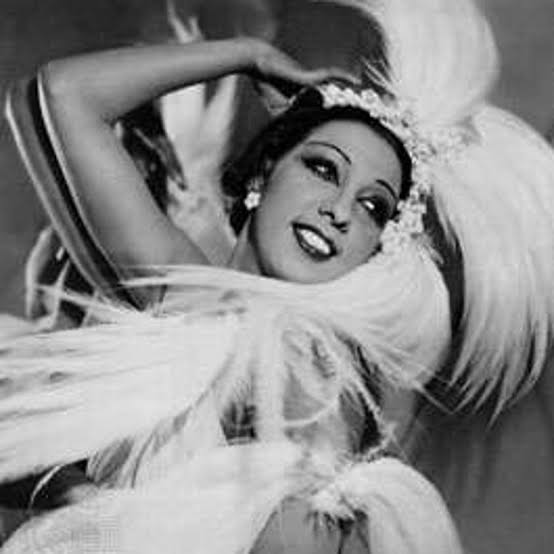
At 19, she sailed to Paris as part of a touring dance troupe. France, unlike America at the time, welcomed her with open arms. Her bold, often risqué performances at the Folies Bergère — especially the iconic banana skirt dance in La Revue Nègre — turned her into a sensation. With her expressive eyes, infectious smile, and uncontainable energy, Josephine became a symbol of the Jazz Age and the heartbeat of the Roaring Twenties in Europe.

While she lit up the stage, Josephine was also deeply aware of global injustices. During the Second World War, she turned her celebrity status into a covert weapon. Enlisted as an honorary correspondent for French military intelligence, she attended high-society events and embassy gatherings, eavesdropping on Axis diplomats.
She smuggled secret messages hidden in her sheet music, used invisible ink, and carried sensitive documents in her underwear — all while continuing to tour, using her performances as cover. For her service, she was awarded the Croix de Guerre, the Rosette de la Résistance, and named a Chevalier of the Légion d’Honneur — among France’s highest honours.
Beyond fame and espionage, Josephine envisioned a world where racial harmony was not a dream, but a daily reality. She married several times and adopted twelve children from different ethnic and religious backgrounds, calling them her “Rainbow Tribe.” She raised them at her Château des Milandes in the south of France, hoping their coexistence would show the world a better way to live.
Her approach was criticised by some as idealistic or performative, but for Baker, it was a living experiment in unity, one that reflected her deepest values.
Despite her acclaim in Europe, the United States remained ambivalent towards her. She returned in the 1950s and 60s to tour, but frequently refused to perform in segregated venues, making her a controversial figure in the racially divided nation.

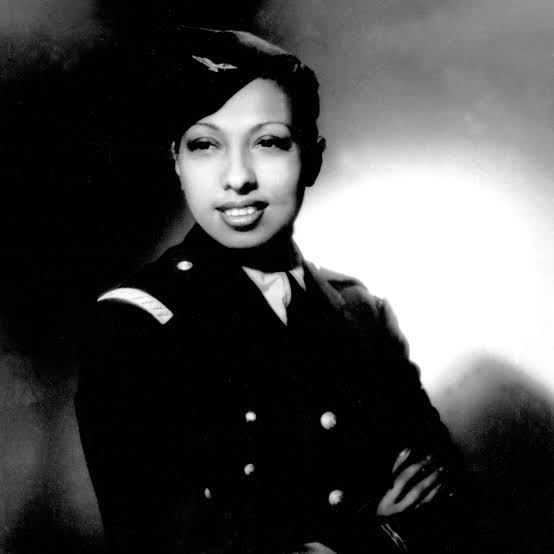
In 1963, she was the only woman to speak at the March on Washington, appearing just before Martin Luther King Jr. She took the stage in her French military uniform, medals gleaming, and declared:
“I have walked into the palaces of kings and queens and into the houses of presidents… But I could not walk into a hotel in America and get a cup of coffee.”
King’s widow, Coretta Scott King, later invited Baker to take up leadership of the civil rights movement after King’s assassination, but Josephine declined, citing her children as her priority.
Josephine Baker passed away in Paris on 12 April 1975, just days after a triumphant comeback performance celebrating her 50-year career. She received a full French military funeral, an unprecedented honour for an American-born entertainer.
In 2021, more than four decades after her death, Josephine was laid to rest at the Panthéon in Paris, France’s most hallowed mausoleum — making her the first Black woman, the first American-born woman, and only the sixth woman in history to receive the honour.
Josephine Baker lived many lives: the exotic dancer, the war-time operative, the mother, the activist, the global citizen.
Her life was brought to the screen in the 1991 television film The Josephine Baker Story and explored in depth in the 2018 documentary Joséphine Baker: Première icône noire (Josephine Baker: The Story of an Awakening).