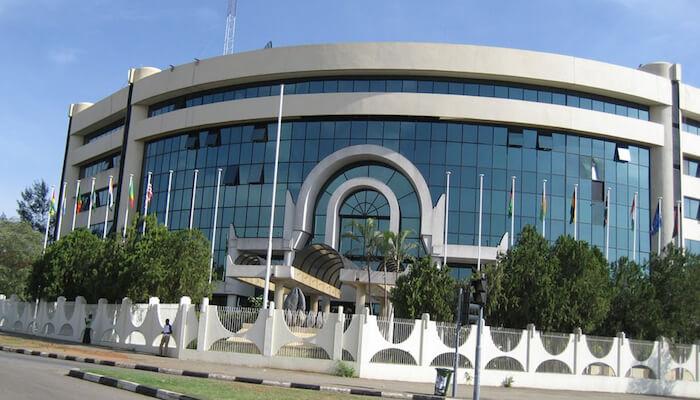
The Economic Community of West African States (ECOWAS) has announced plans to implement a 25% reduction in passenger service and security charges on regional flights by January 1, 2026, in a bid to reduce the cost of air travel across West Africa.
The decision was part of a strategy to tackle the region’s high airfare costs, which have long hindered mobility, trade, and economic integration within the sub-region.
Recent studies revealed that travelers in the ECOWAS bloc are subjected to 66 separate charges, while airlines face 112 distinct levies, making West Africa one of the most expensive regions for air travel globally.
Read also: Burkina Faso, Mali, Niger exit hinder ECOWAS agricultural projects -Report

A Committee of Aviation Experts, convened under the ECOWAS Commission, has recommended that all member states adopt harmonised regional aviation strategy aligned with international standards.
Central to the proposed policy is the elimination of all taxes deemed non-compliant with International Civil Aviation Organization (ICAO) guidelines, including security and tourism-related levies.
The strategy also calls for a 25% cut in airport passenger service and security charges, a change expected to be enforced from January 2026 after detailed consultations with airport authorities and national civil aviation bodies.
Importantly, the Committee has urged airlines to reflect these cost reductions in ticket prices, ensuring that travelers directly benefit from the policy.
Airports are likewise encouraged to modernize operations, enhance efficiency, and boost revenue from non-aeronautical sources to offset reduced income from charges.

To ensure successful implementation, ECOWAS plans to establish an oversight committee by June 2025.
The proposal will be formally presented to the ECOWAS Authority of Heads of State and Government for endorsement in the coming months.
Chris Appiah, Director of Transport at the ECOWAS Commission
emphasised the economic potential of the move during a press briefing.
He cited findings that show West African airports charge up to 103% more in passenger service fees and 53% more in security fees compared to other African regions.
“Our research shows that eliminating unjustified taxes and reducing charges could increase passenger demand by up to 40% across the region.
“Air travel stimulates commerce, tourism, and investment, and this reform can unlock over $500 million in additional revenue within a year”, Appiah stated.
He stressed that the new pricing model would bring much-needed transparency to the aviation sector.
“You cannot tax air transport and claim to promote tourism at the same time, it’s contradictory,” he said.
Read also: Kenya President Ruto suggests Chinese partnership as elixir for ECOWAS
The journey toward this reform began in 2014, when ECOWAS Heads of State met in Abuja and acknowledged the crippling effect of exorbitant airfares.
Since then, the Commission has worked closely with international aviation bodies, including IATA, African Airlines Association, abbreviated AFRAA (AFRAA), The African Civil Aviation Commission (AFCAC), and the African Union, to craft a regional strategy that aligns with global best practices.
According to Appiah, simulations from the policy framework suggest that cutting charges would not hurt revenue; instead, it would stimulate enough traffic growth to increase overall earnings.
Appiah pointed out that the most successful aviation hubs in Africa, particularly in North, East, and Southern Africa, operate under zero-tax regimes for air transport services.
“In contrast, ECOWAS states have lagged behind, with only Lagos and Accra featuring among the top 10 busiest intra-African air routes”, he added.
Despite ECOWAS’s role in leading the initiative, implementation will ultimately depend on the political will of individual member states.
“Each government must take responsibility for reviewing and amending its fiscal policies. Ministries of Finance and national parliaments will need to remove outdated and excessive taxes,” Appiah explained.
He stated that the strategy also encourages regional airlines to collaborate more effectively through code-sharing agreements and joint ventures.
“This would allow travelers to book single-ticket journeys across multiple carriers, reducing costs and improving efficiency.
“For example, partnerships between Air Peace, ASKY, and Air Côte d’Ivoire could make regional routes more accessible and affordable.
“This is already standard practice globally and could be transformative for West Africa”, said Appiah.
Appiah also underscored the importance of private sector participation in aviation. He cautioned that government-run airlines often suffer from inefficiency and bureaucracy.
“The role of government should be to create an enabling environment. The private sector should be allowed to operate airlines competitively and professionally,” he said.
Citing the success of Ethiopian Airlines, he noted that even state-owned carriers must operate independently to thrive. “A performance-based approach is essential, whether it’s a national, regional, or pan-African airline,” he noted.
With all ECOWAS member states already signatories to International Civil Aviation Organisation (ICAO) conventions, the regional bloc believes the time is ripe to align air transport policies with global norms.