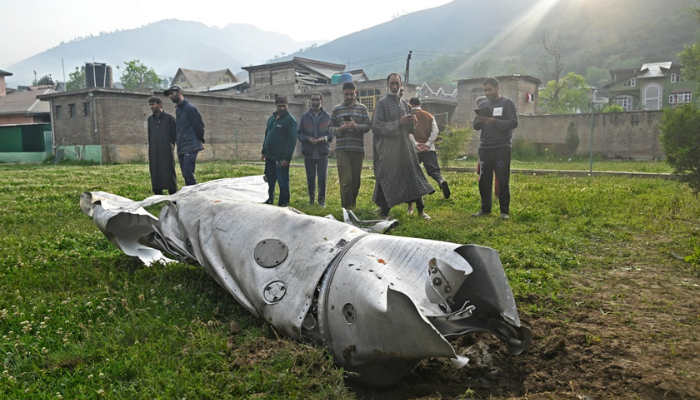
India and Pakistan exchanged heavy artillery fire on Wednesday, marking the most intense military confrontation between the nuclear-armed neighbours in over 20 years. The escalation came after New Delhi launched missile strikes across the disputed border, killing at least 34 people and triggering fears of a wider conflict.
Pakistan reported 26 civilian deaths from the Indian strikes, including four children, while Indian authorities confirmed eight deaths from retaliatory Pakistani shelling. The flare-up followed an April 22 attack in Indian-administered Kashmir that killed 26 Hindu tourists — an assault India blamed on Pakistan-based militant group Lashkar-e-Taiba.
Read also: Pakistan decries ‘act of war’ after India launches missile strikes
New Delhi described its strikes as “focused, measured and non-escalatory,” claiming to have destroyed nine terrorist camps. “Justice is served,” the Indian army said. However, Pakistan accused Indian Prime Minister Narendra Modi of using military action to bolster domestic support. Defence Minister Khawaja Muhammad Asif said Islamabad had already responded and would “settle the score.”

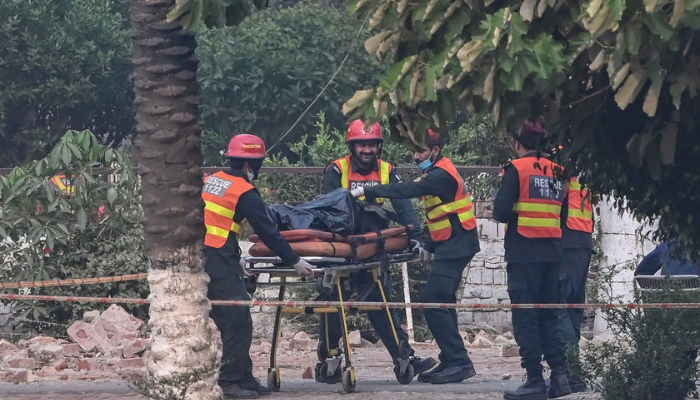
Pakistan’s military claimed to have downed five Indian jets. India acknowledged three crashes within its territory, with wreckage spotted near Wuyan in Indian-controlled Kashmir.
Read also: Pakistan closes air space for Indian airlines – Reuters
In Muzaffarabad, capital of Pakistan-administered Kashmir, witnesses described scenes of devastation. Shelling also rained down on the Indian town of Poonch, where eight were killed and dozens wounded. “We woke up as we heard the sound of firing,” one injured resident told local media. “I saw shells raining down.”
The Indian army accused Pakistan of indiscriminate firing across the Line of Control (LoC), the de facto Kashmir border. Nightly exchanges of gunfire have continued since April 24, and Pakistan says it has conducted two missile tests.
Tensions are at their highest since 2019, when India carried out airstrikes in Balakot following a suicide bombing that killed 40 Indian paramilitary personnel.

Read also: Indian firm inaugurates N10bn onion processing plant in Kano
Global leaders have urged restraint. UN Secretary-General Antonio Guterres warned the world “cannot afford” a conflict between the two nations. The U.S., China, Britain, France, and Russia have all issued calls for de-escalation. Flights over the region have been rerouted amid safety concerns.
Iran’s Foreign Minister Abbas Araghchi is expected in New Delhi on Wednesday following talks in Islamabad, as Tehran seeks to mediate and reduce hostilities.