|
Getting your Trinity Audio player ready...
|
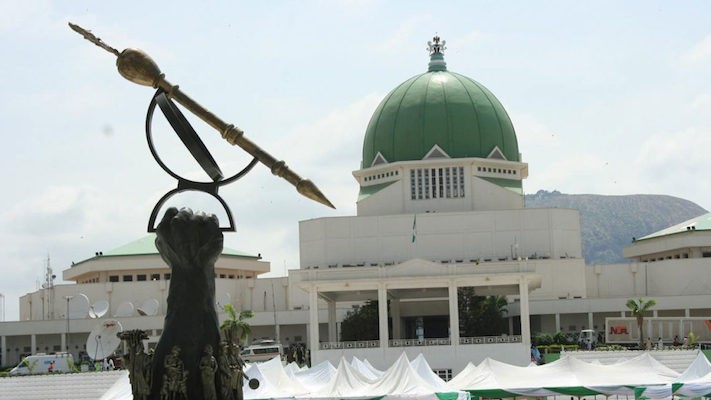
Nigeria’s National Assembly will resume its plenary today amid mounting public expectations for swift and decisive legislative action on pressing national matters ranging from tax bills and constitutional review to security and political stability.
The National Assembly initially adjourned plenary on March 27 to allow members observe the Sallah and Easter festivities, and subsequently postponed resumption from April 29 to May 6. Now back in session, both chambers are set to confront a backlog of urgent issues that have grown in significance during the break.
High on the agenda is the passage of the Tax Reform Bills, 2024, being championed by the Presidential Committee on Fiscal Policy and Tax Reforms. These bills aim to streamline Nigeria’s complex tax system, improve compliance, expand the revenue base, and reduce the burden on small businesses.
Read also: N’Assembly advances tax reform bills amid stakeholder concerns

Opeyemi Bamidele, Senate leader, reiterated the Upper Chamber’s commitment to the tax reform agenda, describing the bills as ‘game changers’ that would eliminate tax burdens for low-income earners and exempt small businesses from taxation.
“The House of Representatives has successfully passed the Tax Reform Bills 2024. When we resume plenary, the Senate will resolve all areas of concern and pass the bills purely in the national interest,” Bamidele stated.
He emphasised that the passage is vital to improving government revenue and enabling the delivery of democratic dividends.
“First on our agenda is the further consideration of the Tax Reform Bills, 2024. Its passage has become imperative to reform the country’s tax regime and shore up the revenue of the federation,” Bamidele said.
In addition to economic concerns, security and constitutional reform are expected to dominate proceedings.

Lawmakers will consider over 200 constitutional amendment proposals. Among them are changes related to devolution of powers, state policing, local government autonomy, judiciary reforms, and the creation of new states.
Deputy Speaker Benjamin Kalu, chairman of the Constitution Amendment Committee, disclosed that more than 100 new bills are underway.
The Senate Constitution Review Committee, chaired by Deputy Senate President Barau I. Jubrin, will also fast-track the process. According to Bamidele, the review is aimed at “creating a more efficient and responsive governance system” and “strengthening our federal structure in the interest of all.”
Equally pressing is the political crisis in Rivers State, where tensions between Governor Siminalayi Fubara and his political opponents have escalated. In March, the Senate approved President Bola Tinubu’s request to declare a state of emergency in the state, invoking Section 11(4) of the Constitution.
The resumption will see the formal establishment of a committee to investigate the crisis and oversee the administration under the newly appointed Sole Administrator, Vice Admiral Ibok-Ete Ibas (retd.).
Tajudeen Abbas, Speaker of the House, emphasised the importance of the Assembly’s intervention in Rivers.
“With the governor suspended, the Assembly dissolved, and emergency rule in place, the National Assembly has a responsibility to step in to make laws and keep the wheel turning.”
He directed Ibas to report directly to the National Assembly for legislative approvals, making the National Assembly a temporary stand-in for the state legislature.
However, the move has drawn criticism. Chinedu Obi, director-general of the Inter-Party Advisory Council (IPAC), denounced the appointment.
“Ibas is sitting on something illegal. The constitution did not anticipate an administrator for a state in a democracy.”
The legislature is also set to debate emotionally charged motions on the renewed violence in Plateau and Benue States, where dozens have been killed by suspected bandits and herdsmen, and thousands displaced.
Read also: Tinubu urges Senate to pass workable Tax Reform Laws
Lawmakers from the North-Central zone plan to push for urgent federal intervention, improved security, and compensation for affected victims. Bamidele said the Senate will:
“Speed engagement with key actors in the security sector and come up with mechanisms for the effective management of national security.”
“We are committed to putting an end to all acts of terrorism across the federation.”
Additionally, defections remain a major political subplot. The People’s Democratic Party (PDP) has lost several members, and more defections are anticipated. One notable case is Oluwole Oke, representing Obokun/Oriade Federal Constituency, who publicly expressed his discontent with the PDP leadership and revealed he is reconsidering his membership.
However, this trend could soon face legislative resistance. A proposed bill—‘A Bill for an Act to Alter Sections 68(1)(g) & 109(1)(g) of the Constitution’—seeks to mandate resignation from a political party before any defection. The bill is one of the constitutional amendments that have passed second reading in the House.
Obi of IPAC supports this, “Because people voted for party and mandate of the party, you cannot move that mandate to another party, it’s not moral. Once you defect, your seat should be vacant.”