|
Getting your Trinity Audio player ready...
|
The federal government has called on state governments and health facilities across Nigeria to establish dedicated budget lines for Infection Prevention and Control (IPC), as part of efforts to strengthen the nation’s health security and reduce disease outbreaks.
Tochi Okwor, the Antimicrobial Resistance and Infection Prevention and Control Programme Coordinator at the Nigeria Centre for Disease Control and Prevention (NCDC), speaking at an event to commemorate World Hand Hygiene Day 2025 at Maitama District Hospital on monday in Abuja, emphasised the need for sustainable funding to drive IPC measures at all levels of healthcare delivery.
She informed that at the federal level, there is now a dedicated IPC budget line which enables structured, measurable implementation across all 36 states and the FCT, with over 150 facility-level IPC programmes
“We urge states and health facilities to emulate the national and establish budget lines for IPC”, she urged.

Okwor described hand hygiene as a “pillar of our national health security strategy” and called on healthcare workers to recognise its central role in saving lives and curbing healthcare-associated infections (HAIs).
“It is both an honour and a duty to stand before you today to mark World Hand Hygiene Day 2025, a day that is profoundly significant for our profession, our patients, and the integrity of our health system. “At the Nigeria Centre for Disease Control and Prevention (NCDC), hand hygiene is not merely a procedure, it is a pillar of our national health security strategy”, she said.
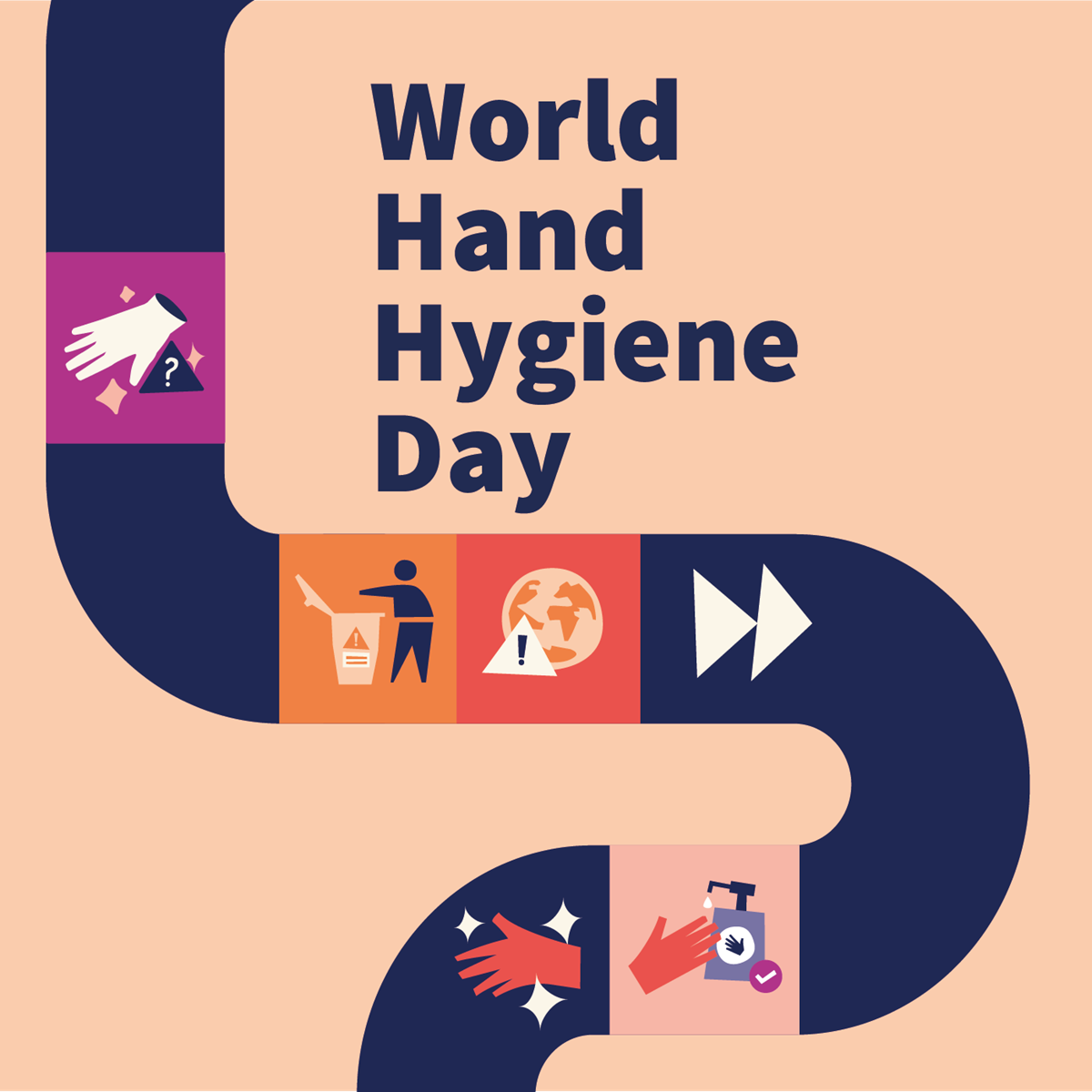
Highlighting the global theme for this year’s campaign — “It Might Be Gloves. It’s Always Hand Hygiene” , Okwor warned against the misuse of gloves as a substitute for proper handwashing.
“Let us be clear: gloves are not a substitute for clean hands. In fact, when misused—whether by failing to change them between patients, using them for non-clinical tasks, or skipping hand hygiene before and after use—gloves become tools of contamination rather than protection”, the expert explained.
She noted that despite the clear evidence supporting hand hygiene as the most effective method for preventing HAIs and limiting the spread of multidrug-resistant organisms (MDROs), challenges persist in Nigeria.

“HAIs remain high, AMR continues to rise, and compliance with IPC protocols is uneven. These are not abstract metrics — we see their impact as they translate into prolonged hospital stays, higher treatment costs, the overuse of antibiotics, and preventable deaths. Every missed opportunity to clean our hands is a missed opportunity to save a life”, she said.
Okwor, while urging all healthcare stakeholders to recommit to safer practices,she assured that the NCDC will remain resolute in supporting a future where hand hygiene is not an afterthought but a foundation, where every glove is used wisely, and where infection prevention is the standard, not the exception.
Also speaking, Adedolapo Fasawe, FCT mandate secretary, health and environment, represented by Osagie Osawade, expressed concern that the need for basic hand hygiene still requires constant reminders, suggesting the issue may be more behavioural than infrastructural.
“Surprisingly, in 2025, we are still reminding people about hand washing and disease prevention. It’s not that there’s a shortage of water or so, but it’s just, I don’t know whether it’s an attitudinal problem. But if there’s a big pandemic, everybody will start washing, people will start moving around with hand sanitisers in their pockets. But once the emergency is over, everybody goes back. So this is something that should be attitudinal; it should be with us.”
Fasawe called for regular, unannounced audits as a way to reinforce proper IPC practices in health facilities.