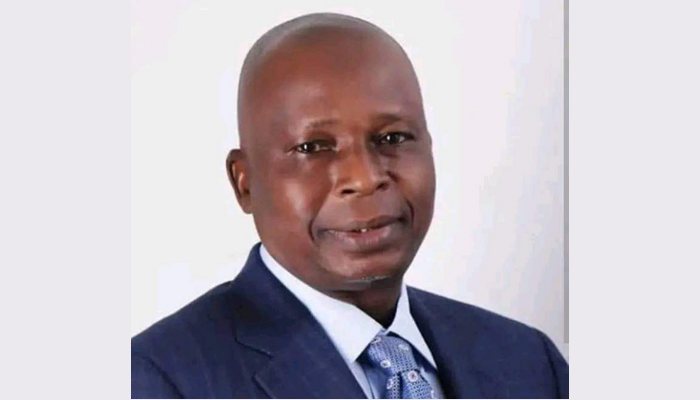
Before he became the Attorney-General of the Federation and Minister of Justice under the administration of President Bola Tinubu, Chief Lateef Fagbemi SAN was a distinguished and an accomplished lawyer. But he was also a strong loyalist of the All Progressives Congress (APC), which he represented in several legal battles both in opposition and in power.
Of course, being a partisan politician does not disqualify a senior lawyer from being his country’s attorney-general. However, once you become your country’s attorney-general, you are not only the government’s chief legal adviser, but also a custodian of the country’s constitution. Therefore, you cannot, and must not, put partisan politics, or fealty towards the president, above adherence to the rule of law and absolute fidelity with the constitution.
Read also: Group seeking true federal constitution unveils Tambuwal, Gbenga Daniel co-chair of May summit
Arguably, however, Chief Fagbemi crossed those lines. The legal advice he gave to Tinubu to declare a state of emergency in Rivers State and remove the state’s elected functionaries from office had politics written all over it. Fagbemi provided a legal fig leaf for a predetermined political outcome that was illegal and unconstitutional. Truth is, the preponderance of legal opinion rejects the notion that the president can remove from office the governor, deputy governor, speaker and members of the House of Assembly of any state. Why does this matter? It matters because once it is accepted that, in a supposed democracy and federal system, a president can remove an elected governor from office, then Nigeria is on a slippery slope to dictatorship and unitarism.

Yet, that’s the state of affairs that Chief Fagbemi wants Nigerians to accept. Rather than show some humility and concede that his legal advice may be wrong, he doubled down on it. With unbelievable hubris, he recently said: “So, it’s Rivers State’s turn today. It can be anybody’s turn tomorrow.” He went on to issue a threat redolent of Stalinism: “Let the signal be clear to those who want to foment trouble to think twice. If it happens again, I will encourage Mr President to do the same, this time even with greater vigour and vitality.”
Without a doubt, that’s the voice of an attorney-general playing politics with the rule of law; an attorney-general who would advise a president to violate the constitution for a political end.
Alexis de Tocqueville, the 19th century political philosopher, famously said: “The discourse of crisis is the natural language of any genuine democracy.” In other words, democracy is not the absence of crises, rather, it’s resolving crises through negotiated political consensus and legitimate legal means. But is the emergency power in the Constitution intended as a political instrument to punish governors who “foment trouble”? What does “foment trouble” mean? What is its threshold? Chief Fagbemi clearly spoke as an authoritarian politician who sees the law as an instrument of coercion deployed on political whims, not as an attorney-general who sees the law as a tool to maintain order in a democratic society within the ambit of legality and constitutionality.
Unfortunately, to add insult to injury, Chief Fagbemi accused Nigerians of interpreting the constitution based on political partisanship. Recently, speaking to reporters after the launch of a book on the late Prince Bola Ajibola, a former AGF, Chief Fagbemi said: “Nigerians should stop interpreting the law based on political partisanship, but let’s stick to the law.” He added: “When issues like this (the state of emergency) come up, people should go and read very well and get themselves familiar with what the law says.” The inference is that he knows what the law says, while those who disagree with him do not; that he interpreted the Constitution devoid of political partisanship, while those who disagree with his interpretation wallowed in political partisanship. Well, since Chief Fagbemi expressed such self-justifying views, he invariably invited a response, a riposte.
“It matters because once it is accepted that, in a supposed democracy and federal system, a president can remove an elected governor from office, then Nigeria is on a slippery slope to dictatorship and unitarism.”

But the starting point in addressing the state of emergency saga is to distinguish between the two questions at its heart. Here’s the first question: Does the president have the power to declare a state of emergency in any party of Nigeria? Of course, he does. Section 305 of the Constitution makes that absolutely clear, although it’s doubtful that the conditions precedent, such as “a breakdown of public order or public safety to such extent as to require extraordinary measures to restore peace and security” existed in Rivers State. President Tinubu said a “grave situation” led him to declare a state of emergency in Rivers State. But the “grave situation” in Rivers State, triggered by the war of attrition between the governor and his predecessor, paled into insignificance when compared with the mass killings in the Middle Belt. Yet, notwithstanding the dubiousness of the justification, we must concede that, constitutionally, the president has the power to declare a state of emergency, subject to the approval of the National Assembly.
But that leads us to the second question. Does the president, in declaring a state of emergency, also have the power to remove the governor, deputy governor, speaker and members of the House of Assembly of a state? That’s the real point of contention!
Chief Fagbemi says Nigerians should “read very well and get themselves familiar with what the law says.” But nowhere is it provided under the extant 1999 Constitution that the president can remove elected state functionaries once he declares a state of emergency. If the drafters of the Constitution wanted to give the president the powers to remove an elected governor, and appoint an unelected State Administrator in his place, wouldn’t they say so explicitly? These are fundamental matters that are too important for constitutional drafters to ignore or cloak in ambiguity.
Read also: Emeka Anyoku, Ike Nwachukwu reiterate call for restructuring, constitutional review
Now, every constitutional lawyer knows that the first rule of interpretation is the plain English meaning of the words used. But if there is debate about the plain meaning, recourse must be had to the original intent of the drafters. As Professor Joel Trachtman put it in his book The Tools of Argument, “A judge should seek to be faithful to the intent of the drafters.”
Unfortunately, in 2006, the Supreme Court declined, on technical grounds, to rule on President Obasanjo’s use of emergency powers to remove a state governor. The apex court may also decline to rule on Tinubu’s state of emergency. But that won’t validate Chief Fagbemi’s interpretation of the law.
Think about it. What does Chief Fagbemi know that Chief Rotimi Williams, who chaired the committee that drafted the 1979 Constitution, which birthed the current 1999 Constitution, did not know? In 2004, Chief Williams categorically said: “There is no provision contained in any part of our Constitution which confers such a power on the President.” What does Fagbemi know that Professor Ben Nwabueze and Professor Itse Sagay, both renowned constitutional scholars and Senior Advocates of Nigeria, did not know? They condemned President Obasanjo’s use of emergency powers to remove state governors as “gross acts of illegality”. And what does Fagbemi know that a former AGF, Mohammed Adoke, did not know? Adoke said: “The removal of a Governor is nowhere provided for in the mechanism for implementing a State of Emergency”.
So, tell me, who’s interpreting the Constitution based on political partisanship? Certainly, it’s not Chief Williams, the chief drafter of the Constitution, or Professors Nwabueze and Sagay, renowned constitutional lawyers. Well, the finger points at Fagbemi!