Manufacturers in Africa’s most populous country are seen intensifying pressure as energy costs surged 42.3 percent, squeezing profit margins and threatening competitiveness.
MAN’s latest 2024 economic review report shows that manufacturers’ total expenditure on alternative energy sources surged by 42.3 percent to N1.11 trillion in 2024 from N 781.68 billion in 2023.
On a half-on-half basis, manufacturers spent N404.80 billion in the half-year 2024 to N708.07 billion in the half-year 2024, indicating a 75 rise in energy spent.
Read also: Manufacturers warn return of Customs’ FOB charge could trigger economic fallout

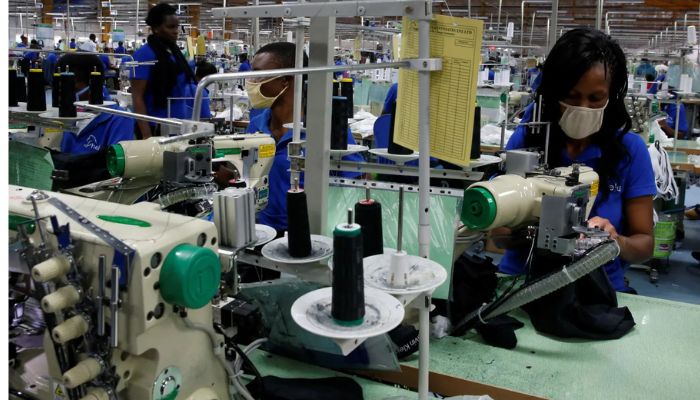
On a sectoral basis, the textile, apparel, and footwear industry saw the highest jump in energy costs as the sector recorded a fourfold increase, reaching N26.45 billion in 2024 as against N6.97 billion in 2023.
This is followed by the chemical and pharmaceutical industry with a 100 percent spike in energy costs to N208.68 and the non-metallic mineral products sector’s energy costs increased by 33.7 percent to N118.49 billion in 2024.
The food, beverage & tobacco sector recorded the least N229.41 billion in alternative energy spending, up from N182.76 billion in 2023.
According to experts, a reliable energy supply remains the only way to unlock the country’s industrial potential and drive growth through the manufacturing sector.
Energy is a key element of the production process. Nigeria’s inability to supply and distribute sufficient electricity has left businesses at the mercy of generators powered by diesel and petrol, whose prices have surged in recent months.

This raises the production costs for manufacturers significantly and forecloses their chances of competing with international peers.
“By addressing energy security, we can unlock the full potential of our industries, reduce the cost of energy in manufacturing, and create more opportunities for Nigerians, along with contributing to the country’s socio-economic prosperity,” Francis Meshioye, MAN’s president said at the association’s 20204 energy summit.
He added that a stable energy supply is a basic requirement for the smooth operation of industries, and it is essential for achieving sustainable growth and competitiveness.
Local products are often more expensive than imported Chinese products because production costs in the country are significantly higher than China’s especially when key issues such as taxes and regulations are factored in.
According to MAN, manufacturers spend 40 percent of their total production cost on generating energy for their businesses.
Segun Oduntan, chairperson of the Association Nigeria of Electricity Distributors (ANED), blamed the inefficiencies in the power sector on corruption and utilisation of outdated infrastructure.
According to him, corruption plays a major role in the continuous decline in the country’s power sector.
Read also: U.S 14% tariff has significant impact on sector, economy – manufacturers
In a comparative analysis, he stated that it cost Ethiopia $4.8 billion and 14 years to construct its 6,450 megawatts hydropower project which is the largest dam in Africa. Yet, Nigeria spent $5.8 billion in 42 years to build its 3,050 megawatts Manbilla hydropower project.
He stated prioritising national progress above personal gain by embracing patriotism and ownership will help the nation enjoy the dividends of democracy for the long haul.
“Our energy infrastructure is outdated and unfortunately as a nation, we don’t like taking ownership. We should replace the energy infrastructure, and get it going well, that is the truth and how we can all grow as a nation.”