|
Getting your Trinity Audio player ready...
|
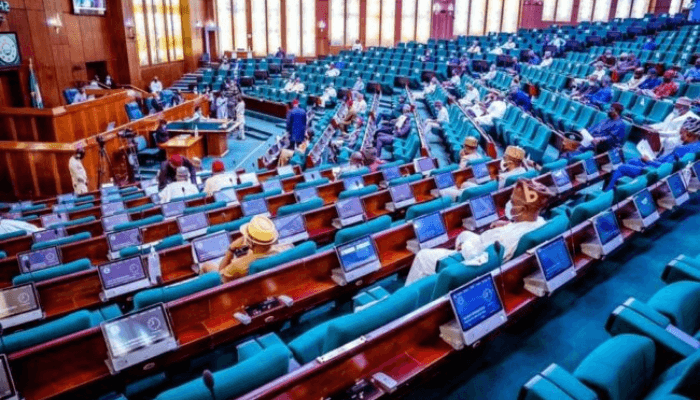
The House of Representatives is pushing for a harmonised legislative framework to unify energy policies across Nigeria, particularly in the renewable sector. This push will culminate in the first-ever Legislative Conference on Renewable Energy.
The two-day conference, scheduled for 5 and 6 May 2025 in Lagos, is being organised by the House Committee on Renewable Energy in partnership with the United Nations Development Programme (UNDP). It is expected to bring together lawmakers, regulators, development partners, and private sector leaders to align on a cohesive national policy for energy transition.
Read also: Five takeaways from renewable energy record growth in 2024
“This conference aims at bringing together key stakeholders and industry players to discuss renewable energy legislations, energy transition, renewable energy financing, investment opportunities and related matters, towards developing a national legislative framework on renewable energy,” Afam Ogene, chairman of the committee said during a press conference on Wednesday.

Ogene said recent constitutional and legal reforms have created a new momentum in the energy sector, making it imperative to harmonise legislation across all tiers of government. “Recent legislative reforms around the energy sector in Nigeria highlight this growing momentum, thus necessitating the convocation of the 1st Edition of the Legislative Conference on Renewable Energy in Nigeria,” he added.
One of the major driver informing this push is the Fifth Alteration Bill 2022 (No.33), now law, which empowers states to make laws on electricity generation, transmission, and distribution within areas connected to the national grid—an authority previously confined to off-grid systems.
Ogene also pointed to the Electricity Act 2023, signed into law in February 2024, describing it as transformative. “The Act permits states to issue licenses for all electricity activities (generation, transmission and distribution), encompassing lawmaking, regulation, and policy development across the entire power sector value chain,” he explained.
He added that the forthcoming National Integrated Electricity Policy 2025 will give states greater clarity to develop their own electricity markets, with an emphasis on renewable solutions such as solar-powered off-grid systems to reach underserved communities.
Among the key objectives of the conference, Ogene said, is the need to foster collaboration between lawmakers, experts, and stakeholders to address legislative gaps and promote investment.

“The promotion of dialogue among legislators, experts, and stakeholders on critical legislative priorities, regulatory frameworks, and global best practices to accelerate renewable energy adoption in Nigeria,” he said, is a major priority of the gathering.
Other targets include “a coordinated platform for federal and state lawmakers to harmonise policies, address regulatory bottlenecks, and align efforts in advancing Nigeria’s renewable energy transition,” and “an action-oriented roadmap, by producing a clear, time-bound legislative action plan with prioritised reforms, investment incentives, and accountability mechanisms to drive renewable energy growth and grid modernisation.”
Read also: REA: From rural electrification agency to renewable energy agency
Ogene noted that the conference will also have a continental dimension, with delegates from South Africa, Ghana, and Gambia expected to participate, alongside representatives from the Inter-Parliamentary Union.
“We also confirmed participation from three African parliaments—South Africa, Ghana, and Gambia—showcasing the House Committee on Renewable Energy’s impact,” he said.