|
Getting your Trinity Audio player ready...
|
Official government data in the northwest state of Kaduna, the former administrative capital of the Northern region, indicates that 75 percent of rural dwellers in the state are impoverished, a development that excludes them from all form of financial services.
About 3.5 miformsn out of the total population of over 9.86 million citizens of the state, are said to outside the financial system as of 2023, and their exclusion is believed to be hindering them from participating in economic development of the state.
Financial exclusion is defined by industry experts as the inability of individuals and businesses to access or make use mainstream financial services like bankiof ng, insurance, and credit, a trend that attributed in the state to the worseningis economic condition in Nigeria.
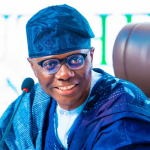
This information was the major takeaway from the official flagging off ‘ Kaduna Economic and Financial Inclusion Summit (KEFIS 2025)’ themed “Expanding Financial Access for Sustainable Development”, presided over by Governor Uba Sani, Wednesday, in Kaduna.

Speaking during the ceremony, Governor Sani said that it was the worrisome dimension of financial exclusion in the state that necessitated the signing of the Financial Inclusion Act, immediately after assuming office in 2023.
According to him, his administration has also institutionalized financial inclusion thrinstitutionalisedtate Financial Inclusion Executive Order, leading to the formation of a state committee and targeted interventions.
He noted that since singing the Act, his administration has put in place a process of opening three million new accounts by 2025 for vulnerable residents of the state, as a way of bringing them out of poverty.
The governor disclosed that so far, over 2.5 million of such accounts have already been opened, and nearly seven million citizens registered for National Identification Numbers (NIN) to facilitate access to finance in the state, since assuming office about two years ago.
“True financial inclusion is about granting individuals and communities the means to participate meaningfully in the economy, break the cycle of poverty, and elevate their quality of life.
About 3.5 million people in Kaduna were outside the financial system as of 2023. This exclusion hindered economic growth and left many vulnerable groups disenfranchised from the benefits of modern financial systems,’’ the Governor further disclosed.

Recounting his experience as former chairman of the Senate Committee on Banking and Financial Institutions, the Governor said it was the seriousness he attached to challenge of financial exclusion that spurred his sponsorship of the Banking and Other Financial Institutions Act (BOFIA) 2020.
He said Over N18 billion was channelled into individual accounts through direct cash transfers and inputs distribution by agencies like KADEDA, KADSIPA, and the Planning and Budget Commission, since assuming office.
The governor revealed that the policy introduced by his administration has led to a 19% increase in financially served adults, rising from 45% in 2022 to 64% in 2024, with about 9% new banked population and 10% accessing other formal financial services.
Commenting on solutions that fintech can bring to reduce financial exclusion in the country, Governor Sani noted that the law brought fintech companies ’s under Central Bank regulation to enable digital financial services to reach the underserved areas.
“A lot has happened since fintechs came under the CBN’s regulatory oversight. They are now reaching people formerly outside the financial system,” he said, “highlighting how they have enabled access to mobile banking, credit, and donor programs”.
According to him, his administration has also institutionalised financial inclusion through the Kaduna State Financial Inclusion Executive Order, leading to the formation of a state committee and targeted interventions.
The Governor added that Kaduna’s inclusion strategy also supports Micro, Small, and Medium Enterprises (MSMES), which are critical to job creation.
“We are fostering a vibrant entrepreneurial ecosystem where MSMEs can grow, create employment opportunities, and contribute to the economy of Kaduna State,” he said, adding that the economic impact is already visible, with poverty rates and income inequality on the Governor Uba Sani disclosed that access to financial services and credit “has lifted many people out of poverty.”
“In Kaduna State, we believe in a comprehensive approach to tackling insecurity. Financial inclusion is addressing the root causes of insecurity: unemployment and inequality,” he pointed out.
The Governor said that partnership with banks (UBA, Jaiz, Zenith, Fidelity), fintech (Monie point, Momo, Teasy Pay, E-Tranzact), and global development partners like the Gates Foundation has been pivotal.
He noted that in recognition of its progress, Kaduna has been chosen as a pilot state by the Office of the Vice President for a national financial inclusion initiative, saying as part of this, Kaduna will allocate 5,000 hectares for an in-grower scheme, supporting rural farmers through input support and product-based repayments.
“This approach is tailored to empower rural communities and integrate them into the formal financial system,” he explained.
The governor disclosed that he was also recently appointed to the Governing Board of the Presidential Committee on Economic and Financial Inclusion (PPrecefi, representing Northern Nigeria—a nod to Kaduna’s role as a trailblazer in financial empowerment.