|
Getting your Trinity Audio player ready...
|
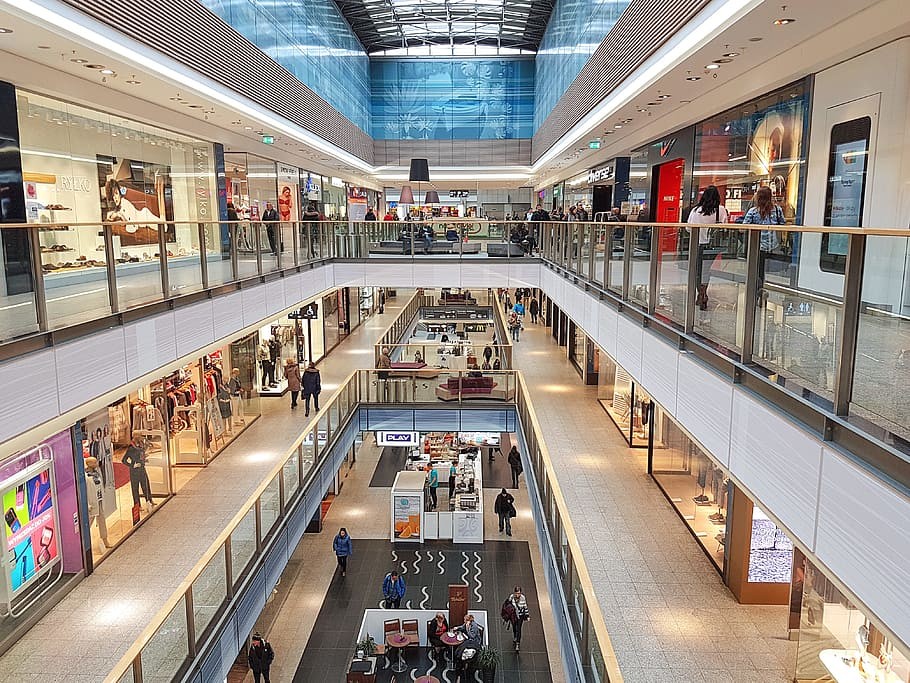
Formal retail in Nigeria is not in the best of time in Nigeria due to a number of reasons bothering mainly on the economic slowdown that has affected both personal and household income significantly.
On an incremental basis, it is giving way to community or neighbourhood malls, which are experiencing exponential growth driven by tenant and consumer preference,s which is also occasioned by adverse macro-economic conditions, especially inflation.
In the last five to 10 years, most of the Grade A malls have seen vacancy rates in the cities, especially Abuja, where Wuse Novare, Apo 2, and Silverbird are struggling with considerable vacancy rates.
According to a recent report published by Northcourt, the three malls have recorded 17 per cent, 15 per cent and 21 per cent respectively, explaining that since Shoprite’s departure, they have seen a sharp drop in foot traffic and a rise in business closures or relocations.

“Conversions in the larger Abuja real estate market have roared on, leading to increased supply of shops, offices, warehouses and Airbnb-style lodgings,” the report said, noting that the retail market has seen a significant shift towards the development of small sized malls in communities and neighbourhoods, making shopping experience more convenient and much closer to consumers.
While Ayo Ibaru, CEO, Northcourt, says the please growth and spread of community malls are a response to tenant and consumer preferences, Michael Chu’di Ejekam, CEO, Atreos, a retail investment holding platform, told BusinessDay that the economic slowdown and hash operating environment have forced mall developers to design their facilities in a way that would not cost them much money with off-taker problem.
“At the moment, investors are smart and are thinking of what are sustainable rates in the market. They are coming up with new approaches. What is in high consideration now is neighbourhood retail. Malls have come down to as small as 7,000 square metres as against large malls of 20,000-30,000 square metres,” he said.
According to Ejekam, there are three pockets of considerations that go into mall development and these have to do with the consumers, the retailers and the investors, pointing out that the reality of the Nigerian consumer is that an average household spends 60-70 percent of its monthly spend on food and beverages consumed at home.
He said that because of the challenge with power, people cannot afford to go out there and buya large stock of goods and store them with refrigeration, meaning that they have to go out frequently to buy their stock.

“Again, there is low car ownership rate fuelling available ones in Nigeria which means that shoppers cannot go far for their shopping. They want to be able to work short distances to do their shopping. All these have to influence the kind of mall that the developer has to put up. He has to create something within the neighbourhood,” he advised.
Ejekam noted that investors are also challenged by the high construction cost in Nigeria which, he said, was times 2.5 percent higher than what it costs to develop a mall in South Africa, saying, “what this means is that a $40 million mall in South Africa will cost times 2.5 percent more in Nigeria.”
This development explains the widespread presence of these neighbourhood malls, otherwise called superstores, mostly in mid-income and low-income neighbourhoods such as Surulere, Gbagada, Ikorodu, Okokomaiko, Ikotun, Egbe, Festac/Amuwo Odofin, among other locations.
Besides their nearness to residential areas, these superstores are also offering affordable prices and discounts which which are the reasons consumers are switching from formal retail to Bokku Mart, Primemart, Prestige, Twin Faja, for their grocery needs, due to their discount sales.
The discount prices also allow retailers, including market women, to buy in bulk and resell to their customers.
Bokku, for instance, which started operations on September 30, 2022, already has 75 outlets across the Lagos mainland. It was founded by Adewale Adeyemi, a business leader and entrepreneur.
Many consumers attest to the fact that bread from Bokku has been their favourite and this is reflected the long queues seen in the outlets. When it started, the bread was sold for N1,250, but retailers can buy in a dozen and resell for N1,500.
Oluwatobi Michael, a resident of Isashi in Ojo area of Lagos said that since the Primemart opened along Lagos-Badagry expressway, his mother stopped patronising regular retail stores close to them.
“My mother prefers to buy groceries and drinks from there. She enjoys the discount sales and has been leveraging the opportunity to get necessary things for the house,” he said.