|
Getting your Trinity Audio player ready...
|
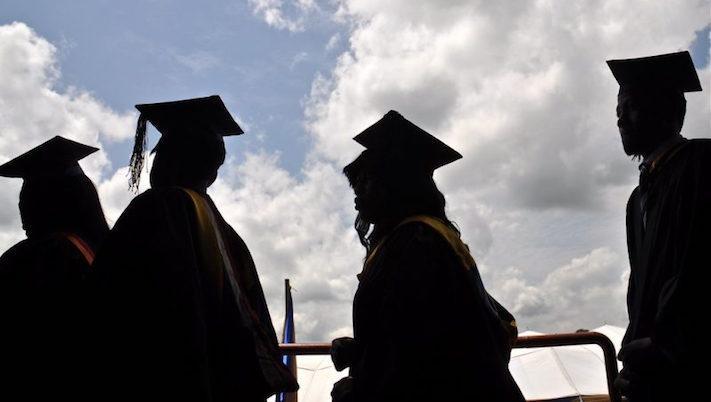
If you walk through the gates of a typical Nigerian university today, you might be forgiven for thinking you have stumbled into a bustling religious convention, a local government headquarters, or perhaps a festival ground – anything but a citadel of critical inquiry. These physical manifestations are symptoms of a profound transformation within our higher institutions: the shrinking of the intellectual space that once defined them. Intellectual spaces have shrunk so dramatically that they now compete – and often lose – to other, more boisterous spaces: religious, ethnic, political, and social. How did we get here? The story is as complex as it is cautionary.
The fall of intellectual diversity
Universities once thrived on diversity – of thought, background, and experience. Nigerian campuses were melting pots, drawing staff and students from all corners of the country and beyond. Debate was the currency of the realm, and intellectual heroes earned respect through logic, expertise, and the power of their ideas.
But as the intellectual space began to shrink, so did this diversity. Staff recruitment became increasingly local and insular, with inbreeding (hiring from within) and ethnic or religious considerations overshadowing merit. The result? A narrowing of perspectives, a decline in creative dissent, and the rise of groupthink. In such an environment, authority is rarely questioned, and respect is bestowed by group affiliation rather than earned through competence or originality.

The university environment comprises competing “spaces” – intellectual, academic, social, political, ethnic, and religious. In healthy universities, these spaces coexist in a delicate equilibrium, with the intellectual space remaining dominant. In Nigeria, that equilibrium has been dramatically disrupted. Religious, cultural, and ethnic spaces have steadily encroached upon and diminished the intellectual space.
Evidence of this shift is everywhere. Professors are now addressed as “daddy,” “baba,” or “mama,” while younger lecturers become “uncles” and “aunties.” Department heads are “Oga,” “Onyisi,” or “Maigida” – traditional terms replacing academic titles. When new university officials assume office, their first assignment is often a visit to a church or mosque for thanksgiving, followed by spiritual cleansing of the office. Inaugural lectures, once solemn academic events, now resemble chieftaincy ceremonies with “aso ebi” (uniform attire), traditional rulers, and praise worship.
From unionism to opportunism
The intellectual space in Nigerian universities was once fiercely protected by ideologue – union leaders and student activists who championed academic freedom and critical debate. Military crackdowns in the late 20th Century decimated this group, leaving a vacuum filled by those with more pragmatic ambitions. Cult groups, which began as confraternities with noble ideals, devolved into violent cartels vying for control of student unions. As ideological fervour faded, unionism became less about ideas and more about power and access to resources. Solidarity chants replaced debate, and congresses became mere briefings. The monetisation of campus politics created an environment where violence, not dialogue, set the tone.
A similar decline occurred within the Academic Staff Union of Universities (ASUU), which, after its 1992 strike and ban, shifted from radical socialist leadership to one focused on control and compliance. Loyalty was redefined as blind followership, and the union’s intellectual foundations collapsed, replaced by cartel-like structures.

With unions weakened and debate in retreat, religion rushed in to fill the void. Campuses now host a proliferation of fellowships and prayer groups, with some universities boasting over a hundred religious societies. Even academic awards are increasingly distributed along religious or ethnic lines.
Cultural associations have also flourished. The “Aso Ebi” social uniform now graces inaugural lectures, and the “First Lady” syndrome sees spouses of university leaders assuming quasi-official roles. Academic events have become social spectacles, overshadowing the pursuit of knowledge with displays of status.
From ideas to identity politics
The decline of staff diversity in Nigerian universities has led to insular networks and groupthink, as academic inbreeding, ethnic and religious recruitments stifle dissent and creativity. In these closed environments, respect and influence are based on conformity, not competence, and leadership is often awarded by ethnic or religious affiliation rather than merit. This fosters a culture where questioning authority is discouraged, and loyalty is demanded.
Consequently, critical thinking and workplace skills – hallmarks of a vibrant intellectual space, are increasingly absent. Attempts to compensate by expanding curricula or increasing workloads cannot replicate the organic growth that true intellectual diversity brings. The neglect is starkly visible in university libraries, which remain largely unused and poorly maintained except during accreditation, symbolising the broader erosion of intellectual culture on campus.
The way forward
The transformation of Nigerian universities reflects broader societal shifts, but it needs not be permanent. The intellectual space can be reclaimed through deliberate policies promoting diversity, merit-based leadership, and the reestablishment of forums for genuine intellectual discourse. As we pursue economic transformation and technological advancement, we must remember that these goals are unattainable without universities that prioritise critical thinking, innovation, and intellectual rigor over cultural, religious, or ethnic affiliations.
Nigerian universities have lost their intellectual edge not through a single catastrophic event but through the gradual erosion of the values, practices, and spaces that once made them centres of ideas and innovation. Reclaiming this edge requires not just resources but a fundamental rethinking of what universities should be and how they should function in our national life.