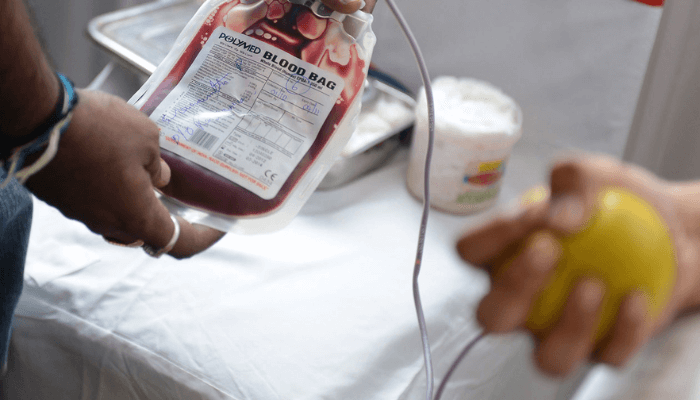
Hannah Oluwayemisi Olawumi, a Professor of Haematology at the University of Ilorin (UNILORIN), has said research findings suggest that blood donation may reduce the risk of cancer and heart attack.
Omowumi stated while delivering her inaugural lecture entitled “Heroes Without Capes: The Life-saving Power of Blood Sacrifice,” held at the University Auditorium.
She explained that blood donation benefits cardiovascular health as it regulates iron levels in the body, adding that excess iron is a known contributor to heart disease.
Olawumi posited that, “excess iron is linked to heart diseases, and there is no natural mechanism for iron excretion other than through the loss of epithelial cells or blood loss. Thus, bloodletting can help regulate excess body iron.

“Each unit of blood contains approximately 250 mg of iron, and regular blood donation helps decrease the likelihood of iron accumulation in the body.
“This explains why women of childbearing age, who lose blood monthly through menstruation, have a lower risk of heart attacks and death from heart diseases compared to men in the same age group.
“Epidemiological studies have indicated a connection between excess iron and an increased incidence and risk of cancer, while experimental research has linked iron to cancer initiation, tumour growth, and metastasis.
“Iron plays a significant role in proliferation, metabolism, and metastasis, reinforcing its relationship with tumour development and progression.
“Cancer cells exhibit an iron-seeking phenotype due to dysregulated iron metabolism, influenced in part by oncogenes and tumour suppressors. Their dependency on iron affects several cell death pathways, including ferroptosis, an iron-dependent form of cell death.”

The haematologist lamented that research conducted in Nigeria had shown that many citizens are reluctant to donate blood due to fears of negative health effects and superstitions that donated blood may be used for rituals.
She emphasised that proper educational programmes and intensive blood donation campaigns are needed to dispel these myths, eliminate fears, and encourage more people to become voluntary donors.
Olawumi called on national health authorities to facilitate the establishment of well-coordinated blood programmes, supported by appropriate legislation, to expand the voluntary blood donor base.
She recommended specific, focused capacity-building initiatives aimed at fostering a paradigm shift in the attitude of hospital staff, particularly those working in blood banks, to improve service delivery and donor experience.