Experts who met at the American Corner in the University of Port Harcourt to review diplomatic communications have revealed that poor diplomacy has denied Nigeria and most African countries of huge economic and investment opportunities.
The experts warned that the underappreciation of diplomatic culture within Africa, particularly in Nigeria, is costing the continent lost investments, broken partnerships, and weakened international relevance.
It is globally recognized that diplomatic skills can significantly boost investment in a country by improving the business environment, building international relationships, and facilitating trade and economic integration.
Diplomats can thus play a key role in promoting their country as a desirable investment location, channeling investor feedback, and helping businesses navigate complex regulations and markets.

The result, it was agreed, is that investors who have been made to feel safe about a country by their diplomats begin to take investment decisions in such favoured country which was softened by diplomats with skills.
On that note, the experts made it clear that diplomacy is good business.
This is said to be more so when Nigeria’s political landscape showed fragility and businesses face increasing uncertainty.
A new call for diplomacy is therefore rising as
the inaugural ‘Diplomacy and Corporate Communications Conference’ (DCCC) held in Port Harcourt has thrown fresh light on the vital role of diplomatic skills in fostering peace, economic growth, and national development.

John Uche, widely known as ‘the social voice,’ and the lead convener of the event, while speaking to students, professionals and policy makers at the event last weekend, passionately stressed the urgent need to bridge the diplomacy gap in Africa.
He said: “Without diplomacy, there can be no peace and without peace, development and prosperity will remain elusive”.
He further stated: “Our schools teach diplomacy in theory, but one cannot find the practical application. We cannot compete globally if our young leaders lack negotiation skills and strategic communication tools.”
Speakers at the conference echoed the same message: diplomacy is no longer reserved for politicians and ambassadors, it is essential for everyone.
Ijeawele Ogbonna, a growth manager in the communications sector, spoke from her professional and personal experiences.
She highlighted how poor communication can easily derail business deals and family relationships alike.
“In my field, one wrong tone can cost millions, today’s conversation shows that diplomacy is not for diplomats alone. It is a survival skill for every individual, organisation, and nation.”
Ebenezer Wikina, founder of Policy Shapers, introduced the concept of digital diplomacy, urging young people to use their phones not only for entertainment but for influencing policies and engaging leaders.
Wikina, also, an oil industry communication expert, highlighted the importance of local diplomacy, especially at grassroots levels where dialogue could prevent crises before they escalate.
“As we see in Rivers State, the lack of dialogue has contributed to instability; diplomacy is cheaper than conflict. Dialogue saves lives, saves resources, and builds stronger communities.”
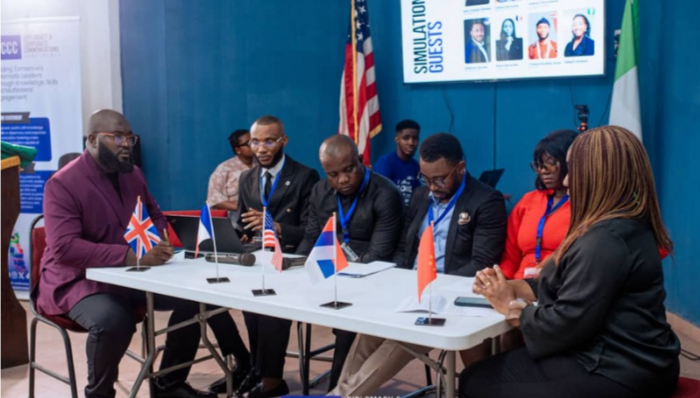
The conference also featured simulation sessions, allowing delegates to experience practical negotiations, fostering critical thinking, empathy, and consensus-building.
Participants tackled real-world issues, demonstrating that with the right skills, conflicts could be resolved peacefully and profitably.
The underlying message was clear: if Nigeria and Africa wish to remain globally relevant, they must cultivate a culture of diplomacy, integrating it into education, governance, corporate structures, and daily interactions.
Uche concluded with a rallying call. “If we rise diplomatically, we rise economically. Peace is not only a human need; it is good business.”
The success of the inaugural ‘Diplomacy and Corporate Communications Conference has now sparked hope that with sustained efforts and support, a new generation of diplomatic leaders will emerge leaders equipped to negotiate not just for themselves, but for the future of the continent.