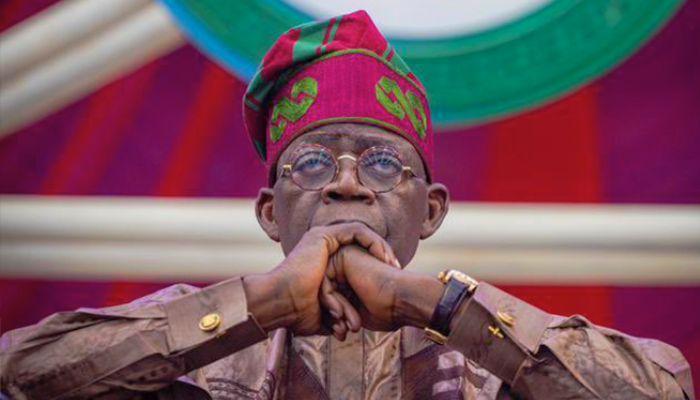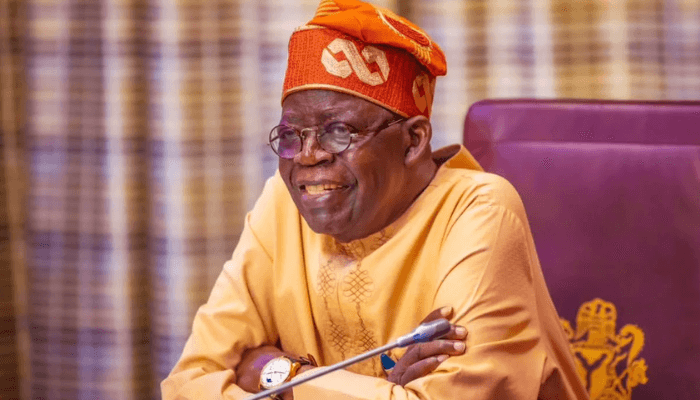
President Bola Ahmed Tinubu is many things to many people. He is like the proverbial elephant, the definition of which differs according to the part of the body the 10 blind men touched.
The quote “Man, know thyself” is often attributed to the ancient philosopher Socrates. The quote emphasises the importance of self-reflection and understanding one’s own nature, capabilities, and limitations, and, to a large extent, seeing oneself through the eyes of others. This aligns with the literary logic that the best way to understand a character is to listen to what people say about the character and what he says about himself.
There must be a time in a leader’s life to take inventory of his/her activities. It matters a great deal how people perceive their leader.
Every leader must be concerned about how he/she is being perceived by those he/she leads. The real perception may not come from those who work directly with such leaders and those who see such leaders as tin gods purely because of pecuniary reasons.

While aides may have a vaunted view of their benefactor, once in a while, leaders must feel the pulse of the people outside the confines or corridors of power.
A time came during the earthly ministry of Jesus Christ when he desired to know the perception of the people about him. He asked his 12 disciples, “Who do men say that I am?”
Beyond the confines of the Aso Rock Villa, there are various perceptions of the man, President Tinubu, in relation to his style of leadership in the close to two years he has been in the saddle.
Again, beyond what the Bayo Onanugas of Aso Rock say about Tinubu, what do Dave Umahis, Reno Omokris, Daniel Bwalas, Nyesom Wike, and Ayo Fayoses of this world say about the Jagaban? Who, really, do the masses of this country say Tinubu is, as their president? That is the crux of the matter because it is in these hapless ones that truth resides.
So, to succeed as the President of Nigeria, Tinubu must fashion out a means of gleaning information from outside his kitchen cabinet.

Power, all over the world, has a way of shielding leaders from reality. They are always cocooned in their palatial mansions and surrounded by O’Yes men and women who chorus to them, “All correct, Sir,” even when everything is far from being correct.
Senseless killings and the government’s inaction
For instance, does President Tinubu know the real pain in Plateau and Benue States at the moment beyond what his advisers tell him?
He might not even be seeing the real figures of casualties as being reported by the media. The Service Chiefs may not be bold enough to declare to him that so-and-so number of citizens have been killed in so-and-so states by bandits, herdsmen, or insurgent Boko Haram, or that new variants of insurgents have emerged to add to the miseries of Nigerians. They may not say such things to avoid looking like failures before the President.
Who will tell the president that many Nigerians are not happy; that the country has descended into a state of anarchy, a field of blood, where life is worth nothing?
How would the president hear that fear has enveloped the land and citizens are wondering what kind of leaders they have?
How would a land be drinking the blood of its people in peacetime as if there was war? Today, 50 were killed in Bokkos; tomorrow, 55 will be killed in Zike, Kimakpa, and Kwali districts of Bassa LGA, Plateau; the next day, 56 will be killed in Logbo and Gbagir communities of Benue, and 100 will be killed in so-and-so places, and no day passes without such reports.
Haba! Who will tell the president that Nigeria is bleeding seriously and that things must not continue this way?
Before his inauguration as the president, many Nigerians had nearly sworn that the country would never experience the level of killings that featured during the Muhammadu Buhari administration.
The basis for such thinking was that Tinubu would not indulge the killer herdsmen as Buhari allegedly did.
During the Buhari era, herdsmen terrorised many parts of the country, particularly Benue State. The killings were so many that the then Governor Samuel Ortom accused Buhari of masterminding the carnage. He was so furious with President Buhari that he was declared a persona non grata in Aso Rock.
Who will tell President Tinubu that since he mounted the saddle on May 29, 2023, bloodshed in the country has worsened? The question on the lips of many people is, why does it seem as if the current administration has become overwhelmed, despite repeated threats?
There is no phrase that the presidency has not employed in warning and assuring the people that the senseless killings will stop. From “enough is enough” to “we are on top of the situation”, to “we stand by you”, to “we are committed to ending insecurity”, to “we will defeat our enemies”, and to legions of others.
During the Buhari administration, there was a strong belief that the then occupant of Aso Rock Villa was complicit, picking dangerous stones for the enemies’ catapult because of ethnic affiliation.
What then could be the reason for the continued carnage and the seeming “see nothing and do nothing” government’s posture under Tinubu?
Some folks tell us that the killings have not reached the level of self-defence, but we may glean a lesson from this quote: “Pale Ebenezer thought it wrong to fight, but Roaring Bill (who killed him) thought it right.” (Joseph Hilaire (Pierre) Belloc, an English writer).
The president must seek a concrete and not pretentious way of achieving victory in the low-grade war that is raging in the country.
He must cue into the philosophy of Winston Churchill, British statesman, that “Victory at all costs, victory in spite of all terror, victory however long and hard the road may be; for without victory there is no survival.”
His ‘lopsided’ appointments?
Who will tell the president that his style of appointments is really deepening the fault lines in the country? The president might be thinking that those appointments were innocuous and in the best interest of the country, but who will tell him that his choices are creating an impression that he is a bigot and a tribal jingoist?
Who will tell the president that Nigeria is a sensitive state, worsened by the civil war, which has engendered certain ways of thinking and sentiments, to the point that even decisions made with the best of intentions are misconstrued? Efforts must be made at all times to ensure that such sentiments are not invoked.
For instance, who will tell President Tinubu that the recent composition of the National Population Census Committee did not go in tandem with the Federal Character that stipulates representatives from various blocs of the country?
Who will tell the Jagaban that the exclusion of the South East and South-South in such a sensitive committee as the census is provocative? Who will tell the president that the perception of the Nigerian citizens matters a lot in determining his success in office?
Human rights status under Tinubu
Before he mounted the saddle as the Nigerian president, many citizens had thought that issues of human rights abuses would be a thing of the past, given his background as a member of the National Democratic Coalition (NADECO) in the military era.
But who will tell the president that since 2023, there seems to be a spike in human rights abuses, particularly in the context of security operations, non-state actor violence, and the struggle for accountability and rule of law?
In a report compiled by Human Rights Watch, Amnesty International, the U.S. Department of State, Freedom House, and the Policy and Legal Advocacy Centre (PLAC), the groups noted that “Nigeria’s human rights situation since 2023 remains a major concern, with reports of widespread violations by state and non-state actors. These include extrajudicial killings, arbitrary arrests and detention, restrictions on freedom of expression and assembly, and continued abuses by non-state actors like Boko Haram and other armed groups.”
The right groups also pointed out that specific concerns include“ state actors extrajudicial killings and abuses by security forces, including military airstrikes that have reportedly resulted in civilian casualties. Restrictions on freedom of expression, including harassment and threats against journalists and activists. Allegations of forced abortions and infanticide by the military in the Northeast. Systemic issues with the security apparatus and the lack of accountability for human rights abuses.
“Non-State Actors: Continued attacks by Boko Haram and other militant groups, leading to displacement, killings, and kidnappings. Bandit attacks in the North-West, resulting in widespread killings, kidnappings, and sexual violence.
“Intercommunal conflicts between farmers and herders in the Middle Belt region, leading to violence and displacement.
“Other Concerns: Challenges with the independence of the judiciary and integrity of the electoral process. Serious corruption cases at all levels of government. Persistent gender-based violence, including domestic violence, sexual violence, and child marriage.”
The president’s endless overseas trips attracting flaks
If the president wants to find out how many Nigerians are receiving his incessant journeys abroad, he needs to ask the right question: ‘What do my compatriots think about my journeys?’ The correct answer cannot come from the Aso Rock precinct.
Hunger in the land
Again, suppose the President wants to know that there is indeed hunger in the land. In that case, it may be the mistake of the century to seek an answer from Nentawe Goshwe Yilwatda, Minister of Humanitarian Affairs and Poverty Reduction. You know why? The minister could declare to him that “palliatives” have gone round and that everybody is just fine, and that anybody complaining of hunger in Nigeria must be an enemy of the government!