|
Getting your Trinity Audio player ready...
|
With Nigeria ranked the 13th most vulnerable country to cyberattacks globally, business leaders are being urged to match the pace of cybercriminals leveraging artificial intelligence (AI) for increasingly sophisticated attacks.
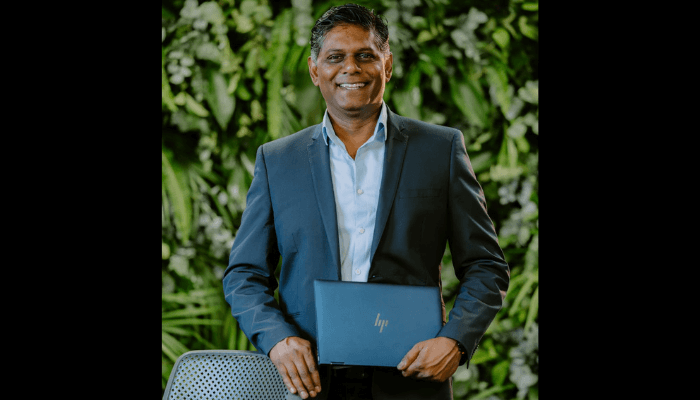
Yesh Surjoodeen, managing director for Southern and Central Africa at HP, warned in a recent opinion piece that Nigerian businesses must urgently adopt smarter device security measures and foster a culture of cybersecurity awareness to stay ahead of evolving threats.
“The race is on between Nigerian hackers using AI to attack and Nigerian businesses using AI to defend,” Surjoodeen said, citing new research by Deloitte.
He noted that cybercriminals are now writing attack scripts, identifying system vulnerabilities, and creating new malware with AI tools—often outpacing existing defence mechanisms.

AI-assisted phishing, which mimics personalised communication with alarming accuracy, has also become a major concern.
“A recent study showed that more than 50 percent of AI-generated phishing emails successfully deceive their targets,” he said.
Read also: AI is an enabler, not a job threat – HP’s Surjoodeen says
According to HP Wolf Security research, device security failures often begin at procurement. “Thirty-four percent of organisations that audit suppliers found at least one hardware provider failed a cybersecurity audit in the past five years, and nearly 18 percent of those cases led to contract termination,” Surjoodeen revealed.
He also flagged weak BIOS security as a critical, yet overlooked, vulnerability. “Fifty-three percent of IT and security decision makers admit to using weak or shared BIOS passwords, with many failing to update them throughout a device’s lifespan,” he said.

Beyond technical defences, Surjoodeen stressed the importance of responsible device decommissioning. “Destroying devices that could be securely repurposed not only drives up e-waste but undermines sustainability efforts. Secure decommissioning solutions can save costs and support ESG goals.”
While AI can be weaponised by bad actors, he argued it can also be a powerful defence tool. HP’s Sure Click Enterprise, for instance, uses machine learning to identify and neutralise threats in real-time, even against zero-day exploits.
“Cybercriminals will continue to harness AI for malicious purposes,” Surjoodeen said. “That’s why business leaders must respond with equal sophistication—by investing in cutting-edge technologies and building strong security cultures.”
As the lines between human and AI capabilities blur, Surjoodeen’s message is clear: securing Nigeria’s digital infrastructure requires a dual approach—technology and human initiative working hand in hand.