Despite an increase in export volumes and revenue in the first quarter of 2025, Nigeria’s Customs Service at the Lilypond Export Command says systemic inefficiencies continue to limit the country’s export potential.
Ajibola Odusanya, the Comptroller, told journalists that the command recorded N7.1 billion in Nigeria Export Supervision Scheme (NESS) payments between January and March, just slightly above the N7 billion recorded in the same period last year.
But what stood out was the value of trade. A combined $986.4 million worth of exports, marking a 318 percent increase from Q1 2024.
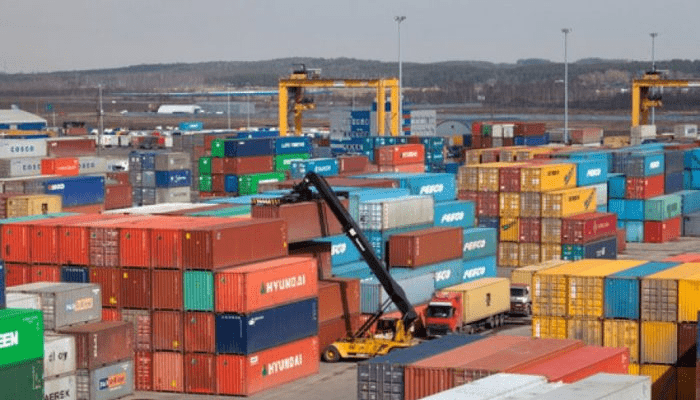
The exports, spread across 11,459 containers, almost double the 5,891 moved in the previous year, comprising mainly agricultural produce, manufactured goods ($329.9m), and solid minerals. These, Odusanya said, show that exporters are responding to the government’s call to grow non-oil trade, and that Customs is actively facilitating the push.

But challenges remain
“We have a lot of containers here, and all of them have been cleared by Customs,” Odusanya said, pointing at trucks stranded around the terminal. “It is the logistics aspect of taking them inside the port that is holding them, and the problem still persists.”
The crux of the matter is the ETO system, he says; a digital truck scheduling platform developed by the Nigerian Ports Authority and managed by Truck Transit Parks.
While designed to ease cargo movement into terminals, Customs and exporters have repeatedly flagged it for causing delays, particularly during peak periods such as this.
Read also: Onne port receives largest container ship

“Before now, maybe 100 export containers entered the port daily. But now, the volume has grown to 200 or 250. They [ETO handlers] must step up their job,” Odusanya said, adding that the command will hold a meeting with the Apapa Port Manager to push for faster admittance.
He also disclosed that the controversial Nigerian Export Proceeds (NXP) form policy, introduced by the Central Bank of Nigeria to ensure repatriation of forex, has been suspended following sustained pushback from exporters and Customs officials.
Odusanya explained that the NXP requirement, in its former structure, had been stalling exports because it demanded information exporters typically only have after their containers have entered the port or even been shipped out.
“It is not all exports that are commercial. We have non-commercial exports like personal effects, repair and return. But they [CBN and NPA] didn’t consider that,” he said. “If they wait for container lists to appear on the NXP before granting port access, many exporters may lose their contracts. Some goods may even spoil.”
While the policy has now been shelved, Odusanya suspects regulators may return with a revised version. “I don’t know if they’ve cancelled it completely, but I know they are now thinking of an alternative way to enforce it without harming exports.”
Odusanya warned that unless these operational barriers, are addressed, Nigeria risks losing the momentum it has built in diversifying its exports and meeting targets under the African Continental Free Trade Area (AfCFTA).