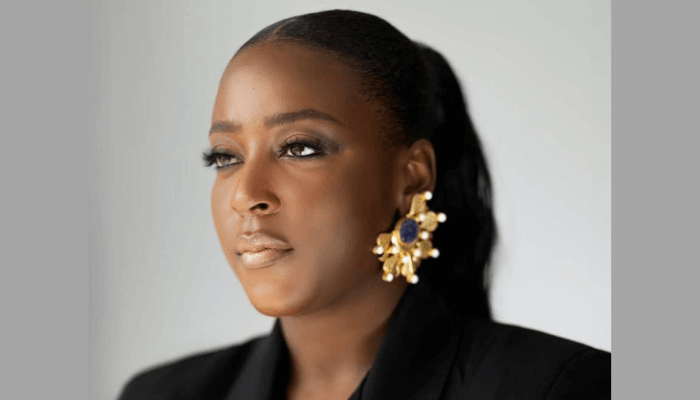
Ugonna Ibe-Ejiogu is a cultural strategist, curator, and founder of Yenwa Gallery and Cinnamon Lagos. Her work bridges art, sustainability, and creative entrepreneurship, with a focus on building systems that elevate African voices and practices. She previously led the revitalisation of the Guild of Professional Fine Artists of Nigeria and has consulted on environmental and cultural projects across Lagos and Abuja. Ugonna holds a Master’s in Management from Harvard University, complemented by an academic foundation in Art History from Sotheby’s Institute of Art and a Bachelor of Science in Biology from the University of Texas at San Antonio. In this interview with KENNETH ATHEKAME, she spoke about the state of the Nigerian creative industry and the roles of digital platforms and online sales in the growth of the Nigerian art market. Excerpts:
From your perspective, how would you characterise the current state of the Nigerian creative economy? In 2022, it contributed approximately $5.6 billion. The Federal Ministry of Information and National Orientation has set an ambitious goal to grow the sector to $20 billion by 2027. Do you think this is viable, considering the current state of the Nigerian economy?
Creativity isn’t fluff. Its structure, labour, economic output, and it already plays a significant role in Nigeria’s GDP. The $20 billion target is viable, but only if we start treating the sector like the serious business it is. That means building infrastructure, streamlining funding access, strengthening IP frameworks, and embedding creative industries into national development plans. Encouragingly, we now have a dedicated Federal Ministry of Arts, Culture, and the Creative Economy. That alone is a structural shift with real potential. The appointments so far are promising, but as always, the outcome depends on follow-through. Stakeholders across the sector have been clear on what’s needed for years. The real question is whether political will and coordinated investment will finally match the vision.
What are some of the most significant changes you’ve observed in the Nigerian art scene since you began your career at Terra Kulture?

The scene has opened up—literally and figuratively. When I began at Terra Kulture, Lagos was the nucleus, and there was a strong institutional hold on where and how art was shown. That foundation was valuable. But what we’re seeing now is a more layered, decentralised, and dynamic ecosystem. Independent spaces have gained momentum, and new galleries are emerging with global ambition and curatorial clarity. We’re also seeing stronger intergenerational relationships—something I find vital. Contemporary work doesn’t exist in a vacuum. Context matters. That kind of exchange deepens the practice, for artists and audiences alike.
What do you see as the primary strengths and weaknesses of Nigeria’s creative economy today?
Our biggest strength is the abundance of talent and the instinct to create against all odds. Nigerian creatives are resourceful and globally resonant. We move culture. The weakness lies in the scaffolding—or lack of it. We don’t have enough formal infrastructure, data systems, capital access, or legal protection. The ideas are there, but the systems that help them scale are still underdeveloped.
How do you believe Nigeria’s creative economy can be better positioned to compete on a global scale?
The challenge isn’t that we’re outside the global conversation. It’s that we often don’t leverage our full power within it. Nigerian creatives already shape global culture in fashion, music, and visual art. What’s missing is coordinated strategy and infrastructure to match that influence.

To compete globally, we need to strengthen what’s happening locally. That means investing in education, policy, intellectual property protection, and funding structures that allow creatives to scale sustainably. We also need to build better bridges between the creative sector and industries like tech, tourism, and manufacturing because that’s how long-term ecosystems are built. We don’t lack talent or relevance. What we need is to stop underestimating the value we already hold and start positioning it with intention.
You’ve worked with both institutional and independent art spaces. In your opinion, what role do these different entities play in the overall health of the creative economy?
Institutions provide legacy, structure, and public validation. They anchor the field. But many of ours still need strengthening—in funding, governance, and clarity of purpose. Independent spaces, like Yenwa, are more agile. We can take risks, hold space for emerging voices, and respond quickly to the culture. Both models are necessary. A thriving ecosystem isn’t either or, it’s when the two are in conversation, creating balance between stability and experimentation.
You successfully revitalised the Guild of Professional Fine Artists of Nigeria (GFA). What were some of the key strategies you employed to achieve that, and what lessons can be applied to other cultural institutions in Nigeria?
When I was appointed Director of GFA, I became only the second person to hold the position. The Guild had gone nearly a decade without formal leadership. Though its members are some of Nigeria’s most accomplished artists, the institution needed renewed visibility and structure to re-engage with the broader ecosystem. We reactivated membership communication, reintroduced public programming, and opened the GFA Gallery—its first dedicated exhibition space after years of showing primarily at Terra Kulture. That shift gave the Guild a renewed platform for dialogue, collection-building, and critical engagement.
I’ve continued to maintain that relationship, most recently through a collaborative exhibition at Yenwa Gallery. Institutions thrive when they’re actively participating in current cultural dialogues.
As the founder of Yenwa Gallery, you’ve focused on nurturing critical voices and experimental practices. How important is it for galleries to prioritise these aspects in the Nigerian context?
There’s room for different gallery models, and all are essential. But at Yenwa, I’ve chosen to take a curatorial and process-driven approach. It’s not just about sales—it’s about shaping ideas, supporting artistic risk, and deepening engagement with the work. In a market that’s still forming its identity, I think it’s important to hold space for practices that challenge the mainstream or push cultural boundaries. That’s where the most meaningful growth often happens. And for me, prioritising critical voices isn’t just a mission—it’s a responsibility.
Yenwa has participated in international art fairs. How crucial is international exposure for Nigerian artists and galleries in developing the creative economy?
It’s incredibly important. International exposure isn’t just about visibility, it’s about validation, market access, and long-term growth. Showing in Johannesburg, Cape Town, and Miami has allowed our artists to reach collectors and institutions they might not otherwise encounter. But it also creates benchmarks. It forces us to level up—curatorially, logistically, and strategically. Nigerian art has global relevance, and we should be participating in those conversations not as guests, but as contributors.
How can galleries like Yenwa contribute to the sustainability and growth of the art market in Nigeria?
Galleries are the backbone of any art market. We build trust between artists, collectors, and institutions. At Yenwa, we don’t just show work—we invest in artists, help shape careers, educate new collectors, and position work for long-term value. Valuation is part of that. We help set and protect the worth of an artist’s practice, not just in terms of price, but context. A strong gallery creates infrastructure, provides transparency, and nurtures the relationships that allow a market to not only exist but thrive.
How do you see the role of digital platforms and online sales in the growth of the Nigerian art market, especially for emerging artists?
Digital platforms have changed the game. They allow artists to bypass traditional gatekeepers and connect with audiences globally. But visibility without context can be risky. Curation and narrative still matter. That’s something galleries and cultural institutions must continue to offer. Emerging artists benefit most when digital tools are paired with mentorship, documentation, and strategic exposure. Online sales are just one layer—the real value is in how digital platforms can democratize access, archive practice, and build audience over time.
You serve on the Culture and Environment subcommittee of Nigeria’s national policy review. What are some of the key policy changes you advocate for to support the creative economy?
Policy must stop treating culture as optional and start treating it as economic infrastructure. That means real investment, clear funding structures, and legal frameworks that protect both heritage and innovation. With the creation of the Federal Ministry of Arts, Culture, and the Creative Economy, we’re finally in a position to design policy that matches the scale of the sector’s potential. My focus has been on centering community-led practice, sustainability, and access to resources,
particularly for creatives working outside the usual urban bubbles.
How can Nigeria leverage its rich indigenous knowledge systems to create a more sustainable and culturally relevant creative economy?
We don’t need to invent sustainability. It already exists in our indigenous knowledge systems—through material use, community structures, and storytelling traditions. These systems aren’t just heritage, they’re models for circular economies and climate-conscious design. The creative economy can honor and adapt these practices across fashion, architecture, design, and education. But it requires intentional funding, documentation, and public engagement to bring that wisdom forward—not as nostalgia, but as strategy.
How do you think the government and private sector can better collaborate to invest in and support the creative industries?
The government has a duty to subsidise the creative economy, not because it’s charity—but because the return is national image, cultural diplomacy, and exportable value. We need strong public-private collaboration, but we also need the private sector to stop treating creativity like CSR. It’s an industry. Treat it as such. Philanthropic patronage is another powerful piece of the puzzle—supporting institutions, exhibitions, and archival work that may not yield immediate returns, but that build cultural capital and continuity.
How can the government better protect intellectual property within the creative space?
Start with simplification. Make IP registration easier, cheaper, and digital. Invest in public awareness so creatives understand their rights. Then enforce it through updated legal mechanisms and creative industry-specific support systems. We’ve seen countries where creators can register their work and access mediation tools without needing a law degree. Nigeria can do the same. IP protection isn’t just about ownership—it’s about dignity and long-term value creation.
As President of the Lagos chapter of Alpha Kappa Alpha Sorority, Inc., you focus on youth development and education. How do you see the role of community-based initiatives in fostering creativity and building a strong creative economy?
Community-based initiatives are where access begins. At Alpha Kappa Alpha Sorority, Inc., our work around education, economic wealth building, and empowerment creates the foundation for broader participation, including in creative fields. Through scholarship drives, career readiness workshops, and leadership programs, we’re not just giving resources—we’re shaping mindsets. And when done right, these community-led efforts fill the gaps that formal systems often overlook. Creativity isn’t exclusive. It’s built—and that building starts in community.
What role does women empowerment play in the development of the creative economy, and how can we ensure greater inclusivity?
Women are already driving the creative economy—we just need more structures to match their impact. Some of the most respected galleries and institutions in Nigeria are led by women. That’s not coincidence. It’s evidence. The creative value chain is wide. Women are leading not only as artists, but as strategists, coordinators, installers, producers, and researchers. These roles sharpen transferable skills and often open entrepreneurial pathways. To ensure greater inclusivity, we need targeted funding, mentorship, and long-term investment. The proof of impact is already there—we just need to scale it.
How can the creative sector contribute to social and economic development in Nigeria, particularly in addressing issues like unemployment and poverty?
Creativity isn’t just expressive, it’s functional. The sector builds systems of value, offering real career paths through its entire value chain. From production and logistics to research and storytelling, it absorbs a wide range of talent and skill sets.
It also cultivates transferable skills—collaboration, time management, problem-solving—that hold value across industries. We’ve seen people enter creative spaces and build careers that might not look creative at first glance, but are rooted in the ecosystem. This isn’t niche—it’s infrastructure for the future.
How does your womenswear brand, Cinnamon Lagos, reflect your broader vision for the Nigerian creative economy?
Cinnamon Lagos is where my design instincts meet my values. It’s an intimate form of expression—I enjoy dressing women, shaping how they feel in their clothes. But it’s also a business grounded in intentional design, ethical production, and cultural storytelling. Through Cinnamon, I’ve navigated the real-life challenges of creative entrepreneurship in Nigeria—sourcing, scaling, and building a brand within a fragmented system. That experience informs how I think about policy, infrastructure, and creative resilience. Whether through fashion or visual art, my work is always about building systems that allow creative excellence to thrive on our own terms.