During the week, the federal government unveiled a corporate governance scorecard aimed at evaluating and improving the performance of state-owned enterprises (SOEs). This was announced by the Honourable Minister of Finance, who also serves as the Coordinating Minister for the Economy, Mr Wale Edun, in Abuja. This initiative was spearheaded by the Ministry of Finance Incorporated (MOFI), in collaboration with the World Bank, with the ultimate aim of instilling accountability, financial discipline, and transparency in key government-owned entities.
According to the release, the scorecard will identify weaknesses, guide reforms, and reposition SOEs as engines of economic growth. Officials highlighted recent reforms, such as the unbundling of the Transmission Company of Nigeria, as a step towards better governance, the report read.
Sometime in the early 2000s, the world economy witnessed a decline in growth prospects and stability. This was observed across various sectors of both national and international economies, with devastating impacts.
Read also: Poor corporate governance crippling Nigeria power sector, Minister Adelabu warns

The data indicates a significant increase in corporate governance violations during the late 1990s and early 2000s. Domestically, these structural anomalies infiltrated the affairs of financial institutions and later extended to other corporate entities within Nigeria. Ironically, this led to the hasty dissolution of banks’ Boards of Directors (BOD) well before the expiration of their tenure.
One major reason given by the central bank for the premature dissolution of these banks’ boards was inefficiency and ineffectiveness in the discharge of core responsibilities by the directors.
Internationally, several documented cases of corporate governance infractions surfaced, beginning in Europe and extending to Asia. Records show that in the early 2000s, executives at the Houston, Texas-based energy company Enron colluded with the then globally reputable accounting firm, Arthur Andersen, to conceal billions of dollars in debts from failed projects and deals over the years. The resulting bankruptcy was one of the largest in the history of the United States.
“Strategically, good corporate governance aligns with long-term organisational goals, significantly reduces labour turnover by providing job security, and ensures compliance with best practices.”
Other notable global cases of corporate governance failure included MCI, Tyco, Adelphia, and WorldCom.

Before delving further into this critical subject that continues to challenge global business environments, it is essential to examine the concept of ‘corporate failure’ and clarify the ideology behind corporate governance.
Corporate failure defined
Corporate failure refers to a situation where a business—such as a corporation, bank, or insurance company—is heading towards closure or cessation of operations. In essence, the company becomes financially unhealthy or unstable.
One of the potential solutions to corporate failure is the full adoption and implementation of the principles and practices of good corporate governance.
Corporate governance defined
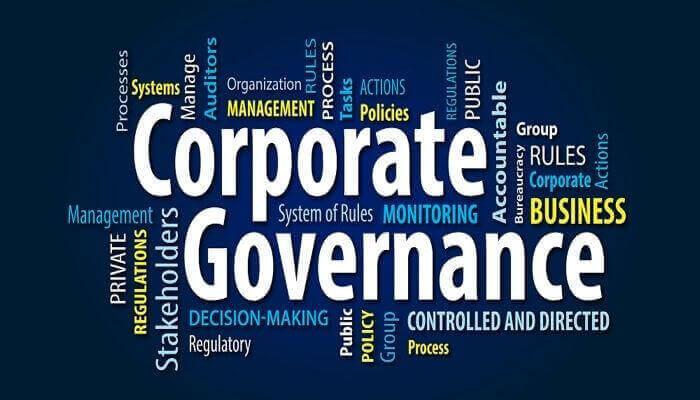
Corporate governance primarily focuses on the proper management of a company’s affairs in the best interests of all stakeholders—shareholders, lenders, government, regulators, creditors, competitors, and the general public.
Before the early 2000s, corporate governance principles were relatively unfamiliar within the Nigerian corporate environment. Much of the early guidance came from the United States, Canada, and Europe.
Corporate governance can also be defined as the system or process by which a corporate entity’s affairs are directed and controlled by those responsible for its oversight.
An ideal corporate governance framework is built upon several key principles: demonstrating a high level of accountability and transparency at all times, avoiding conflicts of interest to maintain independence in judgement, upholding the integrity of financial records, meeting obligations to various stakeholders, and complying with applicable rules and regulations.
When a corporate entity adopts a well-structured governance ideology, the benefits are numerous. These include promoting ethical behaviour among corporate leaders, especially at the executive level, and enhancing the company’s image—boosting brand loyalty and driving sales. It also enables efficient decision-making processes that yield strong results and supports credible and efficient reporting systems.
Read also: Lack of corporate governance is costing startups millions — Report
Strategically, good corporate governance aligns with long-term organisational goals, significantly reduces labour turnover by providing job security, and ensures compliance with best practices. It also eliminates conflicts of interest that can disrupt business operations, strengthens internal controls to prevent fraud, and attracts competent board members who add value to the organisation.
Moreover, it aids in addressing business risks through effective mitigation strategies, fostering a safe operating environment. It encourages the free flow of capital and ultimately assists the organisation in achieving its goals and objectives.
Most importantly, corporate governance plays a crucial role in instilling accountability, financial discipline, and transparency among government-owned entities—both at federal and state levels.
Dr Kingsley Ndubueze Ayozie FCTI, FCA is a Public Affairs Analyst and a Chartered Accountant by profession . He writes from Lagos .