The African Union Inter-Africa Bureau for Animal Resources (AU-IBAR) says Nigeria’s Feed and Fodder sector offers an investment opportunity worth $1 billion.
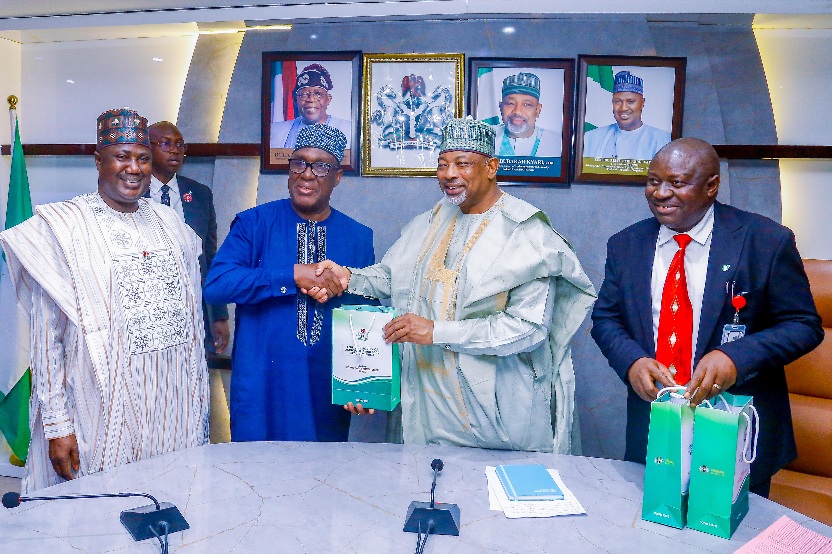
This was the assertion at the High Level Inventory and Investment Forum for Nigeria themed: Harnessing Feed and Fodder Data for Sustainable Livestock Sector Development, Resilience and Stability, organized by the African Union, held in Abuja, on Thursday, April 17, 2025.
The AU-IBAR project aims at enhancing feed and fodder production, developing a feed inventory and balance sheet, as well as a data dashboard to track feed and fodder availability in six African countries, including Nigeria.
Read also: Nigeria secures major mining investment, targets $25bn GDP boost, $8bn FX Alake

Organisers said the project is expected to promote livestock development, enhance food security, and support the growth of the feed and fodder sector.
Huyam Salih, director, AU-IBAR emphasized that sufficient feed and fodder are crucial for transforming livestock development and ensuring high productivity.
“The project involves developing a feed and fodder dashboard to capture production and availability data, enabling governments to take corrective action to support the sector. The dashboard will help identify gaps and shortages, allowing for early warning systems to be put in place.
She said the project is being implemented across the 6 participating countries including Nigeria in Nigeria (West Africa), Cameroon, (Central Africa), Uganda and Kenya, (East Africa) and Somalia as well and Zimbabwe (South Africa).
The director noted that the high-level event is to hand over the feed and fodder balance and data dashboard to the government of Nigeria after being developed as one of the activities by this project.

“Feed and fodder gap in the continent is so high and represents like 48% of the challenges faced by the livestock sector in Africa,” Salih said.
“Feed and fodder is subject to different climatic factors and commercial issues, the project has worked with the International Livestock Research Institute, ILRI, to prepare the inventory and the balance sheet for the animal feed and fodder in Nigeria and other countries.
“Besides that, we have developed the animal feed and fodder dashboard which will be capturing the production and the availability of feed and fodder and where there is a gap or a shortage.
“This will be captured by the system and dashboard and the work is done in collaboration with the National Bureau for Statistics so that the government will be able to take corrective action to support the production of animal feed and fodder.”
In his remarks, Laban MacOpiyo, the animal production, natural resources management and resilience expert, AU-IBAR said Nigeria has a feed and fodder deficit of almost 10%.
The deficit is largely due to distribution issues, with the northern part of the country, where most livestock are found, lacking adequate fodder, while the southern states have an abundance of feed and fodder that often goes to waste.
Read also: FG targets $74bn from livestock investments
“Our assessment has assessed that this Feed and fodder in Nigeria is a $1 billion investment opportunity,” he said.
MacOpiyo emphasized that investing in feed and fodder can address farmer-herder conflicts, upgrade livestock production, and contribute to food security.
“Feed and fodder need to be looked at as a business. It should not be an afterthought,” he stressed.
As you may know, to enhance and transform the livestock development in any African Union member state, we need first to ensure that there is sufficient feed and fodder to transform this development to make sure that there is a high productivity from the animals and the livestock.
Maikano Mohammed Ari, President of the Nigerian Feed and Fodder Multicultural Platform, highlighted the importance of addressing the feed and fodder deficit to promote exports and food security.
“Any country that cannot feed its animals cannot feed its own people,” he noted.