As Nigeria turns to renewable energy, solar power stands out as one of the most promising and accessible solutions to bridge the energy deficit that’s left millions seeking alternatives.
However, the local solar manufacturing industry remains stunted despite Nigeria’s immense solar potential and growing demand for energy alternatives.
At the heart of the problem lies a glaring policy contradiction – while fully assembled solar panels are imported into Nigeria duty-free, with the exemption of photovoltaic cells, other essential raw materials required to produce these panels locally are slapped with significant import duties.
This paradox has created a serious market disadvantage for local manufacturers, slowed progress toward energy independence, and undermined the federal government’s industrialisation ambitions.

“If Nigeria is serious about embracing a greener future, unlocking economic growth through industrialisation, and creating meaningful jobs, the time has come to eliminate import duties on all raw materials for solar panel manufacturing,” a Lagos-based energy consultant familiar with the matter said.
Local manufacturers groan as foreign competitors eat fat
Local solar panel manufacturers in Nigeria currently face a daunting challenge. While photovoltaic (PV) cells are rightly exempt from import duties, manufacturers must still pay import duties on a wide range of other essential raw materials, including but not limited to: Tempered PV Glass, Backsheet Film, EVA Fast Cure, Ribbon, Frame Kit, Junction Box, Frame Silicone, JBox Silicone, Potting Silicone, Flux, Backlabel and Wax Toner/Module.
In contrast, fully assembled solar panels can be imported duty-free, allowing foreign competitors to bypass the cost barriers that local manufacturers must absorb. This undermines Nigeria’s ability to build a strong domestic solar manufacturing base, limits job creation, technology transfer, and long-term energy security.
Read also: Solar import ban risks backfiring in energy-starved Nigeria
“What is needed is a comprehensive duty exemption policy covering all solar panel components, not just selected items like the Photovoltaic cells,” the energy consultant added.

This will level the playing field, reduce production costs, and support the growth of Nigeria’s renewable energy sector.
“It’s like running a race with your shoelaces tied,” said one Adeniyi Ojo, Lagos-based solar panel retailer. “We are expected to build a competitive product, yet the policy environment stacks the odds against us from the start.”
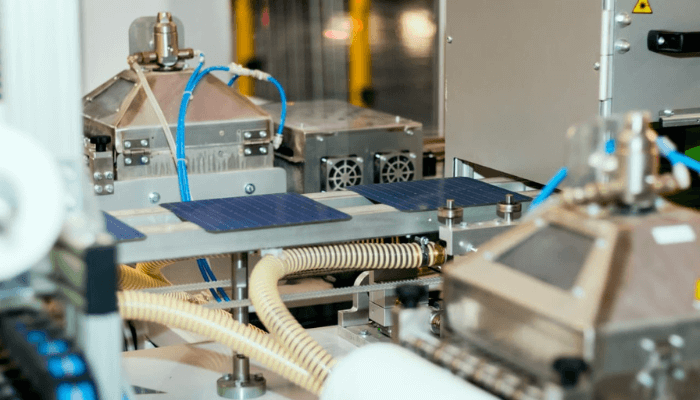
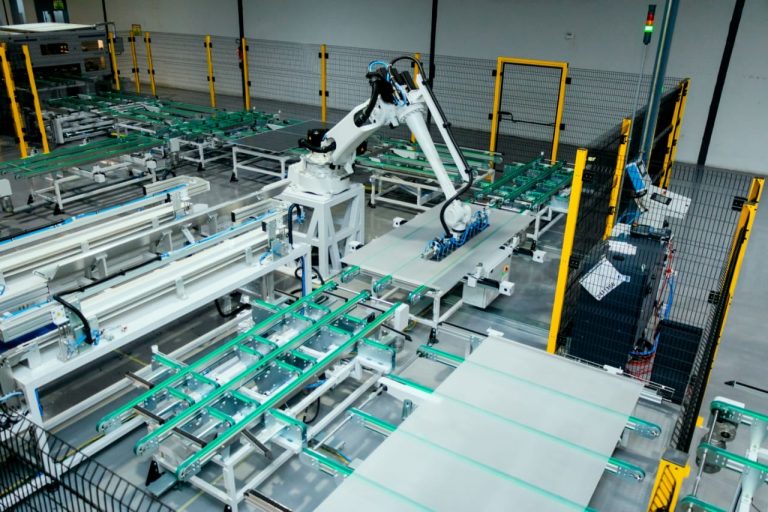
Local manufacturers like LPV Technologies, which operate Nigeria’s largest solar panel manufacturing line, are directly impacted by this policy inconsistency.
This imbalance discourages local investment and hampers the growth of a viable solar panel manufacturing industry. It also means that Nigerian manufacturers cannot take full advantage of the rapidly expanding demand for solar energy across homes, businesses, and rural communities.
Backward integration policy falters
Nigeria’s industrial policy has long emphasised the importance of backward integration—where local production replaces imports through the development of domestic capacity. But how can backward integration succeed when the cost of inputs is artificially inflated by counterproductive duty regimes?
The removal of import duties on solar panel raw materials would send a clear signal that the government is committed to industrial growth and sustainable development. It would align energy and industrial policies and make the local solar manufacturing sector more attractive to investors.
This shift is especially crucial as Nigeria works toward its renewable energy goals under the Sustainable Energy for All (SE4ALL) initiative and National Renewable Energy and Energy Efficiency Policy (NREEEP).
Local content development should be more than just rhetoric—it must be backed by practical, enabling policies that reduce barriers to entry for indigenous producers and entrepreneurs.
Nigerians pay more for clean energy as import duties inflate prices
The downstream effects of these duties are felt most by the Nigerian consumer. Import duties on most raw materials inflate the final cost of locally manufactured solar panels.
As a result, Nigerian households and businesses end up paying more for a clean energy solution that should ideally be both accessible and affordable.
This pricing disparity limits the adoption of solar technologies in a country that desperately needs to diversify its energy mix. With over 85 million Nigerians lacking access to electricity, solar power represents a life-changing solution. But without policy reform, it would remain out of reach for many.
Companies such as LPV Technologies strive to provide cost-effective solar solutions but are limited by the inflated cost of importing most of these raw materials.
By removing import duties on raw materials, the production costs for local manufacturers would drop significantly. These savings could then be passed on to consumers, making solar energy systems more competitively priced and promoting wider adoption—especially in underserved rural areas where grid electricity is still a challenge.
Read also: Nigeria’s solar industry sees unprecedented growth, but affordability remains a challenge
Job creation, skill development grows on policy reforms
The benefits of policy reform extend beyond economics—they impact people’s lives directly through job creation and capacity building. A thriving solar panel manufacturing sector has the potential to generate thousands of jobs, not only in production but also in installation, distribution, maintenance, and after-sales support.
When production becomes more viable, companies can scale, open more plants, and invest in workforce development. Technical training and skill acquisition in renewable energy technologies can become mainstream, providing young Nigerians with pathways to employment in one of the most promising global sectors.
LPV Technologies, which employs Nigerian technicians and engineers at its Lagos-based facility, is poised to expand its operations and workforce if input costs are reduced.
Yet, current policies act as a constraint on this potential. As one solar panel entrepreneur aptly noted, “We cannot have policies that protect local industries with one hand while tying their hands with the other. If raw materials remain expensive due to duties, we cannot grow—let alone employ more people.”
Nigeria’s demographic realities demand urgent action. With a median age of just 18 years and millions entering the labour market annually, job creation is a national imperative. Renewable energy—and solar in particular—offers a scalable solution, if the policy environment allows it to thrive.
Industry experts call for urgent reforms
To unleash the full potential of Nigeria’s solar panel manufacturing sector, the federal government must take decisive action.
Industry experts have called for urgent reforms among which are extension of import duty waivers to all raw materials and components used in solar panel production as well as establishing a clear and supportive industrial policy for renewable energy, with targeted incentives for local manufacturers.
For instance, indigenous solar panel manufacturers like LPV Technologies could double its production capacity and reach underserved markets if import duties on all raw materials for solar panel manufacturing are removed.
There is also the need to streamline customs processes and reduce bureaucracy to make importing inputs more efficient and transparent and provide access to affordable financing for solar entrepreneurs and manufacturers through development banks and green funds.
Lastly, it is important to promote local content and capacity development through partnerships with technical institutions and global manufacturers.
These reforms are not just about solar panel manufacturing – they are about building a resilient, energy-secure, and economically vibrant Nigeria. They are about matching words with action and vision with execution.
Nigeria stands at a critical juncture. The global shift toward clean energy is irreversible, and nations that adapt early will reap the benefits of innovation, industrial growth, and energy resilience.
By removing import duties on all raw materials for solar panel production, Nigeria can take a bold step toward this future.
The removal of these duties is not a handout to local manufacturers – it is a strategic correction that aligns policy with national interest. It is a move that will boost competitiveness, attract investment, empower consumers, and unlock green jobs for millions of Nigerians.