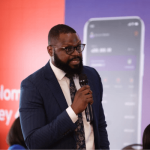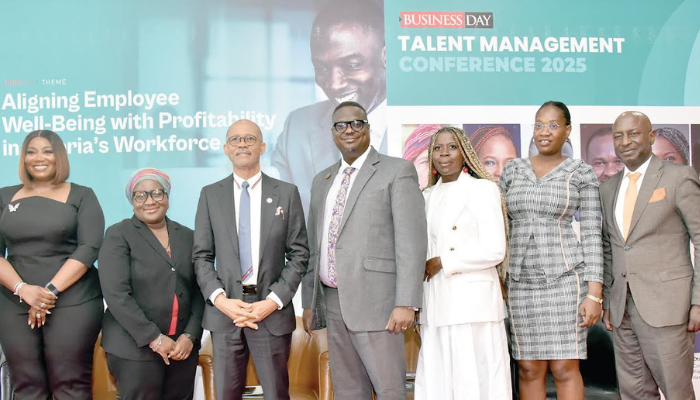
Oluwayomi Nakpoberuo, a well-being (emotional and mental health) expert at Owning My Greatness Ltd, has advocated that business and corporate leaders need to imbibe vulnerability as a leadership tool to foster engagement and productivity from their employees.
She noted this while bringing a more personal lens to engagement, during a panel session titled: ‘Engagement profitability nexus and driving business growth through people’, at theTalent Management conference organised by BusinessDay and Great Place to Work.
The panel, which had human resource and business leaders, brought to life people-centric practices which are increasingly shaping the modern workplace; not as a nice-to-have, but as a strategic imperative.
The session underscored a growing consensus: that investing in people is no longer optional, but essential for sustained business success. Across roles and sectors, the message was clear — where people thrive, business follows.

Read also: Business leaders push for policy consistency to boost Nigeria’s economic resilience
Speaking further, Nakpoberuo believes deep listening rather than box-ticking feedback sessions, creates more engagement with employees.
“When I can be vulnerable with my colleagues, they can also be vulnerable. People model what they see. I’m not listening to respond; I’m listening to hear what they are saying so we can find a solution together”.
“You cannot separate the person from the professional; when employees are well mentally and emotionally, they bring their best selves to work,” she said. “It is therefore important to foster psychological safety by prioritising trust and confidentiality. Creating a safe space for employees is critical… We frown heavily on leaks. It erodes trust and slows healing.”
Funke Shobanjo, chief operating officer at FBNQuest, also made a compelling case for tying employee engagement to measurable business outcomes. “We track our engagement score and tie it to business performance,” she said. “When engagement is high, productivity improves, client experience improves, and there’s a direct impact on our bottom line.”

According to Shobanjo, leadership must set the tone. “If leaders don’t model the culture, engagement efforts won’t stick. It must start from the top — through open communication, recognition, and accountability”, she said.
Read also: Nigeria business leaders urged to innovate processes for market relevance
Investing in people for sustained business success
The power of empathy was a recurring theme. Beyond the numbers, Oluseyi Fasanya, HR director at DHL Express acting as the panel moderator, offered a thoughtful reflection noting, “A shift is underway, as we are seeing employees as ‘resources’ to recognising them as co-creators of business value.”
Recalling his personal experience of bereavement, he said, “I’ve gone through wellness challenges, including the loss of a spouse. I understand how important it is when organisations truly show up for their people. That support resonates with them and stays with them – that’s what great workplaces do.”
Speaking further on this, Nakpoberuo also explained that employees need to be well mentally and emotionally to bring their best selves to work. She shared, “Imagine a scenario where someone has lost a parent and has to return to work the next day. That person’s mind will not be on the job. So we try to show empathy… especially around mental health.”
The importance of soft skills was echoed across the session, with panellists highlighting coaching, communication, and connection as key to staff engagement, outlining the “five Cs” they use to drive engagement: Care, Connect, Coach, Contribute, and Congratulate — principles that translate into real-world practices.
Some examples of the real world practices include managers acting as life coaches, or incentives such as shuttle services introduced through staff feedback.
From the startup ecosystem, Oluwaseun Oladimeji, group head for business growth at Blue Bulb Financials spoke on building trust through ownership.
“Engagement is built through trust and ownership. We involve our people in decision-making and reward innovation.” The company embraces a culture-first approach to people strategy, with initiatives like knowledge-sharing sessions on communication and respect across levels. “Culture is very important to us as a business. People are our differentiating factor.”
Read also: Leadership: Live examples are the most powerful tools
Tying engagement to measurable business outcomes
Shobanjo emphasised the role of ongoing feedback in staying agile. “We use quarterly pulse surveys to listen to our people. We’ve made changes based on that feedback, whether in policy, communication, or leadership development.”
Her emphasis on metrics was unwavering. “Regrettable attrition is costly. If the person is still on your payroll today, then it means you had a reason to keep them.” She also linked manager effectiveness directly to staff retention, noting, “People don’t leave companies, they leave managers. Empathetic, supportive, and understanding managers are essential.”
All panellists echoed the need for inclusivity of wellness policies to both core and support staff, as they deserve the same level of inclusion and appreciation.

![G20 leaders [PHOTO CREDIT: G20]](https://businessday.s3.eu-west-1.amazonaws.com/wp-content/uploads/2025/04/The-6-G20-Nations-dominating-Africas-development-150x150.jpg)