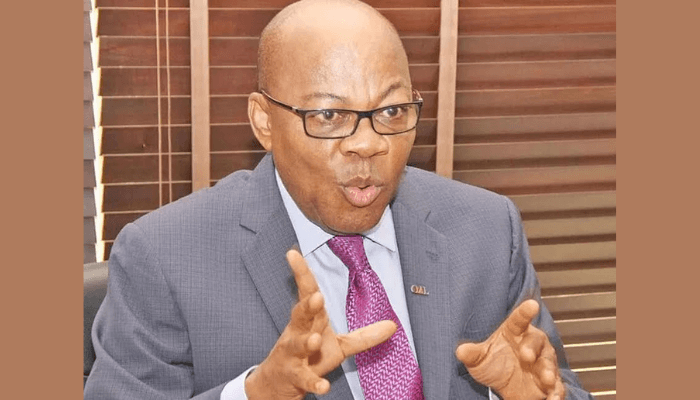
Being the text of a policy report by Olisa Agbakoba (SAN) titled: ‘OAL GOVERNANCE and ECONOMIC ANALYSIS and FORECAST 2025: TO SUCCEED, NIGERIA NEEDS INNOVATION and EFFICIENCY to CREATE a ₦500 TRILLION BUDGET for 2026/2027’ at a media event held in Lagos, recently.
- Executive summary
- Introduction
- The debt challenge
- Theoretical framework: Why nations fail
- Extractive vs. inclusive institutions
- Historical pattern of failure
- Nigeria’s challenge
- III. Governance analysis: Reimagining Nigeria’s governance architecture
- Political order and national unity
- Devolution of powers (restructuring)
- Constitutional reform
- Electoral reform and democratic consolidation
- Public service reform
- Judicial independence and legal system reform
- Department of innovation and efficiency
- Strengthening the anti-corruption system
- IV. Economic analysis: Strategic pathways to a ₦500 trillion economy
- MOFI optimisation
- Enforcement of Section 162 of the Constitution
- Maritime and Blue Economy development
- Oil and Gas Reform – From “Contract Oil” to “Development Oil”
- Financial services sector revitalization
- Digital economy expansion
- Tax reform and revenue collection
- Local content enforcement
- Unlocking dead capital
- Trade policy reform
- Shifting economic World Order
- Critical minerals development
- Aviation sector revitalization
- Space industry development
- V. Implementation framework
- Legislative agenda
- Governance structures
- Financing mechanisms
- Private sector engagement
- “Trumpian speed” approach
- VI. Monitoring and evaluation
- VII. Conclusion
Executive summary
This policy paper presents a comprehensive strategy for Nigeria’s economic transformation from a resource-dependent economy to a diversified, production-oriented powerhouse capable of generating a ₦500 trillion budget by 2026/2027. This ambitious target represents a fundamental reimagining of Nigeria’s economic architecture and governance model that will address unsustainable debt burdens while dramatically enhancing revenue generation.
Drawing on Acemoglu and Robinson’s “Why Nations Fail,” our analysis demonstrates that Nigeria’s economic underperformance stems primarily from extractive institutions that concentrate power and wealth among elites. Sustainable prosperity requires replacing these with inclusive institutions that distribute economic and political power broadly across society.
Our analysis reveals two fundamental imperatives for transformation:

First, Nigeria must restructure its governance architecture through meaningful devolution of powers to states and local governments, constitutional reform that reflects true federalism, judicial independence, and legal system modernization, and comprehensive anti-corruption measures and public service reform.
Second, strategic interventions across multiple sectors can unlock over ₦500 trillion in economic value. These include ₦85 trillion from oil and gas reform through a shift from “Contract Oil” to “Development Oil”; ₦65 trillion from comprehensive tax reform and enhanced revenue collection; ₦50 trillion from MOFI optimization through asset monetization and public-private partnerships; ₦45 trillion from strategic development of critical minerals; ₦40 trillion from unlocking “dead capital” through property rights reform; ₦35 trillion from maritime and blue economy development; ₦30 trillion each from aviation sector revitalization and digital economy expansion; ₦25 trillion each from enforcing local content requirements and implementing strategic trade policies; and ₦10 trillion from space industry development.
Implementation requires execution at “Trumpian speed” – characterized by decisive action, concurrent implementation across multiple fronts, results-oriented governance, bureaucratic streamlining, and technology leverage for acceleration.
The ultimate success of these economic policies will be measured not by macroeconomic statistics or international recognition, but by tangible improvements in the daily lives of ordinary Nigerians:
1. Does the market trader in Onitsha have more money in her pocket?

2. Is food more affordable for the factory worker in Kano?
3. Can the farmer in Benue access better healthcare and education for his children?
4. Does the office worker in Lagos see a clear path to a better future?
With a rapidly growing population, intensifying climate impacts, escalating global competition, and an unsustainable debt burden, Nigeria must capitalize on recent reform momentum to build inclusive institutions for broadly shared prosperity. The transformation outlined in this report is not just economically necessary—it is the moral imperative of our time.
Introduction
Nigeria stands at a critical economic crossroads in 2025. Recent data presents a nuanced picture of an economy showing promising signs of recovery, yet still underperforming its vast potential. The fourth quarter of 2024 saw GDP growth of 3.84% year-on-year—the fastest in three years—primarily driven by the services sector. This follows growth of 2.98% in Q1 2024 and 3.19% in Q2 2024, demonstrating a positive trajectory that has moved the economy from critical condition to a recovering state.
The government’s bold economic reforms have begun to yield positive results despite their initial short-term pains.
Key reforms that have contributed to this gradual stabilization include:
1. Removal of fuel subsidies, which has redirected resources to more productive sectors
2. Exchange rate unification, which has reduced arbitrage opportunities and brought greater transparency to currency transactions
3. Tax system reforms, which are closing numerous loopholes and simplifying the tax system
4. Establishment of the Nigeria Consumer Credit Corporation (CREDICORP), which represents a significant step toward facilitating consumer credit
These initiatives have contributed to moderating inflation and a strengthening naira. Investor confidence has increased, with the naira appreciating by over 7% against the dollar since November 2023, supported by yields of up to 25% on local bonds. Experts in Q2 2024 suggested the naira could strengthen to below 1,000 per dollar, citing potential gains that had already made it the best-performing currency globally at that time. This reflects broader investor interest in frontier markets demonstrating resilience amid global economic uncertainties.
However, while these developments are encouraging, Nigeria remains significantly below its true economic potential. Though not in recession, our economy exists in a state of underperformance relative to its capabilities and the needs of its people. Current projections from the Central Bank of Nigeria anticipate GDP growth of 4.17% for 2025—a positive outlook attributed to ongoing economic reforms and anticipated increases in oil production. Yet this growth rate, while respectable by conventional metrics, is insufficient to address the scale of Nigeria’s developmental challenges or to create the broad-based prosperity its citizens deserve.
Nigeria’s fiscal deficit has decreased from 6.2% of GDP in the first half of the previous year to 4.4% in the same period of 2024—a positive development but one that still leaves significant room for improvement. Persistent challenges remain, with inflation averaging 33.2% in 2024, driven by factors such as extreme climate conditions and rising food costs. Over 33 million Nigerians are now food insecure due to natural disasters and high food prices, underscoring that macroeconomic improvements have yet to translate into meaningful quality-of-life enhancements for many citizens.
While recent economic reforms have created a foundation for recovery, Nigeria’s path to sustainable growth is severely hindered by an unsustainable debt burden that threatens to undermine all progress. This financial predicament represents not merely a fiscal challenge but a fundamental constraint on Nigeria’s ability to invest in its future.
The debt challenge
A particularly concerning dimension of Nigeria’s economic situation is the unsustainable debt burden. As of the first half of 2024, Nigeria’s debt service-to-revenue ratio has surged to 162%, meaning the country is spending far more on debt repayment than it generates in revenue—a sharp increase from the 128% ratio recorded in 2023. In absolute terms, Nigeria spent ₦6.04 trillion on debt servicing in H1 2024, a 69% increase from the previous year. Debt servicing now accounts for 50% of total government expenditure (₦12.17 trillion) and exceeds retained revenue, highlighting a severe fiscal imbalance.
Key factors contributing to this debt crisis include:
1. Naira Depreciation – The falling value of the naira has increased the cost of servicing foreign-denominated debt
2. High Borrowing Costs – Rising interest rates and increased government borrowing have inflated debt obligations
3. Revenue Constraints – Despite subsidy removals and tax reforms, government revenue remains low, making it difficult to balance the budget
Nigeria’s total public debt has also increased, reaching ₦134.3 trillion by mid-2024, up from ₦121.7 trillion in Q1 2024. While the public debt-to-GDP ratio is currently around 58%—still below the IMF’s 60% threshold for emerging markets—the critical concern is the debt-to-revenue ratio, which places Nigeria among the most vulnerable countries in terms of debt sustainability.
Nigeria’s debt crisis is ultimately a symptom of deeper institutional weaknesses. To understand the root causes and develop lasting solutions, we must examine why some nations succeed economically while others fail, despite similar resources and opportunities. The groundbreaking work of Acemoglu and Robinson offers a powerful lens through which to view Nigeria’s economic challenges.
Theoretical framework: Why nations fail
In their seminal work “Why Nations Fail,” Daron Acemoglu and James Robinson present a compelling framework for understanding economic development and decline. Their research demonstrates that the primary determinant of a nation’s economic success is not geography, culture, or natural resources, but rather the nature of its institutions.
Extractive vs. inclusive institutions
According to Acemoglu and Robinson, nations decline when power and wealth concentrate in the hands of elites through extractive institutions. These institutions are designed to extract resources from the many for the benefit of the few. In contrast, inclusive institutions distribute power broadly and create open access to economic opportunities.
Historical pattern of failure
Countries that fail typically exhibit certain institutional characteristics:
1. Weak property rights that prevent citizens from securing the fruits of their labor
2. Limited political participation that concentrates decision-making in the hands of a few
3. Economies designed primarily to benefit a small ruling class rather than society at large
4. Weak rule of law that allows powerful interests to operate with impunity
Nigeria’s challenge
Nigeria faces challenges similar to those described by Acemoglu and Robinson. These include:
1. Corruption that diverts public resources for private gain
2. Over-centralization of power that limits local initiative and accountability
3. Over-reliance on oil revenue that creates economic vulnerability and encourages rent-seeking
4. Weak property rights that limit investment and entrepreneurship
Understanding this theoretical framework is crucial for developing effective strategies to transform Nigeria’s economy. The reforms outlined in this report aim to replace extractive institutions with inclusive ones, creating the foundation for sustainable economic growth and development.
The fundamentals for stronger growth exist—a growing services sector, increased investor confidence, and initial fiscal reforms. What Nigeria requires now is a comprehensive strategy that builds on these positive developments while addressing structural constraints. The economic indicators show potential for much more significant growth if the right policies are implemented with decisive leadership and at the necessary speed.
As this report will demonstrate, the key to unlocking Nigeria’s vast economic potential lies in transformative rather than incremental reforms—reforms that can accelerate GDP growth beyond current projections, dramatically increase revenue generation, and create inclusive prosperity that benefits all Nigerians, not just a privileged few.
III. Governance analysis: Reimagining Nigeria’s governance architecture
Effective governance and strong institutions form the bedrock of economic development. Nigeria requires comprehensive reforms in this area to create the enabling environment for economic transformation. Central to this transformation is the fundamental reimagining of Nigeria’s governance architecture. The current over-centralization of power creates bottlenecks, encourages rent-seeking, and stifles local initiative. However, before addressing structural reforms, we must confront a more fundamental challenge: establishing political order and national unity as the foundation for all other governance reforms.
Political order and national unity
The International Index of failed states classifies Nigeria as being in a low-grade civil war. Insecurity, conflict, and agitation are pervasive throughout the country, with groups such as Boko Haram, IPOB, Niger Delta Militancy, Fulani herdsmen, bandits, and kidnappers causing chaos and disorder. Nigeria cannot achieve economic development without first establishing peace, order, and unity. National Order is the process or system by which a nation secures its peace, and once established, transformational development can occur.
Since 1914, Nigeria has had a political structure imposed upon it without any agreement on the nature of the political union. It is vital that the Government facilitates an agreement on political arrangements that will work for the country. This requires answering critical questions posed by Reverend Father Anthony Akinwale and Late Chief Bola Ige: Are we a country, state, or nation? Do we intend to live together as one country? Once these questions are answered, it will set the stage for a new political arrangement that can be articulated in a new Constitution.
One viable alternative might be engaging leaders of sub-national ethnicities such as Ohanaeze, Arewa, Afenifere, Middle Belt Forum, etc. These leaders have national appeal and can provide a feasible alternative for a new political order. The National Assembly has the power to do this under Section 4(2) of the Constitution, which empowers it to make laws for the peace, order, and good governance of the Federation.
With a foundation of political order and national unity established, the next critical step in Nigeria’s governance transformation is addressing the imbalanced power structure through meaningful devolution of powers.
Devolution of powers (restructuring)
The current federal structure of Nigeria is excessively centralized, concentrating power and resources at the federal level while limiting the autonomy and capacity of states and local governments. This arrangement has proven inefficient and has contributed to poor governance outcomes across the country. A meaningful restructuring must address three key issues: what are the federating units, how to ensure fair fiscal federalism and revenue sharing, and how to ensure that power rotates fairly and inclusively.
On federating units, George Anderson, in his book “Federalism: An Introduction,” explains that federations are products of unique historical processes and can vary greatly in structure—ranging from as few as 2 federating units to over 80. Nigeria’s federating units have evolved to reflect its diverse ethnic, religious, and cultural landscape.
Three distinct models present viable options for Nigeria’s restructuring. In Model 1 (Zones as Federating Units), the six geopolitical zones (North Central, North East, North West, South East, South-South, and South West) would become the primary federating units. These zones broadly accommodate Nigeria’s diversity, though not perfectly, as they contain unequal numbers of states. Each zone would have the autonomy to create its internal states and local governments as needed, creating a more flexible system responsive to regional needs.
In Model 2 (Enhanced State Federation), the current 36 states would remain as federating units, but with constitutional measures to ensure greater equality among states within each zone. The geopolitical zones would be formally recognized in the constitution and granted powers to pass regional legislation and establish shared political, economic, and judicial institutions, creating a more cooperative federal system.
Model 3 (Mixed Approach) would recognize both the zones and states as federating units, creating a two-tier federal structure. Additionally, it would provide special status to certain areas of national significance—such as major cities with federal importance—and create special protections for minority groups that might otherwise lack adequate representation in either zone or state governance structures.
On fiscal federalism, Nigeria’s current arrangement is extremely centralized. The federal government collects at least 97% of revenues, making it one of the most centralized federations globally. Most federal systems collect between 50-75% of revenues at the central level. Nigeria needs to create a better balance by allowing states greater control over natural resources in their domain.
The current constitutional distribution of legislative power heavily favors the federal government, which exercises exclusive authority over 68 items and shares jurisdiction with states over 30 concurrent items. In practice, states may exercise power on the concurrent list only if the federal government has not already “covered the field” in any of those areas. This effectively leaves state governments with very limited actual power.
Massive devolution of powers from the federal to state governments is vital, with two distinct types of devolution to consider: Political and Technical. Technical devolution presents fewer challenges to implement, as few would dispute that states are better positioned to manage drivers’ licenses, intrastate trade, prisons, marriage certificates, primary healthcare, education, and similar matters than the federal government. More politically sensitive matters like state policing might be addressed through the principle of Cooperative Federalism, with shared or joint power arrangements between federal and state governments. For example, municipal policing could be established at the state level while streamlining the federal police force within a shared power framework.
Equally important is empowering local governments as the foundation of the federal structure through the principle of subsidiarity, ensuring that governance is delivered at the lowest practical level. Here, we commend President Tinubu’s enforcing of Section 7 of the Constitution, which guarantees financial autonomy for local governments and establishes democratically elected governance at the local level. Local government is critical because most citizens live at this level, and building capacity here is essential for effectively addressing primary healthcare, education, and other local concerns.
Constitutional reform
Closely connected with devolution of powers is constitutional reform. The 1999 Constitution lacks popular acceptance because it was imposed by the military. The current model of piecemeal constitutional amendment has proven ineffective, taking far too long (over 20 years) and failing to win popular and legitimate acceptance. Professor Ben Nwabueze in his paper, “Legal Authority for the Convening and Holding of a National Conference and for the Making of a People’s Constitution,” suggests a more pragmatic option: wholesale constitutional replacement through the National Assembly’s sovereign authority under Section 4(1) of the Constitution.
Professor Nwabueze in his paper distinguishes between two types of constitutions: sovereign and statutory. A sovereign constitution is one written by the people through a Sovereign National Conference, while a statutory constitution is made by an Act of a sovereign parliament. Nigeria has historically had statutory constitutions created by the sovereign parliament. The 1960, 1963, 1979, and 1999 constitutions were schedules to an Act of parliament.
The 1960 Independence Constitution, for instance, was established by way of a Schedule to an Order-in-Council made by the British Government. The 1963 republican parliament replaced the 1960 Independence Constitution by simply changing the schedules. All Parliament did was to repeal the Order-in Council made by the Queen of England and replace it with a brand-new Republican Constitution. The 1999 Constitution is a schedule to Decree No. 24 Constitution of the Federal Republic of Nigeria (Promulgation) Decree 1999.
According to this approach, the National Assembly can repeal the Constitution of the Federal Republic of Nigeria (Promulgation) Decree 1999 and replace it with a new constitution. This power derives from sections 4(1) and 315(1)(a) & (4) of the 1999 Constitution, which vest the legislative powers of the Federal Republic of Nigeria in the National Assembly.
This new Constitution should provide a clause that strengthens Institutions that consolidate democracy. Institutions like the INEC, Police, ICPC, Accountant General, National Judicial Council, Attorney General, CBN, National Human Rights Commission, Judicature, EFCC, Public Defender, Code of Conduct Bureau, etc. We can copy Chapter 9 of the Constitution of South Africa, titled “Institutions Consolidating Democracy” which guarantees independence and effective functioning of national institutions.
Electoral reform and democratic consolidation
Nigeria’s democratic architecture requires fundamental transformation beyond mere procedural adjustments. The current electoral system suffers from structural weaknesses that undermine public confidence and democratic legitimacy. At the center of these challenges lies the Independent National Electoral Commission (INEC), whose operational constraints have become a significant impediment to electoral integrity.
INEC’s mandate has expanded far beyond its operational capacity, encompassing everything from voter registration and boundary delimitation to political party regulation and election logistics. This institutional overreach has compromised its effectiveness in its primary function: conducting credible elections. The Justice Uwais Committee’s 2008 recommendations offer a practical blueprint for reform, proposing the unbundling of INEC into specialized agencies with focused mandates, strengthening its neutrality in election disputes, and revolutionizing appointment processes to enhance independence.
Comprehensive electoral reform must extend beyond INEC to encompass the entire democratic ecosystem. Campaign financing requires stringent regulation to prevent plutocratic capture of the political process. Voting accessibility demands technological and procedural innovations that maintain integrity while expanding participation. Dispute resolution mechanisms need restructuring to deliver timely, consistent adjudication that commands public confidence.
Political parties—currently functioning as personality vehicles rather than ideological institutions—require regulatory frameworks that promote internal democracy, programmatic politics, and sustainable organizational structures. Constitutional protections for opposition functions would institutionalize democratic checks and balances, ensuring robust policy alternatives and governmental accountability between elections.
A vibrant democracy depends equally on enabling institutions outside government. Media independence requires constitutional shields against political interference and regulatory frameworks that prevent unhealthy concentration of ownership. Digital platforms need governance frameworks that protect expression while combating disinformation. Civil society organizations must be empowered through protective legislation, financing incentives, and formal consultation mechanisms that amplify citizen voices in governance processes.
Public service reform
Nigeria’s public service demands urgent comprehensive reform to enhance efficiency and dramatically reduce governance costs. The landmark Oronsaye report, which recommended consolidating or eliminating 220 of the existing 541 government agencies, offers a clear roadmap for transformation that could generate trillions in savings by 2025—far exceeding the original estimate of ₦862 billion projected for 2012-2015. Despite the current administration’s stated commitment to implement these recommendations, progress has been disappointingly slow, highlighting the need for greater political will and decisive action.
The reform blueprint includes strategic agency consolidations: for example merging the Infrastructure Concession and Regulatory Commission (ICRC) with the Bureau of Public Enterprise (BPE) to create a unified approach to privatization and infrastructure development; combining the National Emergency Management Agency (NEMA) with the National Commission for Refugees (NCF) to streamline disaster response and humanitarian services; consolidating the fragmented media landscape by unifying the Nigerian Television Authority (NTA), Federal Radio Corporation of Nigeria (FRCN), and Voice of Nigeria (VON) into a cohesive public broadcasting service; and abolishing 38 redundant federal agencies including the Public Complaints Commission and National Poverty Eradication Programme whose functions can be more efficiently managed by existing institutions.
At its philosophical core, this reform requires a fundamental redefinition of government’s role—shifting from direct business involvement to focusing on its essential functions of policy formulation, execution, and effective regulation. This principle-based approach would curb the government’s tendency to create agencies as political solutions rather than addressing functional needs, thereby fostering a leaner, more responsive public service.
The reform agenda must also critically examine colonial and military governance legacies, particularly the overlapping responsibilities between the Secretary to the Government of the Federation (SGF) and Head of Service (HOS), which create bureaucratic bottlenecks and administrative inefficiencies. Drawing inspiration from international best practices, Nigeria should consider streamlining its approximately 50 ministries to a more manageable structure comparable to the United States’ 17-18 cabinet departments—creating clearer lines of authority, reducing administrative overhead, and enabling more cohesive policy implementation across government. Through these decisive reforms, Nigeria can build a public service that serves as an enabler rather than an impediment to national development.
Judicial independence and legal system reform
Nigeria’s judicial and legal frameworks require comprehensive transformation to serve as true catalysts for economic development rather than institutional constraints. The current system suffers from structural inefficiencies, outdated legal frameworks, and compromised independence that collectively undermine the rule of law essential for economic prosperity.
The judiciary faces a crippling caseload crisis that delays justice and erodes public confidence. This institutional strain stems from an inefficient court structure that funnels matters of varying significance and jurisdictional character through the same overwhelmed channels. A strategic restructuring of the court system—creating distinct federal, state, and local judicial hierarchies with clear jurisdictional boundaries—would allow each level of government to adjudicate matters within its constitutional domain, significantly reducing the burden on appellate courts.
Currently, we are championing The Speed of Justice Project (SOJ) aimed at addressing the damaging economic impacts of delayed justice. This includes strict case timeline standards, with matters resolved within defined periods based on complexity; technological modernization through e-filing systems, digital case management, and virtual hearings; and active case management requiring judges to control proceedings proactively rather than allowing counsel to dictate pace. Court rules should be modernized to eliminate unnecessary procedural steps that consume time without adding value to the judicial process.
In furtherance of this project, we consulted for the Federal High Court and Court of Appeal in the drafting of Practice Directions for use on cases involving Asset Management Corporation of Nigeria (AMCON) in debt resolution and recovery procedures. The Practice Directions at both Courts are procedural tools that have immensely aided the Courts in quick and efficient determination of cases.
Nigeria must develop a robust domestic arbitration ecosystem that reduces reliance on foreign dispute resolution mechanisms. We advised the Federal Ministry of Justice on the National Policy on Arbitration and Alternative Dispute Resolution, 2023. The policy aims to establish fundamental principles to guide the Federal and State governments’ participation in arbitration references, and position Nigeria as an attractive arbitration hub for domestic, regional, and international commercial arbitration whilst protecting national interest. This requires strengthening the Arbitration and Mediation laws and processes to align with international best practices while protecting national interests; establishing specialized arbitration centers with subject-matter expertise in key economic sectors; training a cadre of internationally recognized Nigerian arbitrators; and ensuring judicial support for arbitration through non-interference and efficient enforcement of awards. The arbitration framework should offer expedited procedures for time-sensitive commercial disputes, particularly those involving international investors or critical infrastructure projects.
Sector-specific tribunals for technical matters like taxation, intellectual property, and commercial disputes would further enhance efficiency while developing specialized judicial expertise. However, this restructuring must distinguish between the administration of justice (where legislative interference is inappropriate) and judicial administration (where legislative frameworks are necessary). Well-crafted legislation governing the National Judicial Council and judicial appointments would strengthen institutional governance without compromising decisional independence.
The current judicial appointment process represents perhaps the greatest threat to judicial independence, with executive dominance creating systemic vulnerabilities to political pressure. Reform requires designing merit-based selection procedures with meaningful input from diverse stakeholders—the bar, civil society, judicial peers, and academic institutions. These procedures must prioritize competence, character, and commitment to constitutional values over political connections or demographic calculations.
Judicial independence must be balanced with meaningful accountability mechanisms. Performance evaluation systems using transparent metrics, regular reporting on judicial operations, and effective misconduct investigation processes would enhance public confidence without compromising judicial autonomy. The National Judicial Council requires strengthening as a self-regulatory body, with constitutional protections ensuring it serves as a buffer between the judiciary and other government branches while maintaining appropriate public oversight channels.
These judicial reforms must operate alongside comprehensive legal system modernization. Nigeria’s current legal framework remains burdened by colonial and military-era laws incorporated through Section 315 of the Constitution—creating a legal ecosystem that reflects neither contemporary realities nor democratic values. Drawing inspiration from Rwanda’s ambitious legal review process, Nigeria should undertake a systematic evaluation of its entire statutory framework, with periodic review cycles ensuring continuous alignment with national development objectives.
Successful implementation requires institutional capacity building across the legal reform ecosystem. The Law Reform Commission, Administration of Justice Commission, and Ministry of Justice reform departments need substantial investment in research capabilities, technical expertise, and stakeholder engagement processes. These institutions must be equipped to identify regulatory obstacles to economic activity, propose evidence-based reforms, and craft legislation that balances regulatory objectives with development imperatives
Department of innovation and efficiency
Establishing a Department of Innovation and Efficiency to drive government productivity and service delivery is essential for administrative reform. This department, which we proposed a decade ago, would identify and implement best practices, streamline processes, and leverage technology to enhance public service delivery. The Trump administration’s model on downsizing, while controversial, offers workable approaches that could be adapted to the Nigerian context.
Learning from international models of government restructuring can provide valuable insights for Nigeria. This includes examining successful reforms in countries with similar challenges and adapting these models to Nigeria’s unique context. The goal should be a leaner, more effective government structure that maximizes service delivery while minimizing bureaucratic overhead.
Strengthening the anti-corruption system
Corruption remains a significant obstacle to Nigeria’s economic development. Comprehensive anti-corruption measures are essential to ensure that public resources are used effectively for national development. There is a strong perception that the anti-corruption process is not working. There is a lot of turf-fighting among anti-corruption and law enforcement agencies. The establishment legislation of most agencies conflicts. Legislative intervention is required to streamline the functions of anti-corruption agencies to avoid duplication. The Supreme Court of Nigeria has repeatedly ruled that the EFCC is straying far from its legislative competence. There is a strong call to unbundle the EFCC by legislation. Legislative oversight is required to determine the primary function of EFCC. Currently, EFCC is engaged in investigation, prosecution, and asset tracing.
IV. Economic analysis: Strategic pathways to a ₦500 trillion economy
Nigeria stands at a critical economic crossroads, facing challenges that demand urgent intervention. To address these economic challenges, we must first clarify Nigeria’s economic objective and ideology. Section 16 of the 1999 Constitution outlines a framework that characterizes Nigeria as having a socialist economy, stating the government should “control the national economy” to “secure the maximum welfare” of citizens and “manage and operate the major sectors of the economy.” Yet in practice, Nigeria operates with a mixed model incorporating both liberal and socialist elements—a contradiction requiring resolution.
A clear delineation of roles between government and the private sector is essential for economic efficiency and growth. The government should focus its energies on policy planning, execution, and regulation; establishing clear rules while ensuring transparency and accountability; creating an enabling environment for investment; developing critical infrastructure such as roads, railways, ports, and power grids; maintaining national security infrastructure; and providing social infrastructure including education and healthcare facilities.
Meanwhile, several sectors are better suited for private sector leadership, including energy and power generation and distribution; mining and solid minerals extraction and processing; commercial farming and agribusiness; and manufacturing and trade activities. This approach aligns with successful models implemented in countries like Singapore, the United States, and even China, where despite different political systems, there exists a clear understanding of which sectors benefit from government oversight versus private enterprise.
For Nigeria to achieve transformative economic growth, we must recognize the critical distinction between two foundational infrastructure types:
· Hard infrastructure (physical assets like ports, railways, power systems, and digital networks) that provides the foundation for economic activity
· Soft infrastructure (institutions, laws, policies, rules, and regulations) that shapes economic behavior and determines whether assets generate prosperity or become instruments of extraction
Simultaneously, Nigeria must strategically advance three economic domains:
· The Blue Economy (sustainable use of ocean resources), which remains our most underdeveloped economic frontier despite Nigeria’s 853km coastline
· The Green Economy (environmentally sustainable practices), which offers pathways to leapfrog traditional development stages
· The Brown Economy (traditional industries), which requires modernization and efficiency gains
With this framework in mind, we can now outline strategic pathways to achieving a ₦500 trillion economy by 2026/2027. This ambitious but achievable goal requires unlocking Nigeria’s economic potential by addressing structural constraints, leveraging underutilized assets, and creating new revenue streams across multiple sectors.
MOFI optimisation
The Ministry of Finance Incorporated (MOFI) holds assets worth ₦30 trillion but remains grossly underperforming. Through proper asset monetization, concessions, and public-private partnerships, MOFI could generate at least ₦50 trillion annually. This includes approximately 50,000 abandoned federal projects across the country valued at over ₦10 trillion and Federal Government landed property estimated at about ₦5 trillion. The Federal Secretariat in Ikoyi Lagos alone is worth at least ₦120 billion and has been abandoned for over 40 years.
MOFI needs comprehensive reform to transform it from a passive asset holder to an active asset manager. This requires establishing a professional asset management structure with private sector expertise, developing a comprehensive asset register to document all government-owned assets, and implementing aggressive asset monetization strategies including sales, concessions, and public-private partnerships.
Legislative frameworks need to be developed to turn these national assets into revenue-generating properties. This includes establishing clear legal foundations for asset transfers, concessions, and joint ventures, developing transparent bidding processes for asset monetization, and creating accountability mechanisms to ensure proper valuation and fair returns to government.
Enforcement of Section 162 of the Constitution
Most Ministries, Departments, and Agencies (MDAs) are not fully aware that they are required to statutorily transfer all revenues generated by them to the Federation Account under section 162(1) of the Constitution. Even though the Constitution sets out the legal basis of public revenue, legislation is needed to compel all MDAs to make statutory transfers of all tax and non-tax income to the Federation Account.
Section 162(1) is not self-executing; a law is required to give effect to it. This legislation should clearly define the scope of revenue that must be remitted, establish mechanisms for tracking and verifying revenue generation across all MDAs, and create consequences for non-compliance including personal liability for accounting officers.
A central revenue monitoring system should be established to track all government receipts in real-time, with regular public reporting of revenue generation and remittance by each MDA. Strict enforcement of this process will immediately double tax and non-tax income of the Government very substantially, potentially reaching ₦50 trillion.
Maritime and Blue Economy development
The maritime sector represents one of Nigeria’s most significant untapped economic opportunities. Experts estimate it can generate ₦7 trillion annually and create 2 million jobs over 5 years. When fully optimized, the sector could generate up to ₦35 trillion annually through direct maritime services, port operations, shipping, and blue economy activities. Currently, Nigeria loses about ₦20 billion daily (₦7.2 trillion annually) at ports due to poor infrastructure and inefficiencies. Over 25,000 foreign vessels illegally trade in Nigeria’s coastal waters, resulting in an estimated revenue loss of at least ₦4 trillion annually.
To address these challenges and capitalize on opportunities, several key legislations need to be passed. These include a comprehensive Blue Economy Act to establish a framework for marine governance and resource management; a Marine Spatial Planning Act to regulate ocean space usage and avoid conflicts between industries; a Sustainable Fisheries and Aquaculture Act to strengthen regulation ensuring sustainability and food security; a Maritime Security and Piracy Suppression Act to combat piracy and maritime crimes; a Ports and Harbors Bill for modernizing port operations and infrastructure; and a Maritime Zones Bill to better define and enforce Nigeria’s maritime jurisdiction. Additionally, the Coastal and Inland Shipping Act (2003) needs strengthening to prevent violations by foreign vessels.
Strategic infrastructural development is also essential, including a major port infrastructure overhaul with Apapa City Port modernization supported by private sector participation. The establishment of a maritime bank would provide necessary financing for critical maritime assets. Inland waterway development through dredging the River Benue to Lokoja and the River Niger from Baro to the Atlantic Ocean with a minimum 10-foot draught would revolutionize inland transportation.
The blue economy offers diverse revenue streams across multiple sectors. Maritime trade and ports could generate $3-5 billion annually, while fisheries and aquaculture could bring in $1-2 billion. Offshore oil and renewable energy represent the largest potential at $10-15 billion, followed by coastal tourism at $2-4 billion. Other sectors include marine biotechnology ($0.5-1 billion), maritime security and fines ($0.3-0.7 billion), and seabed mining ($1-3 billion). With proper implementation of the necessary legal and institutional frameworks, the total potential revenue could reach $17-30+ billion annually.
Nigeria is advantageously positioned with a continental shelf allowing extension of its Exclusive Economic Zone from 200 miles to a further 150 miles. This position, combined with the diverse species of fish and other aquatic resources in coastal waters, represents substantial economic opportunity currently exploited primarily by foreign vessels.
Oil and Gas Reform – From “Contract Oil” to “Development Oil”
The oil and gas sector represents another significant opportunity for economic transformation. Nigeria stands at a critical crossroads in its economic development, with its vast oil and gas reserves presenting a unique opportunity for transformation through a shift from the existing “Contract Oil” model to a “Development Oil” approach.
The current governance framework, characterized by passive state participation through Joint Ventures and Production Sharing Contracts with International Oil Companies, has failed to translate Nigeria’s petroleum wealth into broad economic prosperity, leaving 133 million Nigerians in multidimensional poverty despite constitutional mandates that natural resources be used for citizens’ welfare.
By implementing a “Development Oil” model, Nigeria could potentially generate ₦85 trillion in additional value through strategic asset management, active state participation, value addition within the country, and enhanced local content development. This paradigm shift would position oil and gas resources not merely as commodities to be extracted and exported, but as strategic catalysts for comprehensive national development, aligning with constitutional obligations and addressing the resource curse that has plagued the nation.
The current model effectively delegates Nigeria’s sovereign resource rights to foreign entities, creating a constitutional disconnect where the management of national assets benefits external parties rather than Nigerian citizens. Transitioning to Development Oil governance would involve reasserting state ownership, overhauling governance structures, establishing innovative funding mechanisms like a Sovereign Oil Fund guaranteed by oil reserves, and strengthening local content policies to ensure greater Nigerian participation throughout the value chain.
Financial services sector revitalization
The Financial Services Sector (FSS) is the oxygen and lifeblood of a strong economy. The FSS consists of several key institutions: The Banks, the National Credit Guarantee Corporation, a Development Bank, and the Central Bank of Nigeria (CBN). In Nigeria, it is doubtful if the banks have performed optimally in providing liquidity to the real sector and consumers. The banks seem to be engaged in short-term lending, resulting in an anemic economy. Banking legislation that delivers resources to the economy is urgently needed, similar to the Glass-Steagall Act and Frank-Dodd Act in the US, which focused banks on lending at low-interest rates.
Prior to the election of President Tinubu, Nigeria had no Credit Guarantee Corporation to support businesses. As consultants to the Federal Ministry, we proposed the establishment of a national credit agency, and we applaud President Tinubu’s establishment of the National Credit Corporation as it represents a significant step toward financial inclusion and economic stimulation. The Development Bank of Nigeria is currently undercapitalized, limiting its ability to support the economy. Proper capitalization would enable it to fulfill its role of lending to vital sectors of the economy.
The CBN is the fourth FSS institution. The CBN as presently constituted is overburdened with far too many functions – monetary policy, development funding, banking supervision, financial misconduct, etc. Nigeria, as a federation with diverse regional economies, would benefit from a reformed central banking system that combines decentralized economic responsiveness with strong centralized regulation. Drawing lessons from both the U.S. Federal Reserve System and the Bank of England, we propose a hybrid model that addresses Nigeria’s unique economic challenges.
Nigeria should establish Regional Reserve Banks aligned with its geopolitical zones. These would include the North Central Reserve Bank, North East Reserve Bank, North West Reserve Bank, South East Reserve Bank, South-South Reserve Bank, and South West Reserve Bank. They would collect and analyze regional economic data, implement monetary policy with regional sensitivity, participate in a Nigerian Open Market Committee (similar to the FOMC), address regional development funding needs, and maintain closer relationships with financial institutions in their regions. While decentralizing operational aspects, regulatory functions should be strengthened through a centralized approach:
The Central Bank of Nigeria would focus primarily on monetary policy stability, coordinate financial system stability, manage the Nigerian Monetary Policy Committee, and oversee national currency and reserves. The Nigerian Prudential Regulatory Authority would handle banking supervision and licensing, implement prudential regulations, monitor capital adequacy and liquidity requirements, and conduct stress testing of financial institutions. The Nigerian Financial Conduct Authority would investigate financial misconduct, protect consumers of financial services, ensure market integrity, and promote competition in financial services. This reform could generate significant economic impacts. It would inject over ₦10 trillion into the Nigerian economy through improved policy effectiveness and create thousands of high-quality jobs across the financial sector. The changes would reduce regulatory burden on compliant institutions, improve monetary policy transmission to diverse regions, better address regional economic disparities, enhance financial inclusion in underserved areas, and strengthen investor confidence through improved regulatory clarity.
Digital economy expansion
The digital economy already contributes 18% to GDP and has generated over ₦1 trillion in two years. With proper legislation and investment, this could increase to ₦30 trillion annually. This sector has huge potential for both tax and non-tax revenue opportunities, but realizing this potential requires appropriate legislative frameworks.
Key areas for digital economy expansion include fintech development, providing a clear regulatory framework for financial technology companies; e-commerce expansion, supporting the growth of online marketplaces and digital trade; digital infrastructure investment in broadband and data centers; digital skills development, training Nigerians in tech skills to support the digital economy; and digital government services, digitizing government services to improve efficiency and reduce corruption.
The digital economy can drive job creation, particularly for youth, enhance financial inclusion by providing access to financial services for the unbanked, improve government service delivery through e-government initiatives, and boost productivity across all sectors through digital transformation. Proper policy frameworks, investment incentives, and skill development programs can accelerate this growth.
Tax reform and revenue collection
Reorganizing revenue collection agencies and addressing tax evasion by multinationals (which has cost $178 billion over 10 years) could yield ₦65 trillion annually. This includes creating a one-stop shop for revenue collection by transferring all revenue collection functions to the Federal Inland Revenue Service (FIRS).
For instance, the Customs Service currently provides two functions, enforcement and revenue collection. The revenue collection function could be transferred to FIRS, with the remaining enforcement function merged with Immigration to create a Nigerian Border Protection Agency. This would create a more coherent and efficient revenue collection system while strengthening border enforcement.
The tax base needs expansion by bringing more individuals and businesses into the tax net. This requires simplifying tax compliance procedures, deploying technology for tax administration, and implementing effective tax education programs. Property taxes, currently underutilized, should be strengthened as a major revenue source for state and local governments.
Addressing aggressive tax avoidance and evasion by multinational corporations requires implementing the OECD Base Erosion and Profit Shifting (BEPS) recommendations, strengthening transfer pricing regulations, and enhancing the capacity of tax authorities to audit complex international transactions. Tax harmonization across federal, state, and local governments would reduce multiple taxation and enhance compliance.
Local content enforcement
Nigeria’s inadequate enforcement of local content requirements represents a significant untapped economic opportunity. While the Nigerian Oil and Gas Industry Content Development Act has achieved some success in the engineering sector, it has been poorly implemented across other critical services. Of the 36 value chains in crude oil exploration, at least four key sectors—Legal, Banking, Shipping, and Insurance—continue to exclude Nigerian participation almost entirely.
The scale of this economic leakage is substantial: in legal services alone, Nigeria loses over $1 billion annually to foreign firms. When properly enforced across all sectors, local content policies could generate ₦25 trillion in economic value annually while creating substantial domestic employment and skills development.
A comprehensive local content strategy should expand beyond oil and gas to include telecommunications, construction, manufacturing, and services sectors through sector-specific frameworks with clear targets and compliance metrics. It should establish a centralized monitoring agency with authority to track compliance, implement penalties for non-compliance, and incentivize multinational investment in local capacity development. Implementation capacity needs strengthening through targeted technical training, professional certification programs, and improved access to finance for Nigerian companies. Regular public reporting on local content performance should be mandated to enhance transparency and accountability.
The successful implementation of this strategy would transform value chains across multiple industries, ensuring that economic activities in Nigeria generate benefits for Nigerians rather than exclusively for foreign entities.
Unlocking dead capital
Nigeria’s total property assets are estimated at over $6 trillion, yet 80% of properties are dead capital with no revenue value. Reforming property titling to link property to the financial system could inject at least ₦40 trillion initially into the economy by converting “dead capital” into bankable assets that financial institutions can recognize as collateral.
The Land Use Act created a framework for land titles, but the process has become clogged, diminishing the impact of land collateralization on lending and borrowing. Reform of land use and administration would enable Nigerians to borrow against their property, releasing massive funds into the economy. A Land Use Administration Act would introduce new rules to make the consent process more efficient and give banks confidence to accept title documents as collateral.
This requires digitizing land registries to create a comprehensive database of property ownership, streamlining property registration procedures to reduce time and cost, and establishing clear legal frameworks for property rights protection. Modern land administration systems using geographic information systems (GIS) and blockchain technologies can enhance transparency and security of land transactions.
Financial institutions need incentives and risk-sharing mechanisms to increase lending against property collateral, particularly for small businesses and low-income property owners. Urban planning and infrastructure development in informal settlements can transform undervalued properties into productive assets contributing to economic growth.
Trade policy reform
Nigeria’s national trade policy requires a radical overhaul in response to shifts and challenges within the world trade system. The World Trade Organization has been rendered increasingly redundant as the rules-based trading order established after World War II is under unprecedented pressure from geopolitical tensions, protectionism, and economic realignment.
Shifting economic World Order
The world trade order is experiencing profound challenges. Free trade agreements are under significant strain due to political tensions, protectionism, and economic realignments across major global powers. At the heart of this disruption are the tariff policies initiated under the Trump administration, which have sparked a cascade of trade conflicts including US-China, US-Canada, and US-EU tariff wars. These tensions have been further exacerbated by the Russia-Ukraine War and China’s unilateral expansion through its Belt and Road Initiative.
This shift toward protectionism has now directly impacted Nigeria, with President Trump’s recent announcement of a 14% tariff on all Nigerian exports to the United States. Other African nations face similar or higher tariffs, with South Africa facing 30%, Algeria 30%, Mauritius 40%, and Lesotho a staggering 50%. Within this context, Nigeria and Africa face critical challenges. ECOWAS, which should serve as a bulwark against these global pressures, has been weakened by the Wagner Group’s destabilizing influence. This Russian private military company has supported military coups across West Africa, undermining regional unity and economic integration. Their operations in Mali, Burkina Faso, Niger, and their growing influence across the Sahel have fractured ECOWAS and diminished Western influence in favor of Russian interests.
If these shifts continue unaddressed, Africa risks becoming a dumping ground for foreign products and effectively partitioned economically — reminiscent of the Berlin Conference’s carving of Africa. Nigeria must assert leadership through a reinvigorated ECOWAS to prevent the continent from being submerged by these trade and economic shifts.
The global trade and economic policy landscape is rapidly evolving, particularly in emerging areas including artificial intelligence, critical minerals, the Green Industrial Revolution, and the Energy Transition. These represent both challenges and opportunities for Nigeria’s economic future.
The centerpiece of Nigeria’s response must be a comprehensive trade remedies framework that imposes countervailing duties, anti-dumping measures, and strategic tariffs to protect domestic industries from unfair foreign competition—following the model that successful industrializing nations have historically employed. While these protective measures may temporarily increase consumer prices, they will yield lasting benefits through industrial development, job creation, and economic diversification that position Nigeria as an architect of its economic destiny rather than a passive victim of predatory global trade practices.
The effectiveness of these policy interventions depends on radical institutional reform, most critically the consolidation of Nigeria’s fragmented border agencies into a unified National Customs and Border Enforcement Service modeled after the U.S. Customs and Border Protection Agency. This consolidation would simultaneously enhance revenue collection, reduce corruption opportunities, and enable more sophisticated risk-based enforcement that maintains security while facilitating legitimate trade. Similarly, crucial is modernizing Nigeria’s investment framework by revising Nigeria’s Trade Policy 2023-2027 and establishing Nigeria as the mandatory arbitration seat for all government and public entity commercial transactions. This reform would not only protect national sovereignty in disputes but generate billions in revenue through arbitration services, legal fees, and associated business activities.
In this new era of fragmented global trade, Nigeria must strategically reorient its international economic relationships with pragmatic prioritization. This includes fully implementing the African Continental Free Trade Area to create continental-scale market opportunities while reducing external dependency; negotiating bilateral agreements with major economic powers that safeguard policy autonomy while securing market access; deepening ties with emerging markets like India, Brazil, and ASEAN nations that offer complementary economic profiles; and investing aggressively in renewable energy and digital infrastructure to meet emerging global standards.
Through this comprehensive trade policy transformation, Nigeria can generate ₦25 trillion in economic value through foreign exchange savings, revenue enhancement, and domestic economic stimulation—establishing itself as a resilient, competitive force in a fragmented global trading system where national economic strategy has replaced multilateral cooperation as the defining feature of international commerce.
Critical minerals development
Nigeria holds substantial deposits of critical minerals that are essential for modern technologies and the global green energy transition. The North Central region, comprising states like Plateau, Nasarawa, Niger, Kwara, Kogi, Benue, and the Federal Capital Territory, is particularly rich in minerals like Columbite-Tantalite (Coltan), Lithium, Tin, Rare Earth Elements, Cobalt, Tungsten, and Zirconium.
Strategic development of these mineral resources would not only diversify Nigeria’s economy beyond oil and gas but also position the country as a key supplier in the global critical minerals supply chain, potentially generating up to ₦45 trillion annually. This requires creating a comprehensive geological survey to map mineral deposits, developing modern mining legislation that balances investor incentives with national interests, and establishing transparent licensing procedures to attract reputable mining companies.
Infrastructure development in mining regions, including power, water, and transportation networks, would enhance the viability of mining operations. Value addition through processing facilities would capture more economic value within Nigeria rather than exporting raw minerals. Environmental regulations and community benefit-sharing frameworks would ensure sustainable mining practices and social license to operate.
Technology adoption in exploration, extraction, and processing would enhance efficiency and reduce environmental impact. Mining education and skills development programs would build local technical capacity for the sector. Strategic partnerships with countries and companies with advanced mining expertise could accelerate sector development.
Aviation sector revitalization
The global aviation industry supports 65.5 million jobs worldwide and contributes $2.7 trillion (3.6%) to global GDP. Despite this potential, Nigeria’s aviation sector has severely underperformed, characterized by alarming instability in domestic airlines. By 2000, approximately 150 airlines were registered in Nigeria, yet only 28 survived by 2006. This trend continues in 2025, with indigenous carriers struggling against structural and regulatory challenges, most notably the absence of effective local content policies.
Nigeria maintains over 90 Bilateral Air Service Agreements (BASAs) and participates in the Single African Air Transport Market with 27 other African Union member states. However, these agreements predominantly benefit foreign carriers. Currently, more than 25 foreign airlines operate into Nigeria from multiple international destinations, while only one Nigerian airline maintains international operations and a mere handful serve regional routes. This imbalance allows foreign carriers to dominate Nigerian airspace, extracting over ₦1 trillion annually from the economy—resources that could otherwise support national development.
The implementation of a comprehensive “Fly Nigeria Bill,” modeled after the Coastal and Inland Shipping (Cabotage) Act 2003, presents a transformative opportunity. This legislation would reserve commercial air transportation of passengers, cargo, and services to Nigerian-flagged carriers, ensuring that government expenditure on air travel (conservatively estimated at ₦100 billion annually) builds domestic airline capacity rather than enriching foreign carriers. By guaranteeing a stable base of operations, revenue, and passengers, this policy would create sustainable business models for indigenous airlines while reducing foreign exchange outflows.
Corporate governance reform within the aviation sector is equally crucial to address the persistent failure rate of Nigerian airlines. Regulatory frameworks establishing clear separation between ownership and professional management, strengthening financial oversight, and enhancing operational risk management would build investor and public confidence. Complementing these regulatory improvements, infrastructure development focusing on airport modernization, runway enhancements, and navigation system upgrades would improve operational efficiency and safety standards.
Strategic interventions should include establishing a specialized aviation leasing company to reduce the capital burden on Nigerian airlines, making modern aircraft acquisition more accessible. Developing comprehensive aviation training institutes would build local expertise in piloting, engineering, and management, while investment in domestic maintenance facilities would stem the outflow of foreign exchange for overseas maintenance and create thousands of high-skilled technical jobs.
Through these coordinated interventions, the aviation sector could generate approximately ₦30 trillion in economic value through direct operations, tourism facilitation, trade enablement, and associated services—transforming from a drain on national resources to a catalyst for economic growth.
Space industry development
While aviation represents the present frontier of aerospace development, space technology offers Nigeria’s next horizon of economic opportunity. The global space economy has experienced explosive growth, with space infrastructure companies alone attracting a record $14.5 billion in private investment in 2021. Current projections indicate the global space economy will reach $1.8 trillion by 2035—presenting a strategic window for Nigerian participation.
Nigeria’s existing space program, while modest, provides a foundation for expansion. The Nigerian Communications Satellite (NIGCOMSAT) and the National Space Research and Development Agency (NASRDA) have established basic capabilities, but significant policy modernization and investment are required to capture substantial economic value. The 2006 National Space Policy and 2010 NASRDA Act require comprehensive updates to align with contemporary international frameworks, particularly the Artemis Accords governing future space exploration and resource utilization.
A revitalized Nigerian space program would focus on five strategic domains: satellite communications, earth observation, position/navigation/timing services, space science/exploration, and downstream applications development. By prioritizing practical applications with immediate economic returns alongside longer-term capability building, Nigeria could establish a self-reinforcing ecosystem of space-derived economic benefits.
Satellite communications represent the most immediate commercial opportunity, with potential applications in broadband delivery to underserved regions, maritime communications, and specialized enterprise services. Earth observation capabilities offer transformative potential for agricultural optimization, environmental monitoring, urban planning, and security applications. Position/navigation/timing services could support transportation efficiency, financial transaction verification, and numerous location-based services.
Developing the space sector requires coordinated public-private partnerships model rather than exclusive government funding. A Space Industry Development Fund could provide initial capital for promising ventures, while regulatory frameworks encouraging private investment would accelerate sector growth. Educational institutions need support in developing specialized aerospace engineering programs to build the talent pipeline necessary for sector expansion.
Nigeria should also strategically position itself within the global space economy through international partnerships and cooperative agreements with established space agencies and commercial entities. These relationships would accelerate technology transfer while opening export opportunities for Nigerian space-related products and services.
With strategic investment and policy alignment, Nigeria’s space sector could reasonably generate ₦10 trillion in economic value through direct services, technology applications, and productivity enhancements across multiple sectors of the economy.
V. Implementation framework
Nigeria’s economic challenges demand not just the right solutions but the right tempo of implementation. The methodical pace of traditional governance will not suffice for the scale and urgency of transformation required.
Legislative agenda
Developing a comprehensive legislative agenda to support the economic transformation is essential. This includes prioritizing key bills, engaging with the National Assembly to expedite passage, and ensuring high-quality drafting to avoid implementation challenges.
The legislative agenda should focus on bills that directly unlock economic value, including the Maritime Zones Bill, Ports and Harbors Bill, the Land Use Administration Act, Trade Remedies Act, and the Fly Nigeria Bill. Constitutional amendments should be pursued to strengthen institutional independence and facilitate devolution of powers. Passage of tax bills need to be expedited to expand the tax base and enhance collection efficiency.
A dedicated unit within the Presidency could coordinate this legislative agenda, working closely with the National Assembly leadership. This unit would provide technical support for bill drafting, stakeholder consultation, and advocacy. Regular legislative-executive forums would enhance coordination and accelerate the legislative process.
Governance structures
Effective implementation requires robust governance structures with clear mandates, accountability mechanisms, and coordination processes. This includes establishing a Presidential Delivery Unit to drive implementation of priority initiatives, monitor progress, and resolve bottlenecks. Sector-specific implementation committees with public and private sector representation would oversee reforms in each key sector.
Inter-ministerial coordination mechanisms would ensure coherent implementation across government agencies. State-level implementation units would coordinate with federal structures to ensure national-subnational alignment. These governance structures would have clear reporting lines, decision-making authority, and performance metrics.
Financing mechanisms
A comprehensive financing strategy that combines public resources, private investment, and international support is crucial. This includes budget reallocations to prioritize high-impact interventions, innovative financing mechanisms like impact bonds and blended finance, and strategic engagement with development partners and international financial institutions.
Public-private partnerships would leverage private capital for infrastructure development and service delivery. Nigeria could establish Infrastructure Funds to pool resources for critical infrastructure projects. Green bonds and sustainability-linked financing would support environmentally friendly investments. Diaspora bonds could tap into the resources of Nigerians abroad. Sovereign wealth funds and strategic investment vehicles would manage resource revenues for long-term development.
Private sector engagement
Creating implementation partnerships between government agencies and private sector organizations would enhance execution capacity. These partnerships could take various forms, including technical assistance, co-financing arrangements, and joint implementation units. The private sector’s efficiency and innovation capacity would complement the government’s regulatory authority and resources.
Sector-specific business councils would facilitate structured dialogue between government and industry. Investment promotion agencies would actively target domestic and foreign investors for priority sectors. Business environment reforms would reduce regulatory barriers and transaction costs. Industry-led skills development initiatives would address human capital gaps. Small and medium enterprise development programs would enhance the capacity of local businesses to participate in economic transformation.
“Trumpian speed” approach
What Nigeria needs now is execution at “Trumpian speed”—a reference to the rapid, decisive implementation approach that characterized the Trump administration in the United States. This approach entails decisive action over endless deliberation, concurrent rather than sequential implementation, results-oriented governance, bureaucratic streamlining, and leveraging technology for speed.
While thoughtful planning is necessary, Nigeria must resist the paralysis of over-analysis. Critical reforms should move from concept to implementation within weeks, not years. Rather than addressing challenges one at a time, Nigeria must advance multiple reform fronts simultaneously. The maritime sector cannot wait for financial reforms to be completed, nor can judicial reforms wait for governance restructuring.
Implementation teams must be held accountable for tangible outcomes within specific timeframes. The administration must establish clear metrics and deadlines for each initiative, with consequences for failure to deliver. Administrative processes must be radically simplified to eliminate unnecessary delays. Approval chains should be shortened, reporting requirements streamlined, and decision-making authority pushed downward where appropriate. Digital solutions must be deployed to accelerate implementation, from e-governance platforms that reduce processing times to real-time performance dashboards that enhance accountability.
The cost of delay is measured not just in economic terms but in human suffering. Every day that passes without implementing these vital reforms represents ₦2 billion in potential maritime revenue lost, thousands of jobs not created, hundreds of businesses not started, and critical investment opportunities missed. Nigeria’s international competitors are not waiting, and neither can we.
VI. Monitoring and evaluation
A robust monitoring and evaluation (M&E) system is essential for tracking progress, identifying implementation challenges, and making necessary adjustments. This system should provide timely, accurate information to decision-makers and ensure accountability for results.
Results framework
A comprehensive results framework with clear indicators, targets, and milestones for each strategic pathway would provide a basis for monitoring progress. This framework should include output indicators (measuring direct deliverables), outcome indicators (measuring medium-term results), and impact indicators (measuring long-term economic transformation).
The results framework would define specific, measurable, achievable, relevant, and time-bound (SMART) targets for each initiative. Baseline data would be established to enable measurement of progress over time. Clear responsibilities for data collection and reporting would be assigned to relevant agencies and stakeholders. Regular progress reviews would be conducted to assess performance against targets and make necessary adjustments.
Performance metrics
Key performance indicators (KPIs) would be developed to track implementation progress and outcomes. These metrics would include economic indicators (GDP growth, revenue generation, job creation), sector-specific indicators (port efficiency, banking sector performance, digital economy growth), governance indicators (corruption perception, ease of doing business, public service efficiency), and social indicators (poverty reduction, access to services, income distribution).
A data management system would be established to collect, analyze, and report on these indicators. This system would leverage digital technologies for real-time data collection and analysis. Regular performance dashboards would be published to enhance transparency and accountability. Data quality assurance mechanisms would ensure the reliability and validity of performance information.
Citizen feedback mechanisms
Creating mechanisms for citizen feedback on reform implementation would provide valuable insights and enhance public engagement. This includes perception surveys, community scorecards, and digital platforms for citizen reporting on service delivery and reform impacts.
Regular citizen satisfaction surveys would assess public perceptions of reform impacts. Community scorecards would enable local monitoring of service delivery and infrastructure development. Social audit processes would involve citizens in monitoring public expenditure and project implementation. Digital feedback platforms would provide real-time channels for citizen input and grievance redress. This feedback would be systematically analyzed and incorporated into decision-making.
Accountability structures
Clear accountability mechanisms would ensure that implementation progress is tracked and underperformance addressed. This includes regular performance reviews at multiple levels, with quarterly reviews at the technical level, semi-annual reviews at the ministerial level, and annual reviews at the presidential level.
Independent verification mechanisms for key results would enhance credibility and accountability, including third-party verification of economic data, performance audits by the Auditor General, and independent evaluations of major reform initiatives. Civil society organizations could play a role in independent monitoring and advocacy for reform implementation.
Consequence management systems would provide incentives for high performance and address underperformance. This includes recognition and rewards for exceptional achievement, performance improvement plans for areas falling short of targets, and leadership changes where persistent underperformance is observed. Transparent reporting of results would enhance accountability to citizens and stakeholders.
VII. Conclusion
Nigeria stands at a defining moment in its history. The comprehensive reforms outlined in this policy paper present a clear pathway to transforming our nation’s economy from its current state of underperformance to a dynamic, diversified ₦500 trillion powerhouse by 2026/2027. This ambitious target is not merely aspirational—it is achievable through deliberate, strategic actions across multiple sectors of the economy.
The core insight driving this transformation is the recognition that Nigeria’s economic challenges stem primarily from institutional weaknesses rather than resource constraints. By systematically replacing extractive institutions with inclusive ones—through devolution of powers, constitutional reform, and governance restructuring—we can create the foundation for sustainable, broadly shared prosperity.
Our recommendations across maritime, financial services, aviation, space technology, trade policy, oil and gas reform, and other sectors are designed to work in concert, creating a multiplier effect that accelerates economic growth. The maritime sector, with its potential to generate ₦35 trillion annually and create 2 million jobs, represents a significant opportunity that has been largely untapped. Similarly, optimizing MOFI assets, enforcing statutory revenue transfers, implementing local content policies, and reforming the oil and gas sector could generate substantial additional revenues for national development.
The financial services sector requires revitalization to provide the oxygen and lifeblood for economic growth. This includes banking sector reform, enhancing the Development Bank, and reforming land administration to unlock dead capital. The digital economy, already contributing 18% to GDP, presents further opportunities for revenue generation and job creation.
Trade and investment reforms, including strategic trade policies, export promotion, and review of bilateral investment treaties, would enhance Nigeria’s position in the global economy. The aviation industry, currently dominated by foreign airlines, could be transformed through appropriate policy interventions like the proposed Fly Nigeria Bill.
Addressing corruption and building strong institutions are essential foundations for economic transformation. This includes streamlining functions of anti-corruption agencies, implementing real-time budget tracking, overhauling government procurement, and strengthening whistleblower protections. Legal and justice sector reforms, including a speed-of-justice policy and modernization of court rules, would enhance the rule of law and improve the business environment.
The implementation of these reforms requires a fundamental shift in our approach to governance—moving from the traditional, methodical pace of policy execution to “Trumpian speed” characterized by decisive action, concurrent implementation, results-oriented governance, bureaucratic streamlining, and technology leverage.
The cost of delay is immense. Each day without reform represents billions in lost revenue, thousands of jobs not created, and numerous businesses not started. Our international competitors are advancing rapidly, and Nigeria cannot afford to be left behind. The transformation outlined in this report is not just urgent and necessary—it is the moral imperative of our time.
Success will ultimately be measured not by impressive statistics or glowing reports from international institutions, but by how ordinary Nigerians experience the economy in their daily lives: Does the market trader in Onitsha have more money in her pocket? Is food more affordable for the factory worker in Kano? Can the farmer in Benue access better healthcare and education for his children? Does the office worker in Lagos see a clear path to a better future? These are the real metrics of economic success that matter to the Nigerian people.
With our abundant human and natural resources, strategic geographic position, and the resilience of our people, Nigeria has every ingredient needed for economic greatness. By addressing our institutional challenges with courage and determination, we can unlock our nation’s full potential and create a more prosperous future for generations to come. It’s time to make Nigeria and Africa great again.