|
Getting your Trinity Audio player ready...
|
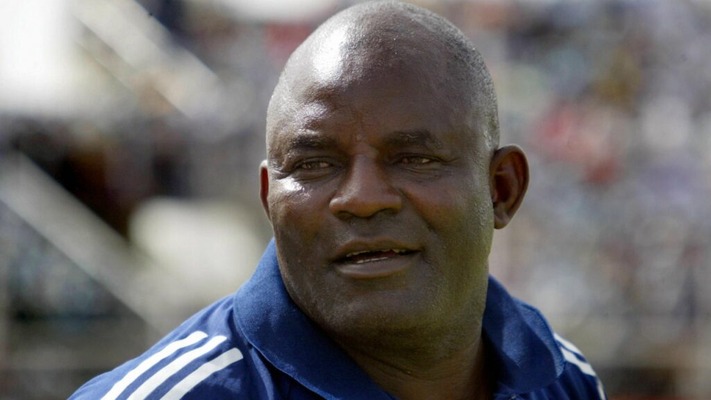
The Nigeria Football Federation (NFF) has expressed deep sorrow following the confirmation of the death of Christian Chukwu, captain of Nigeria’s 1980 Africa Cup of Nations (AFCON) winning squad and former national team coach. Chukwu passed away on Saturday in his hometown of Enugu.
‘Chairman’ of Nigerian football
Nicknamed ‘Chairman’ for his commanding presence and leadership both at Enugu Rangers and with the national team, Chukwu famously lifted the Unity Cup high on March 22, 1980, at the National Stadium in Surulere, Lagos, after Nigeria clinched its first-ever AFCON title — a proud moment witnessed by then-President Shehu Shagari.
NFF pays tribute
Reacting to the news, General Secretary of the NFF, Dr. Mohammed Sanusi, paid glowing tribute to the football icon.
“We have lost a good and great man. Chukwu was the definition of a strong, dedicated, and disciplined leader on and off the field. He was not nicknamed ‘Chairman’ for nothing. He embodied strength, vision, and consistency.

We pray that the Almighty will grant his soul eternal rest, and also grant the family and friends he has left behind, and Nigeria football’s fraternity the fortitude to bear this big loss.”
A storied playing and coaching career
Chukwu was part of the Green Eagles squad that won bronze medals at the 1976 and 1978 AFCON tournaments in Ethiopia and Ghana, respectively, before captaining the team to a historic home triumph in 1980 — a tournament in which he was named Player of the Tournament.
Born on January 4, 1951, Chukwu spent his entire club career at Enugu Rangers. After hanging up his boots, he went on to coach the same club and later managed the Kenyan national team, the Harambee Stars. In 2002, he was appointed Head Coach of the Super Eagles and led Nigeria to a third-place finish at the 2004 AFCON in Tunisia.
End of an era
His death comes just 20 days after the 45th anniversary of Nigeria’s historic 1980 AFCON victory.
Chukwu now joins his late teammates — Best Ogedegbe, Moses Effiong, Okechukwu Isima, Tunde Bamidele, Aloysius Atugbu, Mudashiru Lawal, and Martins Eyo — in the annals of Nigerian football immortality.