|
Getting your Trinity Audio player ready...
|
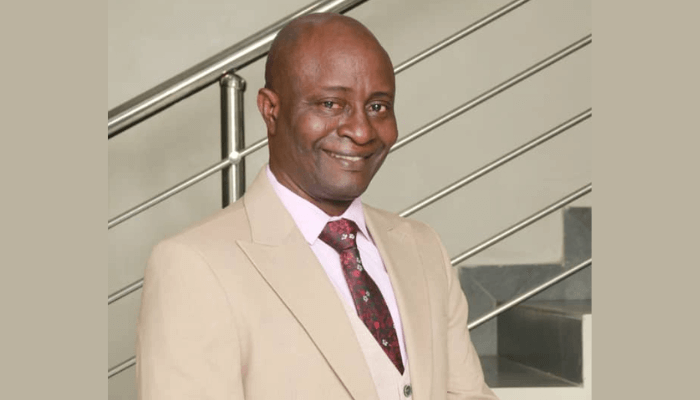
Political will was crucial if Nigeria is to combat corruption, terrorism, and insecurity in the country, a professor of public administration at the Lagos State University (LASU), Olufemi Fatile, has said.
The professor said the level of insecurity in the country was worrisome and urged the federal government to tackle it head-on.
Fatile made this known while delivering the 104 edition of LASU inaugural lecture series at the university’s main campus Ojo in Lagos.
The lecture was titled: ‘Nigeria and The Killer Squad: Corruption, Insecurity And Restructuring Brouhaha- Why These Problems Persist.’

Fatile said the development made some parts of the country unsafe.
“Militia groups in the South, insurgency in the north, kidnapping in the east and south, ritual killings in the east and west, political and non-politically motivated assassinations across the nation.
“The regional pattern of this phenomenon has given rise to regional security formation in the country to curtail the alarming rate of insecurity.
“This is because insecurity is like a sore in a man which, if not well treated, expands gradually to the man’s waist.
“This may have been the main reason that the case of insecurity at present is very difficult to handle, costing the government a lot of money,” he said.

He also described insecurity as one of the most pressing issues facing the country over the years.
“This scenario has contributed to security challenges that have bedevilled the country since independence, with grave consequences for national cohesion and integration.
“Insecurity, which used to be one of the lowest concerns in the hierarchy of Nigeria’s social problems, has now assumed an alarming proportion.
“The alarming rate of insecurity has increased, the crime rate, banditry and terrorist attacks in different parts of the country, has left unpalatable consequences for sustainable development,” he said.
True federalism Nigeria’s best solution
The professor pointed out that true federalism is Nigeria’s best solution, noting that the constitution should be amended to remove anti-federalism provisions and implement real federalism.
He noted that the centralized federalism as practised in the country now is part of the reason for the failure of governance.
Fatile said that there had been growing calls for the restructuring of the federal status in recent years, noting that the colonialists laid the foundation of disaffection that had become the order of the day.
According to him, “In recent years, there have been calls to restructure the current federal status.
“The political tactics adopted by the colonialists laid the foundation of disaffection and acrimony that has become the order of the day in present-day Nigeria.
“The practice of federalism in Nigeria, according to Osegbue, Madubueze and Nwokike (2016), can be described as “centralised federalism”.
“This is where a greater percentage of the power in a state is concentrated at the centre; as a result, the Nigerian federation has been enmeshed in contradictions, paradoxes, controversies and crises”.
Revisit 2014 National Confab recommendations
The lecturer urged the government to revisit the 2014 national confab recommendations on restructuring, resource control, and insecurity, adding that Nigeria needs fair resource distribution for all regions.
“True federalism is Nigeria’s best solution. The constitution should be amended to remove anti-federalism provisions and implement real federalism,” he said.
The professor further pointed out that agitation for political restructuring was not new in the country, saying that agitation had been a recurring decimal which had not been abated since Nigeria’s independence in 1960.
“This is largely out of the frustrations of the citizenry. There is still evidence of inequality, injustice and prejudice in the country’s governance.
“The cases of restructuring, has been founded on two planks which are ethno-regional self-determination and sub-national development.
“The former is driven by the assumption that cultural and ethnic homogenisation could propel solidarity or cooperation for local development, tapping into patriotism.
“The other argument for devolution, local or regional development, has drawn strength from the examples of localised development in Nigeria’s multi-ethnic regions of the First Republic,” he said.
He added that with all these, insecurity and agitation for restructuring continued to pose a challenge to Nigeria, 64 years after independence.
He, however, said these problems cannot be fully resolved but could be addressed, managed and mitigated.
“This agrees with the views of Kreuter, De Rosa, Howze and Baldwin, that even if it is not possible to totally solve wicked problems, it may still be possible to address them.
“Although many insights concerning the different factors, nature and types of wicked problems remain open, as discussed in this lecture, the impossibility of disentangling the causes and outcomes is like wicked problems.
“In addressing wicked problems, there is a need to identify the factors that stem from the local context and to neutralise them or at least strip them down,” he said.
New approach for anti-graft war to work
Fatile called for some deep-rooted beliefs and mental models for the fight against corruption to be more effective.
“There is a need for the inculcation of the right values by the leaders and followers. Without the right values, Nigeria will still wallow in the pit of corruption.
“Solving wicked problems involves having a change in thought and behaviour.
“Government should make resourcing of security forces a priority in order to address major loopholes such as inadequate personnel, capacity challenges, shortage of weapons and officers’ welfare among others.
“For all these recommendations to be achievable there must be political and administrative will on the part of the major stakeholders in government,” he said.
Fatile stressed that fighting corruption in a globalised economy requires strong institutions, laws, human resources, media, and technology.
According to him, Nigeria can significantly curb corruption, insecurity, and terrorism, reducing them to the barest minimum.
“The phenomenon of these wicked problems looms large in every state in Nigeria. Given this reality, more emphasis should be placed on studying this issue in public administration and governance literature.
“We now understand the depth of these wicked problems, but the critical question remains: How do we tame them in a bleeding nation like Nigeria?” he stated.
He further highlighted that the human factor plays a key role in corruption, as individuals are both corrupt and corruptible.
To strengthen the fight against corruption, he recommended a new national slogan: “If you see something, say and do something.”
Present at the lecture was the Vice Chancellor of the university, Ibiyemi Olatunji-Bello, and other management and staff with students of the university.