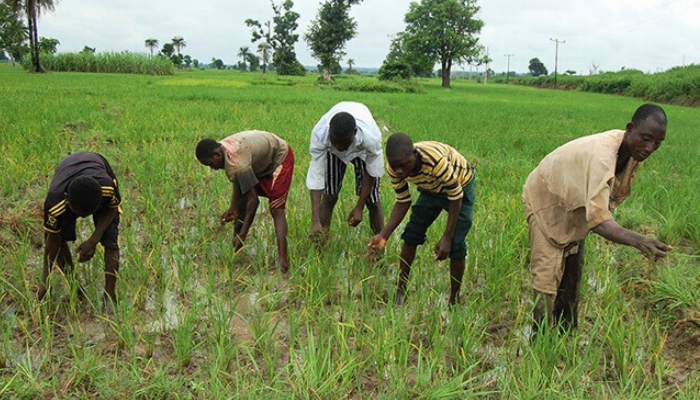
In homes across Nigeria, the struggle to put food on the table is becoming more intense. Markets feel thinner while meals have to be stretched farther. And for millions, hunger is no longer just a temporary hardship; it’s a daily reality. As Africa’s most populous country, Nigeria now stands at a critical junction. The food crisis is not just a headline; it’s a lived experience for more than 25 million people, with an even more alarming 33.1 million projected to be food insecure by mid-2025.
What we’re witnessing isn’t merely about scarcity. It’s about structural gaps, long-standing vulnerabilities, and the urgent need for a rethink on how Nigeria feeds itself. The numbers are staggering, but behind each statistic is a child facing malnutrition, a farmer watching their crops drown in floodwaters, and a mother rationing the last handful of rice.
A nation on the edge
Food insecurity in Nigeria has reached a level not seen in decades. According to the most recent Cadre Harmonisé report, 25.1 million Nigerians faced acute hunger during the 2024 harvest season. Worse still, food insecurity is expected to rise sharply by 2025, particularly in the northeastern region where conflict continues to displace families and disrupt food production.

In Borno, Adamawa, and Yobe states alone, over 4.4 million people are food insecure. More than 2.2 million people have been displaced by insurgency. In these communities, the challenge isn’t just about growing food; it’s about staying safe enough to grow anything at all.
Children are bearing the brunt. Nine million face the risk of malnutrition, with 2.6 million needing immediate treatment for Severe Acute Malnutrition (SAM). These aren’t just health issues. They are early warning signs of a system under strain.
What’s fuelling the crisis?
At the heart of Nigeria’s food crisis is a web of overlapping issues. Climate shocks, inflation, weak infrastructure, and conflict are all tightening their grip on Nigeria’s ability to feed itself.
In 2024 alone, food prices soared by over 40 percent, with Nigeria’s inflation hitting a 28-year high. Basic ingredients like tomatoes, rice, and maize became luxuries for many families. The causes were not hard to find: rising fuel costs, currency devaluation, and worsening transportation bottlenecks.

Floods destroyed over 1.6 million hectares of farmland last year, wiping out nearly 1.1 million metric tonnes of cereals, enough food to feed 13 million people for a year. Erratic rainfall
Patterns and extreme weather are becoming the norm. And Nigeria’s agriculture, still largely rain-fed, remains deeply vulnerable.
Then there’s the issue of access. Poor road networks and a lack of storage facilities mean that even when food is grown, up to 40 percent of it never makes it to market. These post-harvest losses are silently eating into Nigeria’s food supply.
Rethinking the approach: What needs to change?
Solving Nigeria’s food crisis is not just about producing more. It’s about making sure food reaches those who need it. It’s about building systems that are resilient to shocks, whether from conflict or climate. And it’s about treating food security not as charity but as a national development priority.
Here are four critical areas that need urgent attention:
1. Modernising agriculture with resilience in mind
Nigeria’s farming systems remain largely traditional and underpowered. But they don’t have to stay that way.
Targeted investments in irrigation, storage, and processing could transform yields and reduce waste. A $2.3 billion investment in rural infrastructure – storage hubs, roads, and small-scale processing plants – could prevent losses and stabilise market supply.
Equally important is helping farmers adapt to climate change. Partnerships with institutions like the International Institute of Tropical Agriculture (IITA) and the National Biotechnology Development Agency (NABDA) can drive the adoption of drought-resistant crops and climate-smart farming techniques.
In Borno State, for instance, the UNDP’s Regional Stabilisation Facility helped farmers increase their harvests by 63 percent not through high-tech miracles but by combining input support, training, and access to local markets.
Private sector-led initiatives are also beginning to play a role. Programs like Johnvents Group’s Nourished Crop, Better Farmer; an ambitious cocoa sustainability project aiming to empower 150,000 farmers by 2030 signal the kind of long-term thinking needed. By combining extension services with access to inputs, improved agronomic practices, and farmer education, such models offer a pathway to more resilient rural livelihoods.
Strengthening support for conflict-affected communities
The food crisis cannot be addressed without acknowledging the impact of conflict on farming communities. Where insecurity prevails, farmers can’t plant, trade routes are cut off, and humanitarian aid becomes the primary lifeline.
Programmes like those run by the World Food Programme (WFP) and Save the Children show what’s possible. In some communities, cooperative groups have enabled smallholder farmers, especially women, to access markets, pool resources, and negotiate better prices. These efforts have improved incomes for more than 15,000 farmers and restored a sense of agency in regions long forgotten.
Cash transfers linked to agricultural extension services have also shown promise, reducing acute malnutrition by nearly 18 percent in some pilot states. These are simple solutions that scale impact without creating dependency.
Fixing the policy gaps
Nigeria’s food system doesn’t just need new ideas; it needs better policies and stronger institutions.
Nigeria already has roadmaps and strategies, many gathering dust. The time has come to implement them with accountability. A good starting point is the IISD’s cost roadmap for food system transformation. It calls for shock-responsive safety nets, stronger school feeding programmes, and reforms that give women better access to land.
Dormant initiatives like Agricultural Development Projects (ADPs) can be revived and modernised. What’s needed is not another round of speeches but firm political will and sustained follow-through.
Building local value chains
One of the quiet failures in Nigeria’s food sector is the lack of value addition. Too often, produce leaves the farm gate in raw form, fetching low prices and missing out on the jobs and income that processing can generate.
Establishing agro-processing hubs near production zones would not only create employment but also cut transportation costs and improve shelf life. In Kano, for instance, improved irrigation and stronger linkages between farmers and local markets helped participating communities achieve nearly 90% food security.
Nigeria could scale this success across other regions, especially for crops like cassava, cocoa, and sesame, where export potential is high. Investments in integrated processing facilities by firms like Johnvents Industries and Premium Cocoa Products Ile-Oluji in Ondo State are already showing how value-added production can support both local consumption and global competitiveness.
The way forward
Food security is not just about agriculture. It’s about equity, access, climate resilience, and long-term planning. It’s about treating farmers like professionals, not subsistence survivors. And it’s about recognising that hunger, left unchecked, will undermine every other goal the country hopes to achieve, from education to health to national security.
The solutions are not out of reach. They just need to be made a priority.
Nigeria has the land, the people, and the knowledge. What it now needs is urgency and commitment. Not just from the government, but from the private sector, civil society, and communities themselves.
The road from scarcity to abundance is not without obstacles. But it is a road that can be travelled step by step, harvest by harvest, reform by reform. Because a nation that cannot feed itself cannot grow. And a nation that feeds its people builds a future worth fighting for.
John Alamu, Group Managing Director, Johnvents Group.