Rural farmers in Imo State under the Livelihood Improvement Family Enterprises Project in the Niger Delta (LIFE-ND) who have started training in various forms of agric entrepreneurship say they expect a minimum take-off monthly profit of N200,000.
This comes under the funding ambit of the International Fund for Agricultural Development (IFAD) in partnership with the Niger Delta Development Commission (NDDC) which is executed under the special purpose vehicle (SPV) of the LIFE-ND.
Some of the agric-preneurs who spoke with newsmen on tour of the eight locations in Imo State showed huge enthusiasm as they also commended the IFAD/FG/NDDC initiative.
Mrs Mercy Ifeoma Njoku, an incubatee in cassava value chain business located at Obollo in Isiala Mbano LGA, said the business is profitable and she hoped to make not less than N200,000 every month, though the business has seasons and varieties.

Her incubator (trainer), Prince Mbaeyi Alison Emeka, who runs the cassava value chain business at Obollo known as ‘Prince Mbaeyi Farm’, said he returned from Europe to find escape from poverty in the cassava business.
To those fleeing from farms to the cities and abroad, the returnee said: “I do not see it as a hard job. When I started this, I did cultivation in the dry season and tilled with the shovel. I planted the cassava stems myself. I did the first weeding when the dews were dropping down. If you plant cassava, you do not need to go always to monitor for pests attack.”
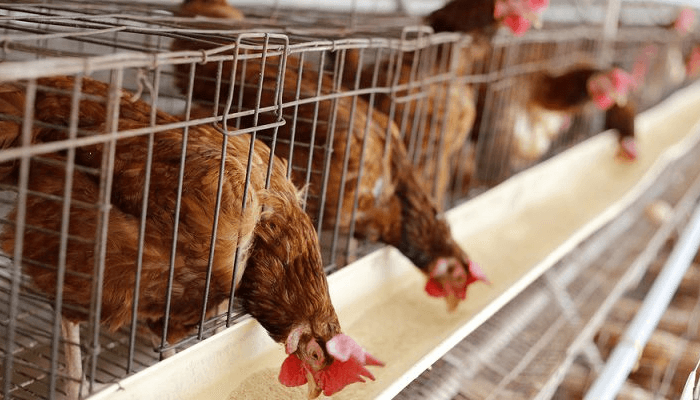
At Egbelu Nguru in Umuowa Ngor-Okpala, Chisom Nwosu, an incubatee in poultry business, told newsmen that the coming of the LIFE-ND has galvanized the community by mopping up young people and women into an agric army. He trains at Petros Farms at Egbelu under Young-man Tubonimi Soseipiri who said he is an assistant farm manager at Petros Farms.
The incubate described the scheme as a very lovely programme and that the trainer is working very hard to groom them.
Read also: 4,250 Rivers agripreneurs begin training in PH as NDDC/IFAD $30m scheme rolls off

In his own, the incubator said he was approached by the LIFE-ND team at Obike community and he is acting now as the incubator for Obike community.
He said they have exposed the 17 incubatees under his farm to all aspects of poultry business including layer and broiler production methods.
Ogechi Faustina Ifeanyichukwu, another incubetee, said she has huge interest in poultry business and that the LIFE-ND scheme brought to them through the NDDC funding under the IFAD partnership has served as a life changer.
LIFE-ND and fishery in Imo State:
By the activities of LIFE-ND supported by the $30m NDDC is bringing to three states, Imo State may soon join as one of Nigeria’s fish value chain hubs.
When newsmen visited the state, found huge enthusiasm in locations where fishery has become a major agripreneur practice.
At Amaukwu centre in Amaukwu Obollo, Ken Njoku, an incubator in the 13-year-old Samtirice Farm, a division of GKN Concept, said he is also a returnee from abroad. He said he found fish farming as a big business because of the gap in the state. “So, I decided to go into agriculture. If you look around, you will see that I am not into fish farm only but I am also in other areas of agriculture. So, I have passion for it and I am doing it not only because of the passion but as an agric business.”
He said almost all his 14 incubatees were working very hard, and that he would teach the secrets of the fish business by registering them into the association. He thus appealed to the FG to continue with this and do more because there are many idle youths in the communities.
Miss Ajunwa Precious, an incubate at the fish farm, confirmed what the incubator said. “They have thought us many things on fish farming, types of fish, maturity duration, treatment of the pond, stocking of fish etc. I believe this skill will help me in life.”
Another, Igwe Chibueze, who said he holds an Ordinary Level certificate said this is pure grace that has located his community. “By the grace of God, our incubator has opened our eyes and widened our knowledge and the secret things about fish farming business. And we have learned many things.”
A person with disability is also happy to have been rescued. David Chimaeme, an incubate, said he expects to become an employer instead of one needing help all the time. He also hopes that materials to start a fish farm would be extended to him and others to make their area a fish hub.
He however wants help in extended marketing opportunities because if many persons are producing fish in one locality, it may suffer glut.
Our reporters observed that many young people and women have started trouping the incubation centres in Imo State asking to be integrated.
Dr/Mrs Chioma Ukwuoma, Team Leader, Farms Monitoring, explained that Imo State was given five local government areas to focus but three were added later to make it eight LGAs.
She also said four commodities were given to Imo State: cassava, rice, poultry and aquaculture, to be covered from production, processing, to marketing value chain. Each community is given one commodity, she explained.
“This is a new programme mainly targeted at the youths, female-headed homes, and people with disabilities.
“It is yielding the desired fruits in the sense that as we are touring around now, you see people selected that they are happy and enjoying the programme. And they are also saying programme should continue because they are seeing the benefit of being in agriculture. And also providing food to help themselves and others in the communities.”
She said they are happy that the agripreneurs were happy. “And I wish more youths and more women should be involved in this programme, and I am urging that more women and youths should be added to the ones they have already. Where they selected 10 or 20 they should add more so that it will reach a lot of people in the communities to alleviate poverty and youth restiveness.”
Giving a general background, she said the agric programme covers the nine Niger Delta States with IFAD’s $6om covering six while NDDC’s $30m is now backing three states.
Each state chooses 10 LGAs and 10 communities per LGA. “The project goal is the transformation of the rural economy in which all rural population can derive prosperity and equal benefit.
“The primary targets are the unemployed youths (aged 18-35) as well as women-headed households with children under the age of 15 willing to engage in the production, processing and marketing of the selected commodities.
“Each state is targeted to impact on 4,250 direct beneficiaries within a period of six years in the first instance.”