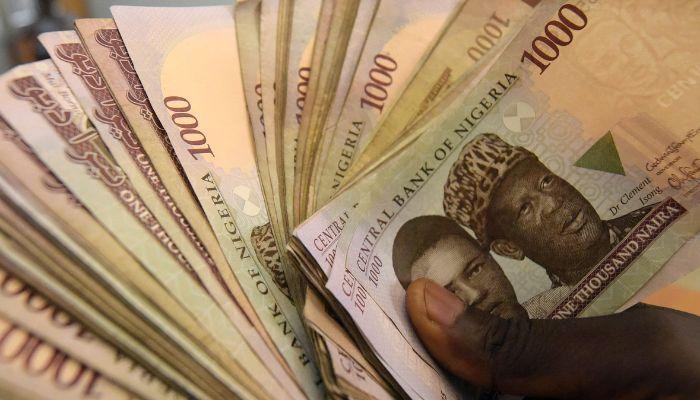
The Chatham House of March 4, 2025, authored by David Lubin, argued that Nigeria’s economy has become more competitive due to the naira’s depreciation and warned against attempts to strengthen the currency. It contends that the devaluation has improved Nigeria’s balance of payments, boosted foreign reserves, and supported the government’s budget by increasing revenue from foreign-denominated sources. However, this perspective raises critical concerns, especially when considering the urgent need to stabilise the naira, boost exports, and achieve sustainable economic recovery. While Chatham House claims that a weaker naira has made Nigeria more competitive, it fails to fully address the broader economic consequences of extreme currency depreciation: The report acknowledges that inflation has surged but underestimates its impact on households. The devaluation of the naira has led to skyrocketing prices of food, transportation, and basic goods, disproportionately affecting the urban poor.
“The devaluation of the naira has led to skyrocketing prices of food, transportation, and basic goods, disproportionately affecting the urban poor.”
A stronger naira would reduce inflationary pressure by making imports cheaper. Given that Nigeria heavily depends on imported goods, a weak naira worsens economic hardship. The argument that a weak naira improves competitiveness assumes that Nigeria has a strong export-driven industrial base. However, most Nigerian manufacturers rely on imported raw materials and machinery. The cost of production has surged due to the high cost of importing essential inputs, making local industries less competitive. Small and medium-sized enterprises (SMEs), which form the backbone of Nigeria’s economy, struggle to survive under these conditions. Chatham House claims that a weaker naira makes Nigeria more competitive in the global market. However, currency devaluation alone does not guarantee export growth. Nigeria’s economy is heavily reliant on crude oil exports, which do not significantly benefit from devaluation since oil prices are set in dollars. Non-oil exports remain underdeveloped due to weak infrastructure, inconsistent policies, and inadequate investment in agriculture and manufacturing.
Read also: Weak naira boosts Nigeria’s competitiveness to 25-yr high

A country benefits from a weaker currency when it has a strong production base capable of exporting value-added goods. Nigeria lacks this foundation. Unlike China, which benefited from a weak yuan due to its robust manufacturing sector, Nigeria does not have the industrial framework to take advantage of a depreciated currency. Without a structural transformation of Nigeria’s economy, naira devaluation will not translate into sustained export growth. Chatham House argues that the devaluation has helped Nigeria’s budget by increasing government revenues from foreign-denominated sources. The government may earn more in naira terms from oil royalties and taxes, but this does not equate to long-term stability. The cost of governance, servicing foreign debts, and funding capital projects have also increased due to naira depreciation. The report acknowledges that currency instability can lead to capital flight, yet it does not adequately address its long-term implications. Foreign investors are hesitant to invest in a country with a highly volatile exchange rate. If the naira continues to depreciate unpredictably, Nigeria could struggle to attract sustainable foreign direct investment (FDI). Rather than relying on a weak naira to drive competitiveness, Nigeria should focus on:
Stabilising the exchange rate will reduce inflation and restore confidence in the economy. The Central Bank of Nigeria (CBN) should implement policies that encourage capital inflows, such as easing forex restrictions for productive sectors. Investment in infrastructure, power supply, and industrial zones can help businesses expand exports. Government support for agriculture and manufacturing will reduce import dependence and enhance export capacity. Rather than relying on devaluation to boost revenue, Nigeria must improve tax collection, curb leakages, and reduce over-reliance on oil. Public-private partnerships (PPPs) can be leveraged to develop industries that can compete globally.
Read also: Naira falls sharply after Trump’s trade tariff
Chatham House’s argument in favour of naira depreciation is flawed because it ignores the severe economic consequences of inflation, capital flight, and rising production costs. While currency devaluation may offer short-term fiscal relief, it is not a sustainable path to economic recovery. For Nigeria to truly become competitive, it must strengthen its currency, invest in industrial and export capacity, and implement long-term economic reforms.
Victor Liman was the former Chief Trade Negotiator of Nigeria and Acting Director General, Nigerian Office for Trade Negotiations. He was also the Head and Trade Commissioner, Nigeria Regional Investment and Trade Office, Shanghai, China, with a concurrent mandate to oversee the South Asian countries’ trade relations with Nigeria. vboffiong@gmail.com, +234 9030 035 257