The $250 million World Bank’s Third National Urban Water Sector Reform Project (NUWRSP3) meant to provide access to potable water to communities in some States across Nigeria has failed to achieve its goal, a new report by the Corporate Accountability and Public Participation Africa (CAPPA) has revealed.
The CAPPA revelation comes amid plan by the President Bola Tinubu’s Government to borrow six new loan, totaling $2.3 billion from the World Bank in 2025 to add to the mounting external debt of the Country.
The CAPPA report entitled ‘Big Debt, Big Thirst: A Case Study of World Bank Supported Projects in Ekiti, Rivers and Bauchi States’ probed the implications of privatisation reforms advocated by international financial institutions, particularly the World Bank, and revealed a disturbing pattern of systemic failures that continue to compromise water access for millions of Nigerians.
The study revealed that beyond environmental and demographic factors, the water crisis confronting Nigeria and many other African countries was a consequence of the decades-long State withdrawal from public investment, coupled with the aggressive imposition of neoliberal policies falsely presented as pathways to development.

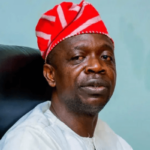
“In this context, we have observed growing debates about water accessibility, particularly around whether water should remain a fundamental public good, universally accessible by right, or be treated as a market-driven commodity, subject to the impersonal forces of profit-oriented supply and demand,” said CAPPA Executive Director, Akinbode Oluwafemi, during the unveiling of the report in Lagos.
Oluwafemi noted that though privatisation and commercialisation are widely promoted as efficient solutions to public sector shortcomings on the grounds that market mechanisms naturally foster investment and operational efficiency, the outcomes of the research in Ekiti, Rivers, and Bauchi states painted a markedly different story. He noted that Instead of improved water access and infrastructure, citizens experience steep tariff hikes, workforce downsisng, diminished public accountability, and continued systemic inefficiencies.
He said,“The World Bank’s Third National Urban Water Sector Reform Project (NUWRSP3), supported by a significant $250 million loan from the International Development Association, promised transformative results for state water sectors through privatisation and corporatisation. Yet our findings unequivocally hold that five years after the project’s completion and with a national debt repayment stretching over forty years, local communities remain deeply underserved and disappointed.
“Systemic issues such as lack of managerial accountability and inconsistent power supply, which were flagged as major challenges under public management, remain unaddressed and even exacerbated under this private-driven reform framework.
Read also: LCCI seeks transparent disbursement of $500m World Bank loan

“Take Ekiti State, for instance, where substantial investments were made in critical infrastructure like the Ero and Ureje dams under the NUWSRP3. Residents in areas such as Iworoko and Olorunsogo (Zones 1A-C, Zone 2, and Zone 4), who paid significant amounts—between N5,000 and N50,000—to obtain prepaid water meters and piped connections to central water points in Ado Ekiti, the state capital, continue to suffer water deprivation. When engaged, many community members nostalgically reference the 1990s as the last period when they had consistent access to potable water—ironically, a time when water utilities were publicly managed.
“In Bauchi State, the report showed that loan injection aimed at infrastructural upgrades and the corporatisation of the state water board failed to resolve chronic water scarcity, primarily due to persistent electricity shortages.
“This situation reinforces our long-held conviction that the privatisation of essential utilities, often heralded as the panacea for public sector inefficiencies, frequently proves anything but infallible.
“The dysfunction evident in Nigeria’s national electricity supply similarly afflicts our water systems. Corporatised thirst, privatised water, privatised light, and enormous debts imposed upon Nigerians and future generations, yet the taps remain dry, leaving communities continually thirsty.
“Our findings specifically highlight how inadequate electricity supply directly undermines the performance and reliability of water supply systems across the three states, among other issues.”
Speaking further, he said, “In Rivers, the report stated that NUWRSP3, designed to enhance water supply services for the over 1.5 million residents in the Obio-Akpor area of Port Harcourt, was initially envisioned to be a collaborative effort between the World Bank and the African Development Bank (AfDB), but ineffective coordination between the two financial institutions and procurement challenges led to severe delays in the project and culminated in the World Bank ultimately withdrawing its support.
“Despite these failures, the burden of debt repayment persists, saddling citizens with enormous financial obligations. These loans, denominated in foreign currency, divert precious and scarce monies away from urgent public investments, further exacerbating economic hardship amidst soaring inflation and poor economic outlook. A pertinent question thus arises: Who takes responsibility for these failures?”.
The report, however, recommended an immediate cessation of the privatisation of water services in Nigeria and advocated for a fundamental reorientation that recognises water as a fundamental human right, necessitating sustained public investment, transparent governance, and genuine democratic control.
Also speaking at the report unveiling, Dean, Faculty of Social Sciences, University of Lagos, Adelaja Odukoya, who is a Professor, described the World Bank’s loan as a “vicious cycle” that benefits the organisation through outrageous interests and serves as a conduit for political office holders to discreetly enrich themselves.
Reflecting on the findings of the report, CAPPA’s Programme Officer, Water Campaign, Sefa Ikpa, said the NUWRSP3 projects in the aforementioned states betrayed the bank’s primary goal to reduce poverty by lending money to the governments of its poorer members to improve their economies and to improve the standard of living of their people.
She lamented that successive governors and administrations in the four states had defrauded citizens, with few or no water project execute d to show for the huge loans taken to provide water after extensive research.