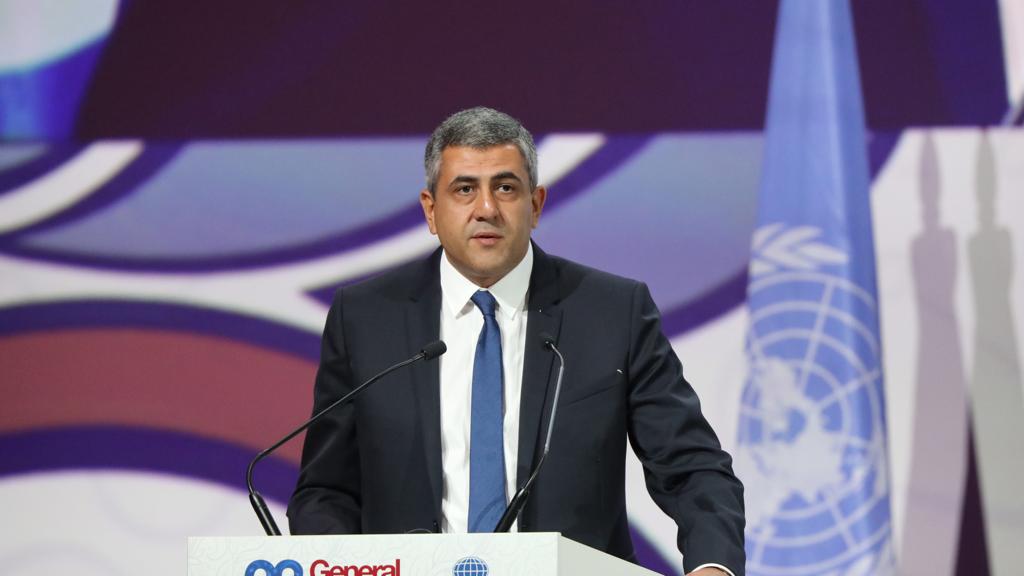
Since assuming office in 2018 as secretary general, United Nations World Tourism Organisation (UNWTO), Zurab Pololikashvili, has brought some transformative changes to the industry, including recent rebranding, among others that combine to make him a worthy tourism ambassador.
Below, the Georgian-born decretary general of UN Tourism, formerly UNWTO, gives his scorecard, amid sharing views on the need to consolidate on the roles and gain tourism to further impact lives and global economies.
First, he described the tourism sector as an important and strategic part of the global economic indexes. It is a low hanging fruit as well as a sector, which is well-positioned to take many out of poverty lines by offering decent jobs for youth particularly and a major growth pole.
Supporting Data:

From the leading destinations in the world such as Spain, France, United States of America among others, to developing and emerging destinations, such as Ghana, Rwanda, among others, tourism, according to Pololikashvili, has over time and again proven how it offer a sustainable path to decent employment and growth for many. This and many other factors make tourism a sector that cannot be overlooked. If for nothing at all, the dreadful COVID-19 pandemic illustrated how travel and tourism was very important to the sustenance of livelihoods.
The sector alone by itself cannot be the magic wand by a much needed leadership to unlock the potential of the tourism sector for the greater good for the millions whose lives depend on it. The World Tourism Organisation (UNWTO) as known then has always been the public voice and critical UN voice in placing tourism as a sector, which will help in the attainment of the SDGs.
Assuming the role of leadership as the Secretary General of United Nations World Tourism Organisation from 2018, Ambassador Zurab Pololikashvili set for himself and the organization, a mission to bring tourism and the UNWTO to the league of key sectors to lead the transformative change the industry needed.
Innovation and education were major features of unleashing the tourism sector, which is grounded in exciting innovations driving and offering enhanced services for seamless solutions for the industry. The above saw the launch of defining technology campaigns to embrace the revolution sweeping other sectors. Many young and experienced entrepreneurs participated and made tourism part of their products, or better still, use technology to offer tailored solutions for destinations and the industry at large.
Technology is an evolving and continuous process, which has opened the floodgates for member states of the organization under Pololikashvili, particularly to adopt such models in developing a robust industry.

This was not just identifying innovation as the required tool to elevate tourism, but bringing the tourism industry to where it deserves.
Education
Pololikashvili also recognized that human resource development is among some of the pressing gaps that the tourism industry is currently confronted with. But his leadership provided solutions with many educational and skills development initiatives for many member states and destinations that have upskilled afterwards.
Partnerships and rebranding
As important as then (UNWTO) was especially with the expertise in helping member states develop their strategies and offering technical assistance, it needed a paradigm shift to engage the major private sector players and drum home how tourism was an inherent part of what they do. A few of the major partnerships championed by Pololikashvili included: Google, technology giants; Meta (Facebook); Amazon; Globalia, just to mention a few. These non-traditional allies of the UN Tourism brought some steam to the sector, leading to countless development of programmes to enable the tourism sector.
A refreshed and energized UNWTO was needed to match its quest to the new paradigm, which Pololikashvili was championing. That quickly and, in accordance with the statues of the organisation and programme of work of the Secretary General, re-launched the vibrant brand identity coupled with its mission to the leading global public voice to champion sustainable tourism development.
The interest soared and was ready for the big takeoff it needed. It needs to be said that in all of these reforms, the organisation in parallel was doing the institutional engagements while opening new channels to governments, and other key international organisations to make tourism a frontline and priority economic sector.
Women empowerment
Since assuming office, Pololikashvili has taken the empowerment of women in the tourism industry a notch higher because of the obvious reasons.
Accounting for about 54 percent of the industry’s workforce, women make a significant component of the industry, yet they are largely languishing at the bottom half of the pay ladder. Recognizing the gaps under his leadership, the Secretary General has taken major steps to acknowledge the challenge and create a new paradigm where women’s role in the tourism sector is given utmost importance by leaders. The Women in Tourism Leadership Committee is one of the several steps instituted and composed of women ‘Tourism Ministers’, who have helped in developing some pathways for training and offering other women incentives and opportunities to climb the ladder in the industry.
Product diversification
The UN Tourism under the leadership of Pololikashvili was not business as usual as he led the introduction of far reaching programmes such as supporting member states to diversify their tourism offerings to create opportunities.
The tourism products in the market or the source markets, especially for emerging tourism economies like Africa, had always made safari the perennial draw of a continent, which boost a tapestry of exciting offers including culture. The elevation of gastronomy tourism, cultural offerings, and sports tourism offered enhanced knowlege and diversified offerings to tap into opportunities that exist. In Victoria Falls, Zimbabwe 2024, it played host to the maiden UN Tourism Regional Gastronomy Forum for Africa. It went beyond just a conference to help african destinations to tap into the enormous benefits of its rich culinary as a major draw.
There are countless number of initiatives that have been instituted to support member states to maximise the true value of the tourism sector.
UN Tourism also unveiled Self-assessment Tool to Assist Rural Destinations (STAR), its pioneering digital self-assessment tool designed to progress tourism development in rural areas.The STAR allows local public authorities in rural destinations to self-evaluate and measure their level of tourism development. It also provides tailored recommendations, benchmarking different destinations and generating valuable data and insights for Member States to enhance sustainable and inclusive tourism policies.
Making rural tourism major component
Another area is rural tourism. In many cases, especially in Africa, tourism products are located in relegated backgrounds, but now a frontline area for UN Tourism and its member states.
There is now a global initiative to highlight places where tourism preserves cultures, traditions, celebrates diversity, provides opportunities and safeguards biodiversity.
For instance, the BTV Label recognizes the villages that are outstanding examples of rural tourism destinations with recognized cultural and natural assets that preserve and promote rural and community-based values, products and lifestyle.
Networking
The network supports the work of UN Tourism in identifying good practices, developing guidelines and policy recommendations as well as insights and knowledge.
Institutional positioning, partnerships
The UN Tourism in the last seven and half years has undergone tremendous changes from being just a specialist UN agency to a transformative international tourism brand that transcends its core publics to bridging the private/public sector gap, while endearing self to big corporations that see the value of the tourism sector to economies.
From the brand identity, change of name from UNWTO to UN Tourism, the leadership of Pololikashvili has ensured partnerships with entities such as Meta, Google, Microsoft, among major global brands. These partnerships have birthed initiatives that have enhanced capacities/services of member states.
Africa’s time under Pololikashvili
Since its inception, under the Pololikashvili administration, the UN Tourism Special Ambassadorial Programme has named over 20 personalities from diverse backgrounds to use their craft, knowledge and network to promote tourism around the world.
Africa boost four personalities including; Nigerian billionaire, Aliko Dangote (businessman); Didier Drogba, former Chelsea and Ivorian legend; Fatmata Binta (Sierra Leone), international acclaimed chef; Magic System Music Group. These ambassadors have supported the works of UN Tourism on the ground and inspired Africans to realise their dreams.
Engagements with African leaders to support tourism
Since the start of his administration in 2018, Pololikashvili, in consultation with the the Commission for Africa (CAF) member states and ministers of tourism, realigned and defined the priorities for African tourism. The extensive work ensured it captured the essential elements in the 10 agenda points in Africa.
Some themes progressed under Pololikashvili’s administration including; advocating Brand Africa, SDGs, pomoting travel facilitation, strengthening tourism statistics, expanding capacity building, among others.
Also, in the last seven and half years,
Pololikashvili visited Africa 17 times including meeting with 15 presidents, vice presidents, prime ministers and higher officials to pave way for collaborations and projects such as UN Tourism education centres in Zimbabwe and Zambia and development of tourism investment guidelines.
Investments in Africa’s tourism sector
The investment guidelines publication is another landmark initiative of the Pololikashvili administration to simplify investment guidelines, which speaks to the investment community about a country’s tourism investment climate. With data and investment factsheet specifically on tourism hard to come by, this was a masterstroke to present the offerings of what member states have for investors.
UN Tourism’s series of investment guidelines is to help better understand and generate sustainable investments in the tourism ecosystem. The guidelines are divided into three series in order to understand, enable and mobilize tourism investments. They also help to develop new insights for policy making to address the current barriers, new opportunities and encourage sustainable investments in the tourism sector.
Six African countries: Mauritius, Cabo Verde, Morocco, Zambia,Tanzania and Namibia have unveiled their publications with more in the pipeline.