|
Getting your Trinity Audio player ready...
|
…NGOs to be badly affected in Nigeria
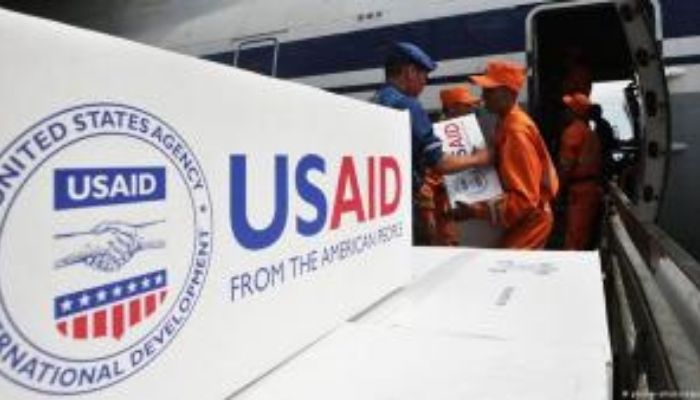
The recent decision by the United States President Donald Trump to freeze funding support for the United States Agency for International Development (USAID) has threatened the jobs of thousands, both in Nigeria and across the world.
USAID, set up in the early 1960s to administer humanitarian aid programmes on behalf of the US Government, employs around 10,000 people, two-thirds of whom work overseas, according to the Congressional Research Service, a Report by the BBC stated.
It has bases in more than 60 countries and works in dozens of others. However, most of the work on the ground is carried out by other organisations that are contracted and funded by USAID.

The news of the looming job losses hit home, when several organisations, mostly beneficiaries of the USAID, were recently given termination notices in Nigeria, following their Agency’s inability to self-fund, being that most USAID organisations are non-profits.
Read also: USAID funding freeze and Nigeria’s buffer measures
BusinessDay’s findings reveal that organisations that could be affected include the Save the Children, Nigeria, the Norwegian Refugee Council, (NRC), Danish Refugee Council (DRC), Mercy Corps, International Organisation for Migration (IOM), the International Rescue Commission (IRC) United Nations for Humanitarian High Commissioner for Refugees (UNHCR), among several other local organisations.
On the Website of Save the Children Nigeria, it states “Funding cuts are putting our lifesaving work under threat. Governments across the world are slashing foreign aid budgets that millions of children facing the toughest challenges depend on.
“It’s a betrayal of the world’s most vulnerable children. It’s leaving critical funding gaps at a time when 1 in 11 children globally need lifesaving assistance. Children who are trying to survive hunger, conflict and natural disasters”.

In a post on the IRC’s Website, it reported that the IRC had lost 46 grants from USAID and the State Department as of February 28th. This means at least 2 million people in crisis areas will no longer get the help they urgently need.
“2 million people could lose access to aid. Kids are in danger of malnutrition and starvation” following the withdrawal of the aid”, IRC noted.
Another post on the website further stated that “Without funding, hundreds of thousands of people will lose support for feeding babies and young children critical programs including Malnutrition services for children, Maternal and newborn health services, Preventing and treating infectious diseases, could shut down in several countries including Nigeria, Burkina Faso, Ethiopia, Kenya and Kenya among others”
Read also: USAID’s Power Africa: Counting wins, losses as funding vanishes
Meanwhile, BusinessDay reports that the funding cut, which affects several countries, has had a devastating impact on local economies and communities that rely heavily on USAID-supported initiatives.
Speaking with BusinessDay, Cynthia Mbamalu, director programmes, YIAGA Africa said “The USAID funding withdrawal put thousands of jobs at risk with a negative impact in the health, agriculture, humanitarian, democracy and governance sectors and work in Nigeria”.
She however, noted that the effect of the fund withdrawal had sparked conversations on dependency on foreign aid and the future of development work in Nigeria.
“As a civil society organisation with a vision of a people-driven and developed Africa, our work in Yiaga Africa on democracy and governance remains crucial regardless of the withdrawal of USAID funding.
“The withdrawal of the funds affected some of our projects and required that we activate an immediate response strategy, such as redesigning our program implementation strategy and approach to work, reviewing our fundraising strategy, reducing our operational cost, reviewing personnel cost and redefining our work style.
“As an organisation, Yiaga Africa had begun the year 2025 with a vision of providing new insights, building resilient institutions and investing in empowering our communities. With the withdrawal of USAID fund, Yiaga Africa, and I believe other civil society partners, have an opportunity to rethink our approach to development work as it relates to funding, begin conversation of Africa-driven philanthropy support to democracy and human rights work both within Nigeria and beyond and design a business model that can sustain our vital work.
“The new realities of development work and the uncertainty in the funding landscape are still evolving; we are adapting and learning as we restructure”, she said.
Read also: USAID to lay off 2000 staff and put most others on administrative leave
Meanwhile, sources who pleaded anonymity while speaking to BusinessDay, said the funding withdrawal had resulted in widespread layoffs, with hundreds if not thousands of workers losing their jobs overnight.
“The impact is being felt across the board, from small businesses to large-scale projects,” said a local official, who wished to remain anonymous. “The loss of jobs is not only affecting individuals but also their families and communities”, the source added.
The USAID funding cut is attributed to a shift in priorities and budget allocations by the new administration of the United States, under the leadership of the recently elected Donald Trump. However, the move has been criticised by many, who argued that it would exacerbate poverty and unemployment in already vulnerable regions.
As the situation continues to unfold, affected communities are calling on Governments and individuals to intervene and provide support to avert the job losses.
The USAID funding cut serves as a stark reminder of the far-reaching consequences of aid withdrawal and the need for sustainable, long-term solutions to address development challenges.