|
Getting your Trinity Audio player ready...
|
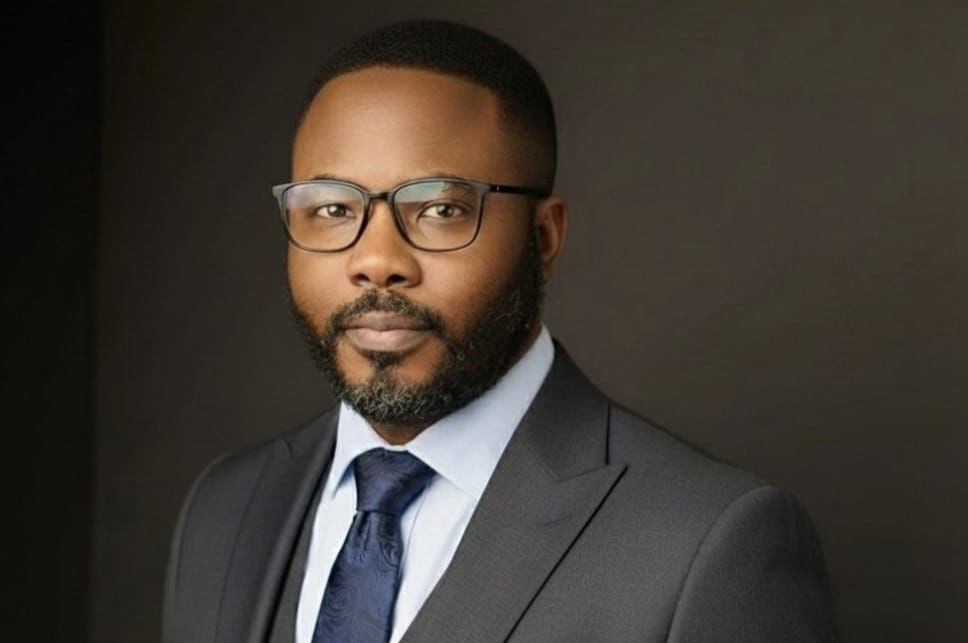
Going by the famous Igbo proverb popularised by Chinua Achebe in his book Things Fall Apart: “Eneke the bird says that since men have learned to shoot without missing, he has learned to fly without perching,” Alex Onyia, an edutech expert has advocated for adapting to mini container classrooms in the southeast to salvage surging rate of unconducive learning environment in the region as a result of negligence. of the authorities concerned.
In his philosophy and advocate for resilience in the face of danger, facing the basic education sector in the southeast, Onyia in his official X handle @winexviv said; I’m thinking we should have mini container schools scattered across remote villages and ghettos in the south east.
“We can give teachers tablets that contain curriculum, lesson plans and lesson contents embedded in. The tablets will have constant internet access to enable us to modify and update contents in real time.”
Onyia’s prescription to addressing the ailing learning conditions in most basic schools in Igboland is occasioned by the insensitivity of the political office holders and politicians in that region.

Most of the primary and even secondary schools in the southeast are in a ‘sorry’ state yet there are governors and national legislators collecting funds meant for the five states.
A lot of the basic schools in rural areas lack quality teachers as pupils learn under a very unhealthy and unconducive environment.
Imagine, a child in a school without toilets, no chairs and desks to write, and the supposedly blackboards are neither whiteboards for mark nor blackboards for chalk.
Obviously, only very few would see education as a window to achieving one’s dreams and aspirations. The authorities in the southeast regions are busy playing lip-service politics at the expense of the future of their children.
The question jostling for answers in many hearts is, where are the visionary leaders such as Akanu Ibiam, Michael Opara and Sam Mbakwe of late memories? The truth be told, many of those politicians in the southeast are nothing but merchandised leaders gunning for their personal goals.

Be that as it may, a fact remains that Onyia’s suggested solution seems to lack merits considering many militating factors that could hinder or even make the idea ridiculous operationally.
Who would want to see his or her child in a container school system, when ordinarily an average Igbo person would rather tilt towards business?
Besides, the temperature in that region makes it very uncomfortable for teaching and learning in a container. Come to think of it, why container, when there are available lands to raise classroom blocks?
The hot weather in the east without doubt, will make container classroom laughable, unless there are plans to install air conditioning. And if these air conditioners are installed, how would the communities’ source the energy to power them?
Most of the schools built in the first republic, apart from the mission schools, were built through community efforts. What exactly changed?
Okereke Onuchukwu sees this approach as being much more expensive, besides, he queried the mechanism in place to ensure the sustainability of the proposed scheme which according to him will demand more energy sources to succeed.
“In all, the sustainability of this should be well examined before execution,” he said.
Mike Onyeogor Jr expressed concern on teacher monitoring should the approach be adopted; besides, he was not sure if the governments of the various states would be willing to endorse such an idea.
“How will the teachers be monitored and paid, will the state government permit and adopt this concept?” he asked.
However, another school of thought believes that solving the educational needs in the southeast goes beyond having container classrooms.
Cee Emmanuel emphasized that there is no need for such a project because there are enough schools which only need upgrading and equipping.
“There are enough schools already in the southeast, judging from my travels around the five states. What we need is to adequately equip them with quality teachers and infrastructure such as libraries, internet facilities, and sporting facilities, among others,” he said.