|
Getting your Trinity Audio player ready...
|
The Federal Government has raised alarm over the presence of about 26,000 children in custodial centres across the country, describing it as a violation of laws that mandate their placement in borstal institutions.
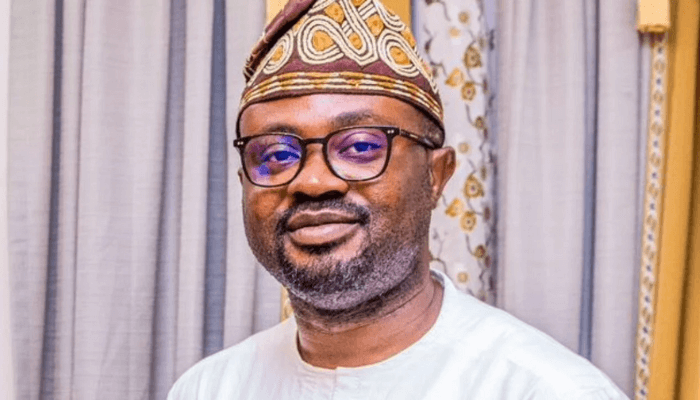
Olubunmi Tunji-Ojo, Minister of Interior, reaffirmed the government’s commitment to addressing this issue and overhauling Nigeria’s justice system to ensure proper juvenile rehabilitation.
Speaking at an inter-agency meeting in Abuja, Tunji-Ojo emphasised the need for a shift in governance, urging stakeholders to focus on action rather than rhetoric.
According to a statement by Ozoya Imohimi, the director, press and public relations, the minister stressed that correctional services should not be about condemnation but true rehabilitation.

The Minister described the current situation as unacceptable, highlighting the lack of adequate facilities and calling for urgent action to address these legal and institutional gaps.
As part of the reform efforts, Dr. Tunji-Ojo announced plans to establish the Nigerian Paramilitary Academy, which will train officers in empathy and correctional principles.
He also emphasized the need for non-custodial measures for non-violent offenders to reduce pre-trial detentions and ease the burden on correctional facilities.
The Minister underscored the importance of inter-ministerial collaboration, calling on state governments to actively participate in addressing juvenile detention.
Read also: Five inmates recaptured after Kogi prison break, says NCoS

Citing findings from the 2024 report on children and young adults deprived of liberty, Tunji-Ojo revealed that an estimated 26,000 children have been held in correctional facilities annually over the past five years, making up over 30% of the total inmate population.
He described this as a gross violation of child protection laws and vowed that the government would investigate the breaches and hold institutions accountable.
“The law is clear—children should not be in adult correctional centres. We will not tolerate violations of this law. Agencies that fail to uphold it will face consequences,” he declared.
The Minister praised the unprecedented inter-ministerial collaboration under President Bola Ahmed Tinubu’s administration, noting that Ministries no longer function in isolation.
He commended the Attorney General of the Federation, the Minister of Women Affairs, and the Minister of Humanitarian Affairs for their commitment to comprehensive justice reform.
Tunji-Ojo assured that by 2027, discussions would shift from promises to tangible achievements.
“It takes a whole village to raise a child. Our nation cannot afford to fail its children. This administration will ensure meaningful reforms are implemented,” he affirmed.
Magdalene Ajani, Permanent Secretary of the Ministry of Interior, also spoke at the meeting, highlighting that between 2018 and 2022, an average of 26,000 children and young adults were detained annually. She stressed the need to promote non-custodial measures and diversion programs as viable alternatives to incarceration.
Ajani emphasised that ending child detention is not just a moral obligation but a strategic investment in justice and sustainable development.
The meeting, which brought together representatives from the Ministries of Justice, Women Affairs, and Humanitarian Affairs, as well as UNICEF and other development partners, marked a significant step toward enforcing the Nigerian Child Rights Act of 2003.