|
Getting your Trinity Audio player ready...
|
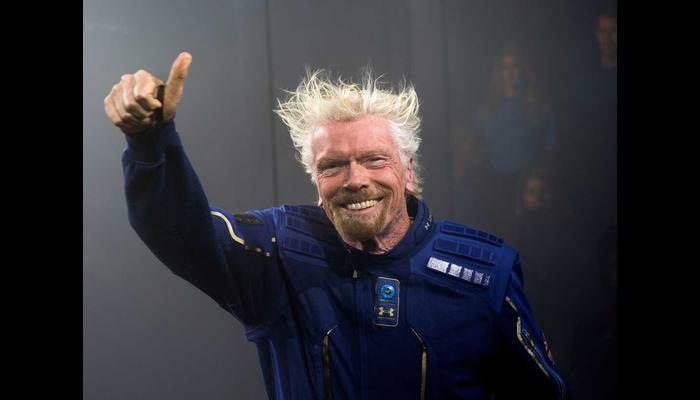
Sir Richard Branson, the visionary behind the Virgin Group, had a business philosophy: Long-term profits over short-term profits.
Virgin Group prioritised sustainable growth over short-term gains, focusing on reinvestment and expansion into new markets, often achieved through strategic joint ventures. Once a business reached a certain scale, it would branch out by creating a new venture.
This approach fostered a culture of innovation and adaptability across the organisation.
Founded in 1970 by Sir Richard Branson, Virgin Group evolved into a prominent British multinational venture capital conglomerate, spanning industries, including travel, telecommunications, health, banking, music, and leisure.

Initially established as a mail-order record company, Virgin quickly grew into a private enterprise engaged in music publishing and retail. By 1986, the company had made its mark on the stock exchange with an impressive turnover of £250 million.
One of Virgin’s most renowned ventures, Virgin Atlantic, became a major contender in the international airline industry. By 2002, the Virgin brand had extended its influence to encompass more than 200 businesses across three continents, operating in diverse sectors such as financial services, transportation (covering both airlines and railways), cinemas, and music retail. The Virgin name had become synonymous with innovation and global recognition.
The organisation has often been described as a ‘keiretsu’—a network of loosely linked, autonomous units managed by self-directed teams operating under the shared Virgin brand. This distinctive structure enabled flexibility and entrepreneurial spirit within the conglomerate.
Becoming a powerful brand
Virgin’s expansion strategy was characterised by Sir Richard Branson’s ingenuity and readiness to embrace fresh challenges, consistently pushing boundaries across diverse industries.

The name ‘Virgin’ was chosen to emphasise the company’s position as an innovator and newcomer in every sector it entered, highlighting its unorthodox approach to business.
In 2001, Branson described the Virgin Group as ‘a branded venture capital house’, reflecting its unique model of investing in a variety of brands and ventures. This strategy prioritised long-term growth and market expansion, often at the expense of immediate profits.
Virgin’s reliance on partnerships introduced a level of adaptability while mitigating financial risks. The group’s businesses were ‘ring-fenced’, ensuring that if one enterprise faced financial difficulties or bankruptcy, its creditors had no claim over the assets of other Virgin companies. This structural approach safeguarded the stability of the wider Virgin network, enabling sustained innovation and resilience.
As he explained, “The brand is our single most important asset. Our ultimate objective is to establish it as a major global name, which means having several core businesses with global potential.”
And it worked.
According to a 1996 survey, Virgin group was a household name with 96 percent of UK customers. Also, 95 per cent could name Richard Branson as its founding member.
Research also showed that the Virgin name was associated with words such as ‘fun’, ‘innovative’, ‘daring’, and ‘successful’.
The personal image and personality of the founder, Richard Branson, were highly recognisable. In Apple Computer’s 1997 ‘Think Different’ advertising campaign, Branson was featured alongside Einstein and Gandhi as a ‘shaper of the 20th century’.
A 2000 survey of students found that Branson was their number one role model. His flair for publicity led him to engage in high-profile stunts, ranging from appearing as a cockney street trader in a US comedy to attempting a non-stop balloon flight around the world.
Avoiding the pressure of public listing
Because he valued long-term profits over short-term ones, he became disillusioned with the obligations of listing the company publicly.
Since most Virgin companies were private, Branson argued that their operations differed fundamentally from those of public companies, which had to satisfy shareholders and analysts with short-term profits, high taxable earnings, and regular dividends.
Compliance with regulations governing public companies, reporting to shareholders, and making presentations in the City of London to investors he believed did not understand his business became burdensome.
The pressure to create short-term profits, especially as the share price began to decline, was the final straw. Branson decided to take the business back into private ownership, buying back shares at the original offer price, valuing the company at £240m.
However, by 2003, Branson appeared to reconsider the advantages of public companies. In December of that year, he launched a public offering of shares in his Australian low-cost airline, Virgin Blue, valued at £983m (€1.4bn), partly to fund Virgin’s expansion into North America.
Virgin’s strategy: Branded venture capital house and partnerships
Virgin had grown rapidly, entering and capturing a significant share of new markets without adopting the traditional structure of a multinational corporation. There was minimal hierarchy and corporate bureaucracy, and no consolidated financial results for external or internal review. Virgin’s financial operations were managed from Geneva.
In these partnerships, Virgin provided the brand while its partners contributed most of the capital. For example, Virgin’s stake in Virgin Direct required an initial investment of just £15m, whereas its partner, AMP, invested £450m. Similarly, Virgin Mobile entered the wireless industry by partnering with existing telecom operators, offering mobile services under the Virgin brand.
Despite its diverse ventures, some critics argued that Virgin had become more of an endorsement brand rather than a company with deep industry expertise. However, Will Whitehorn, Virgin’s corporate affairs director at the time, countered this view, stating:
“At Virgin, we know what the brand means. When we put our name on something, we are making a promise.”
Before entering a new market, Virgin conducted extensive research to ensure it could offer something distinctive. The strategy was to extend the brand at a low cost into industries where it could challenge established competitors and improve consumer value.
Management style
Virgin’s management approach emphasised decentralised decision-making, with a low-cost head office and a focus on business-level autonomy. While Branson delegated extensively, he remained hands-on in marketing and promotional activities.
In his autobiography, Branson described his approach to business financing:
“In the early 1970s, I spent my time juggling different banks, suppliers, and creditors to play one off against the other and stay solvent. Now, I juggle bigger deals instead of banks. It is only a matter of scale.”
Branson prided himself on involving employees in decision-making and seeking their input on ways to enhance customer value. However, employees were still held accountable for performance, with incentives such as stock options, bonuses, and profit-sharing schemes. Wherever possible, Virgin promoted from within.
Corporate performance in the 2000s
By 2003, Virgin had taken on numerous industries with mixed success. Virgin Atlantic was a core business that Branson insisted he would never sell. Other ventures, such as Virgin Express, struggled initially but later achieved profitability. However, controversies, such as the sale of landing slots to Virgin Express in 1996, raised concerns.
Not all Virgin businesses thrived. In 2000, Virgin Clothing was discontinued, and by 2003, Virgin Cola and Virgin Vodka were consolidated into Virgin Drinks. The most publicised failure was Virgin Trains, which faced criticism for poor punctuality and service. While Virgin Rail began reporting profits in 2002, its performance remained under scrutiny.
Virgin’s mixed results raised concerns about potential brand dilution. A commentator noted:
“A customer enjoying a nice massage on a Virgin Atlantic flight may be predisposed to drinking Virgin Cola or staying in a Virgin hotel. But a customer who has a bad experience with any one Virgin product may avoid the entire brand.”
The contrast between the stellar reputation of Virgin Atlantic and the poor reputation of Virgin trains in the UK remained unresolved.
Critics argued that Virgin’s rapid expansion increased the risk of brand damage. However, Virgin’s research suggested that customers typically blamed individual businesses for failures rather than the brand as a whole.
Branson and his brand presently
Branson became an astronaut in 2021, flying on board VSS Unity as part of his first fully crewed Virgin Galactic mission, which was founded under Virgin Galactic Holdings, Inc.
As of early 2023, the Virgin Group’s net worth was estimated at £3 billion.
He also maintains a regular blog and has more than 41 million followers across his social networks. Branson continues to have a large following on social media, utilizing his brand image and the Virgin group for social good.
Branson has remained consistent as a brand for The Virgin Group, demonstrating his leadership style and philanthropy.
Recently on Instagram, he celebrated the 21st birthday of a Nigerian girl born on a Virgin Atlantic flight from Lagos to London, whom he calls his favorite pen pal till date. She was named Virginia after the Group. The group has been providing Virginia with a free flight each year since her birth.